Luakini
/LOO-ah-KEE-nee/
Meaning
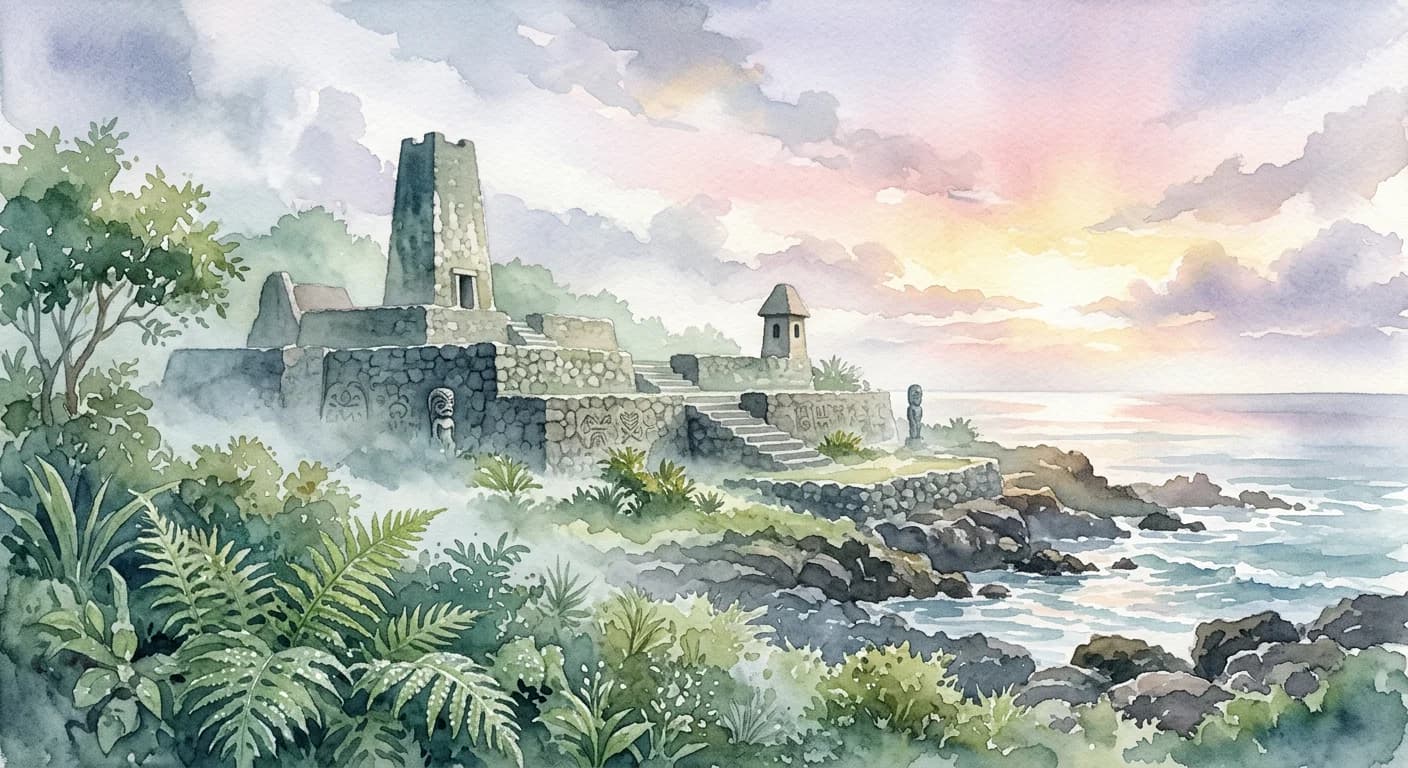
Luakini refers to a paramount sacred temple in ancient Hawaiian society, specifically consecrated to Kū, the god of war, and sometimes Lono, the god of fertility and peace, depending on the specific period and purpose. These monumental stone structures served as critical centers for state-sponsored rituals, including human and animal sacrifices, elaborate ceremonies, and fervent prayers offered by the aliʻi (chiefs) and kahuna (priests) to secure victory in battle, maintain political stability, and ensure the prosperity of the kingdom. It embodies not just a physical edifice but a formidable nexus of spiritual power, divine authority, and the very sovereignty of the ruling class.
Literal Translation
Temple of Lono (often interpreted as a royal or sacred temple)
The Story Behind the Word
The existence of luakini temples reflects the intricate and hierarchical structure of ancient Hawaiian society, where religion and politics were inextricably linked. These temples were not merely places of worship but central instruments of state power, legitimizing the rule of the aliʻi and reinforcing their divine mandate (mana). Their construction often involved immense labor and resources, signifying the chief's ability to command and mobilize the populace, further solidifying their authority. The rituals performed within, particularly human sacrifices, were believed to appease the war god Kū, ensuring agricultural abundance and success in warfare, thereby maintaining the cosmic balance and the well-being of the entire moku (island district) or kingdom. The luakini embodied the serious responsibility of leadership and the profound spiritual consequences of their actions.
Experience It
Consecration of a New Luakini
The air was thick with the scent of kava and sacrifice as the kahuna nui chanted, dedicating the newly completed luakini. King Kamehameha stood proudly, his gaze sweeping over the assembled warriors and commoners, knowing this temple would be the spiritual heart of his expanding dominion, a testament to Kū's favor and his own mana.
Seeking Divine Intervention
Before a crucial battle, the high chief entered the luakini, his heart heavy with the fate of his people. He prostrated himself before the carved images, offering a pig and fervent prayers to Kū, seeking strength, strategy, and ultimate victory against the encroaching enemy. The future of the kingdom rested on the divine response from within these sacred walls.
What Gets Lost in Translation
English speakers might mistakenly view a luakini as simply a
Across Cultures
Similar concepts of state-sanctioned, monumental religious sites dedicated to war deities or national prosperity exist across various ancient cultures. Mesoamerican pyramids, like those of the Aztecs, served as centers for elaborate rituals and sacrifices to appease gods and ensure the state's well-being. Ancient Roman temples often housed cults vital to the empire's military success and political stability, demonstrating a parallel fusion of spiritual and temporal power.
Did You Know?
The construction of a luakini often required such immense resources and manpower that it served as a powerful demonstration of a chief's mana (spiritual power and authority), showcasing their ability to command vast segments of the population.
How It's Used
The term 'Luakini' is used in historical and cultural contexts when discussing ancient Hawaiian religious sites, particularly those of significant spiritual and political importance.