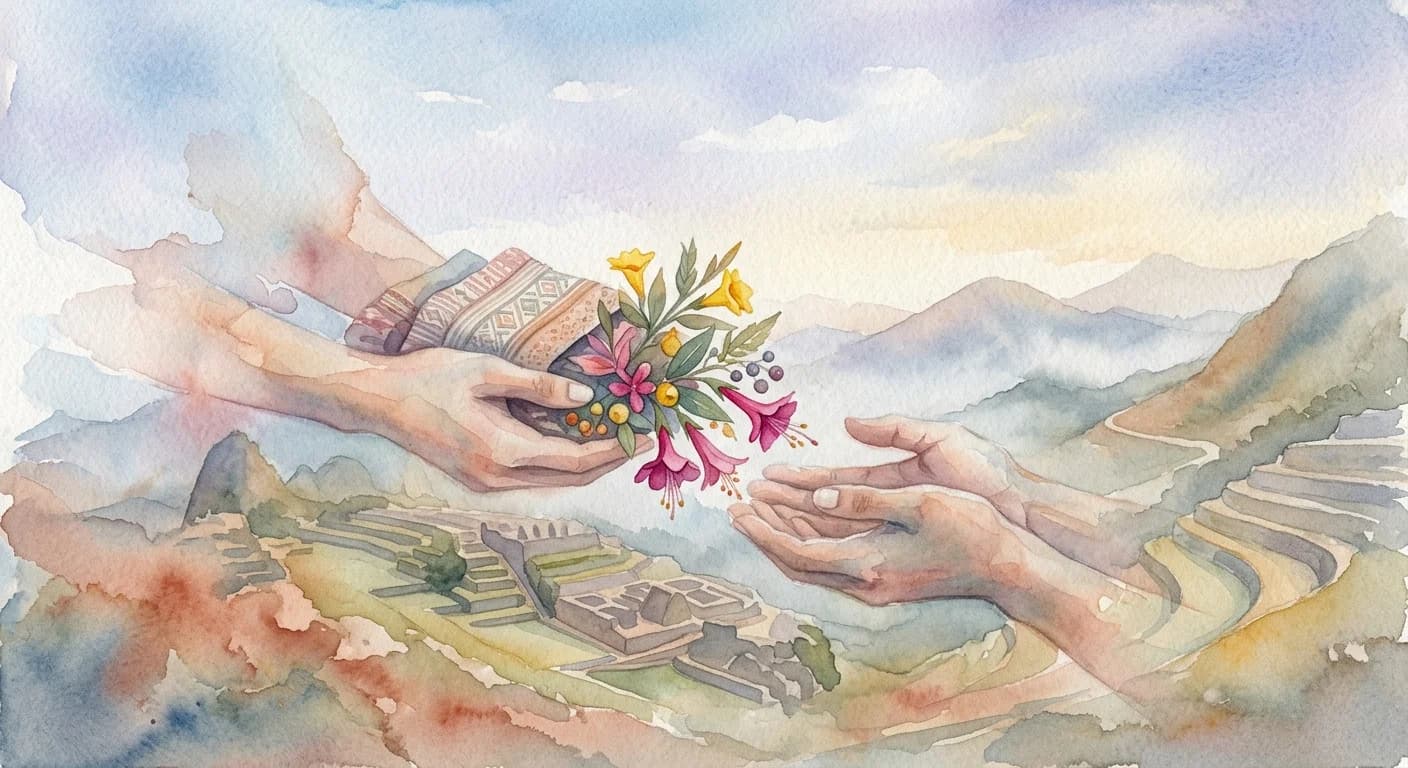
Ayni
/AHY-nee/
Meaning
Ayni is the lifeblood of Andean community, a sacred covenant of reciprocal exchange that weaves individuals into an unbreakable social fabric. It's not merely about fair trade, but a profound understanding that giving and receiving are two sides of the same sacred coin, ensuring collective flourishing. This principle permeates every aspect of life, from shared harvests to community celebrations, fostering deep interdependence and a reverence for the intricate balance between humanity and the natural world. Through Ayni, well-being is never an individual pursuit, but a communal achievement.
Literal Translation
Reciprocity, mutual help
The Story Behind the Word
The concept of Ayni is deeply rooted in the pre-Columbian agricultural societies of the Andes, where survival depended on collective effort and mutual support in a challenging high-altitude environment. The Inca Empire, in particular, formalized systems of reciprocity like 'minka' (communal labor for public works) and 'ayni' (reciprocal labor between families), demonstrating its foundational role in their sophisticated social structure. This word exists because it encapsulates the very essence of Andean worldview: an interconnected cosmos where humans, animals, plants, and even the mountains (apus) are engaged in a constant, dynamic exchange. It reveals a culture that prioritizes harmony, sustainability, and collective responsibility over individual accumulation, viewing life as a continuous cycle of giving and receiving. Ayni is not just an economic principle, but a spiritual one, reflecting the cosmic balance they strive to maintain.
Experience It
Harvesting Potatoes Together
When a family needs help harvesting their potato fields, neighbors arrive early, tools in hand, offering their labor without expectation of immediate payment. Later, when those neighbors require assistance with their own planting or roofing, the first family will reciprocate, ensuring everyone's needs are met through this balanced exchange of effort and goodwill.
Community Festival Preparations
For the annual village festival, one family might contribute a large sack of corn, another offers their skilled hands to decorate the communal hall, and a third prepares traditional chicha. Each contribution, though different, is seen as an equal part of the collective effort, strengthening community bonds and ensuring the celebration's success through Ayni.
The Deeper Meaning
Ayni unveils a profound ecocentric philosophy where humanity is not separate from nature but an integral part of its reciprocal cycles. It challenges individualistic paradigms by positing that true prosperity arises from collective well-being and a harmonious relationship with all living things. This worldview emphasizes balance, interdependence, and the understanding that every action creates a ripple effect, demanding mindful engagement with one's community and environment.
Did You Know?
Ayni extends beyond human interactions; many Andean people believe they practice Ayni with the 'Pachamama' (Mother Earth) by offering rituals and reverence in exchange for bountiful harvests.
How It's Used
Used to describe the principle of reciprocity in daily life, community projects, and social interactions.