Kawsay
/KOW-sai/
Meaning
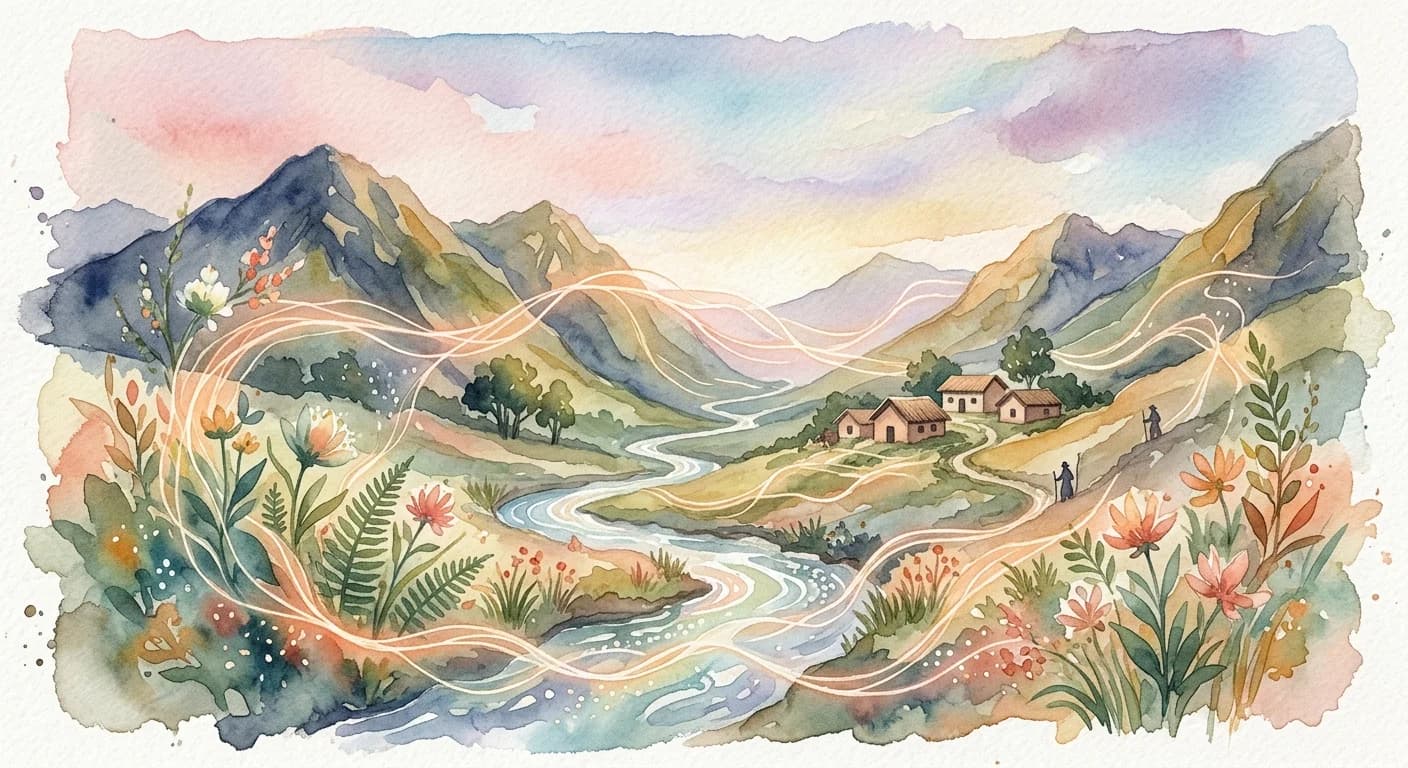
Kawsay is more than mere existence; it is the vibrant, pulsating life force that animates all things, from the smallest insect to the towering mountains and the celestial bodies. It represents a continuous, dynamic flow of interconnected energy that binds the cosmos, nature, and humanity into a single, sacred tapestry. This concept emphasizes an active engagement with the world, fostering harmony, reciprocity, and a profound respect for the inherent vitality in every element of creation.
Literal Translation
Life, to live, existence
The Story Behind the Word
The concept of Kawsay is deeply rooted in the Andean cosmovision, which predates and survived the Inca Empire, shaping the worldview of Quechua-speaking peoples for millennia. It reflects an animistic understanding where all elements of the natural world are imbued with spirit and life, not as passive objects but as active participants in a grand, interconnected system. This understanding underpins the principle of Ayni (reciprocity) and Pachamama (Mother Earth) reverence, as one's Kawsay is inextricably linked to the Kawsay of the community and the environment. The word's existence reveals a culture that perceives life not as an individual possession but as a shared, sacred energy that demands mindful stewardship and harmonious interaction, making humans an integral part, not masters, of the natural world.
Experience It
Harvesting with Respect
A Quechua farmer carefully tends to his potato fields, offering a small prayer of gratitude to Pachamama. He understands that the 'kawsay' of the soil and the plants is a gift, and by nurturing it, he ensures the 'kawsay' of his family and community will also thrive.
Community Celebration
During a village festival, elders speak of the collective 'kawsay' of their people, celebrating their shared history, resilience, and future generations. The vibrant music and communal dance are seen as expressions of this living, breathing energy that sustains them all.
The Deeper Meaning
Kawsay embodies a holistic, ecological philosophy where life is not compartmentalized but seen as an indivisible whole. It challenges anthropocentric views by placing humanity within, rather than above, the web of life, emphasizing an ethical responsibility to maintain balance and reciprocity with all living beings and the cosmos. This worldview promotes a profound sense of belonging and interconnectedness.
Did You Know?
The term 'Buen Vivir' or 'Sumak Kawsay' (Good Living) in modern political discourse directly translates to 'harmonious life' and is a post-colonial re-assertion of this ancient Andean philosophy.
How It's Used
Used in everyday conversation and philosophical discussions to refer to life, existence, and the state of being alive. It's often invoked in contexts related to nature, community well-being, and spiritual understanding.