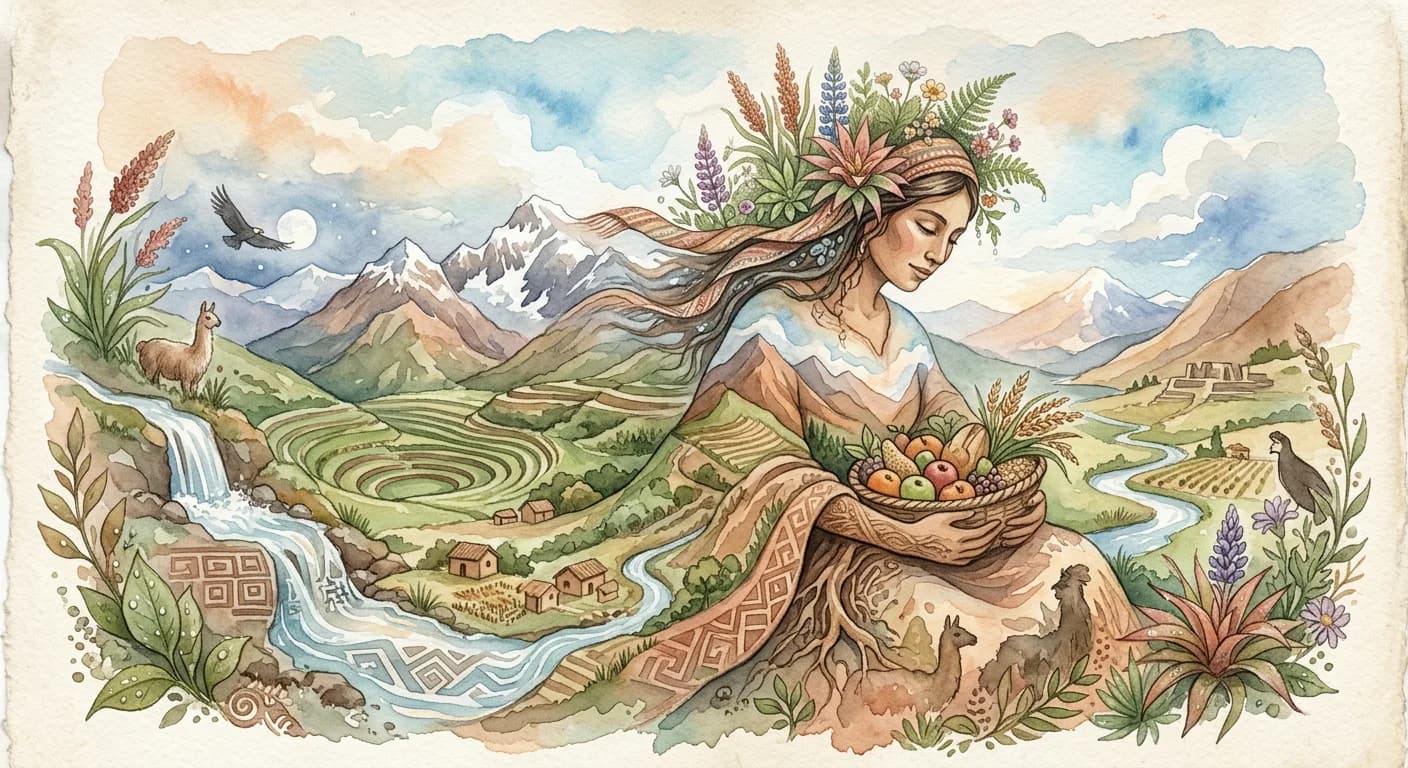
Pachamama
/PAH-chah-MAH-mah/
Meaning
Pachamama is far more than just "Mother Earth"; she is the living, breathing, divine feminine spirit of the cosmos, the generative force from which all life springs. She personifies the fertile land, the mountains, the rivers, and the very air, nurturing humanity and all beings with her boundless abundance. To the Andean peoples, she is a sacred being who demands respect, reciprocity, and gratitude, embodying the intricate web of existence that connects humans, nature, and the spiritual realm.
Literal Translation
Mother Earth / World Mother
The Story Behind the Word
The concept of Pachamama is foundational to Andean cosmology, predating the Inca Empire and enduring through colonial times to the present day. She represents the ultimate provider, a benevolent but powerful deity who governs fertility, harvests, and the well-being of communities. This worldview fosters a deep sense of ayni, or reciprocity, where humans are not masters of the earth but active participants in a symbiotic relationship. Offerings (pagapu) are made not out of fear, but as a sincere expression of gratitude and a way to maintain cosmic balance, ensuring her continued blessings for sustenance and health. This relationship shapes everything from agricultural practices to social structures, emphasizing community, sustainability, and profound reverence for the natural world.
Experience It
Harvest Blessing
As the golden quinoa fields swayed under the Andean sun, Maria poured a small libation of chicha onto the soil. "Pachamama, for this bountiful harvest, we thank you," she murmured, her hands gently caressing the earth, a silent promise of continued care and reverence.
New Home Offering
Before laying the first stone of their new home, old Mateo led his family in a small ceremony. They buried coca leaves and a silver coin in the ground, a humble offering to Pachamama, asking for her blessing and protection over their future dwelling and its inhabitants.
The Deeper Meaning
Pachamama embodies a profound ecological philosophy where humanity is intricately interwoven with nature, not separate from or superior to it. This concept reveals a worldview centered on balance, reciprocity, and a deep understanding of the interconnectedness of all life. It teaches that well-being, both individual and communal, is dependent on honoring and maintaining a harmonious relationship with the living Earth, fostering a sense of stewardship rather than dominion.
Did You Know?
In some Andean traditions, Pachamama is celebrated on August 1st, where families gather to offer food and drink to the earth, symbolically "feeding" her to ensure prosperity for the year.
How It's Used
Used in traditional Andean cultures to refer to the Earth as a living, divine entity, often invoked in ceremonies, prayers, and daily life, especially during planting and harvest seasons.