U.
HomeRegionsLanguagesEmotionsCollections
Find Your Word

“The limits of my language mean the limits of my world.”

— Ludwig Wittgenstein, Philosopher

Untranslatable

A curated collection of the world's most beautiful expressions—words that remind us language is humanity's greatest invention.

  • Home
  • Collections
  • Regions
  • Countries
  • Emotions
  • Tags
  • Contexts
  • Finder
  • Europe
  • Asia
  • Americas
  • Africa
  • Middle East
  • About
  • Contact
  • Privacy Policy
  • Terms of Service

2026 © Untranslatable. All rights reserved.

    /
    /
    1. Home
    2. /
    3. Americas
    4. /
    5. Killa
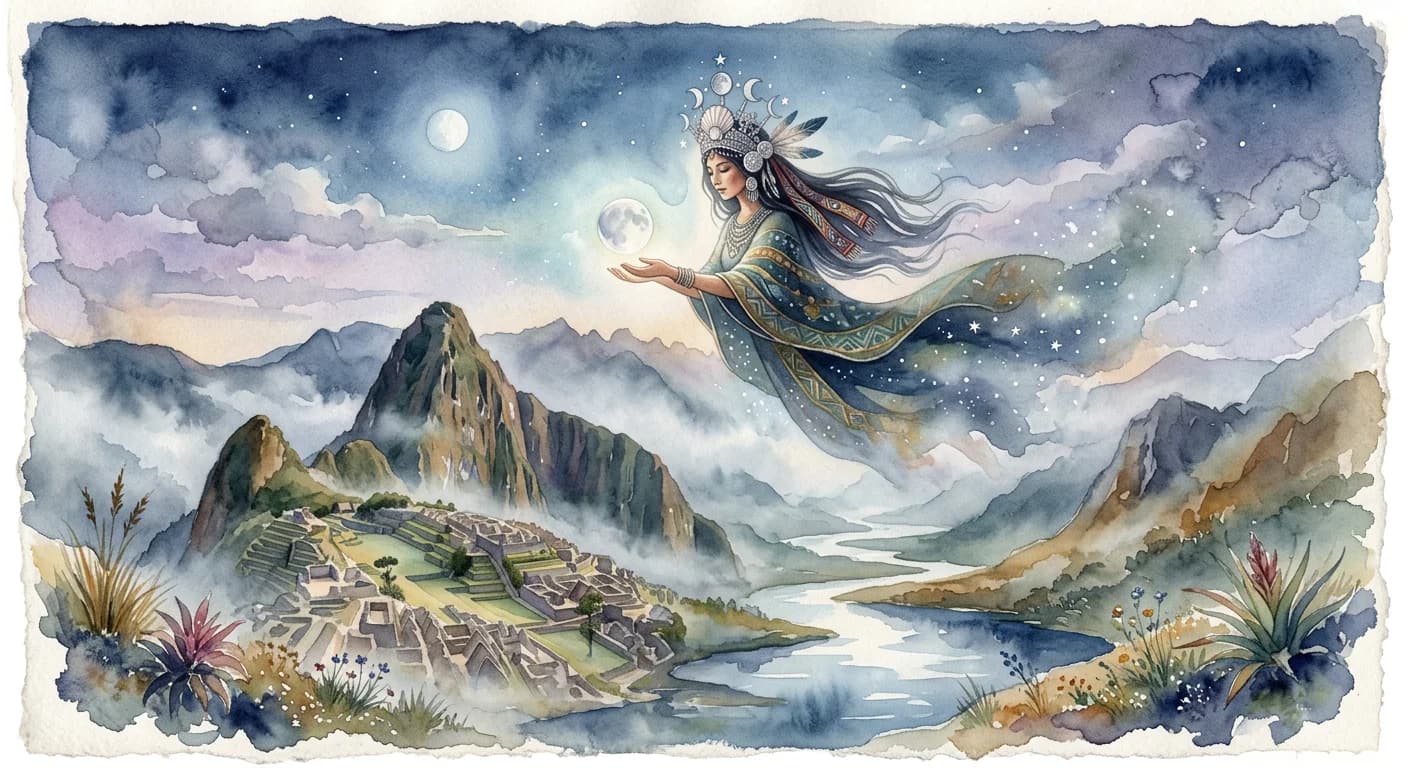
    Artistic representation of Killa
    Quechua•
    🇧🇴Bolivia🇪🇨Ecuador🇵🇪Peru

    Killa

    /KEE-yah/

    Meaning

    In Quechua, 'Killa' is far more than just the Moon; it embodies the profound feminine principle, the rhythmic dance of time, and the very pulse of life itself. It intricately connects to the agricultural cycles that sustain Andean communities and the broader natural world, evoking a gentle yet potent power. Killa represents mystery and the intuitive wisdom inherently linked to lunar phases, serving as a powerful deity within Andean cosmology that influences fertility, emotional states, and the well-being of the Earth.

    Literal Translation

    Moon

    The Story Behind the Word

    The concept of Killa is foundational to Andean cosmology, reflecting a worldview where the celestial and terrestrial are inextricably linked. For the Quechua people, the Moon (Killa) is not merely an inert satellite but a living, breathing deity – Mama Killa (Mother Moon). She is revered as the bringer of fertility, governing the growth of crops, the flow of water, and the reproductive cycles of all living beings. This reverence stems from centuries of observation of the Moon's influence on tides, planting seasons, and even human emotions. The existence of 'Killa' as a multifaceted term reveals a culture that perceives the universe as interconnected, where spiritual forces are active participants in daily life, and where feminine energy is recognized as a primary creative and nurturing power. It underscores a deep respect for natural rhythms and an understanding of the cosmos as a living entity.

    Experience It

    Planting by Killa's Light

    Old Man Pachacuti waits for the full Killa to sow his corn. He believes her gentle light and strong pull will bless the seeds, ensuring a bountiful harvest, just as his ancestors have done for generations.

    Killa's Emotional Influence

    Young Nuna feels a surge of creativity and introspection as the new Killa emerges. She attributes her changing moods and intuitive insights to the Moon's subtle yet powerful influence on her spirit.

    The Deeper Meaning

    Killa encapsulates a philosophical understanding of the universe as a dynamic interplay of complementary forces, where the feminine principle is not subordinate but equally powerful and life-giving. It highlights a cyclical view of time and existence, where life, death, and rebirth are natural phases, guided and influenced by cosmic rhythms. This perspective fosters a deep interconnectedness with nature and a reverence for its subtle yet profound influences on all life.

    Did You Know?

    In some Andean traditions, Killa is considered the wife of Inti (the Sun god), symbolizing the complementary balance of masculine and feminine energies essential for cosmic harmony.

    How It's Used

    Used to refer to the Moon, and in a broader sense, to concepts associated with the lunar deity, feminine energy, and natural cycles.

    Emotions
    serenity,wonder
    Contexts
    daily life,nature,seasons
    🇧🇴Bolivia🇪🇨Ecuador🇵🇪Peru

    by Sofia Rossi·Written Mar 10, 2026·Updated Apr 3, 2026

    Related Words

    Explore more
    Pura vidaSpanish

    More than just 'pure life,' "Pura vida" encapsulates a profound philosophy of embracing the present moment with unwavering optimism and gratitude. It's a daily commitment to finding joy in simple pleasures, accepting life's challenges with a positive spirit, and prioritizing well-being over material possessions. This ubiquitous phrase reflects a national identity built on resilience, community, and an deep appreciation for nature's bounty.

    MamihlapinatapaiYaghan

    Mamihlapinatapai encapsulates that profound, unspoken moment when two individuals lock eyes, each silently acknowledging a mutual desire or intention, yet both hesitate to be the first to act upon it. It's a delicate dance of anticipation, a shared gaze brimming with common understanding and a quiet longing for the other to break the ice. This intricate look carries the weight of a shared, uninitiated potential, a silent conversation where both parties are perfectly aware of what could happen, but neither makes the first move.

    TingoPascuense

    Tingo describes the subtle, insidious process of progressively appropriating a neighbor's belongings by habitually requesting to borrow them, only to 'forget' their return. It's not outright theft, but a slow, deliberate erosion of another's possessions, often under the guise of neighborly exchange. This gradual accumulation, piece by piece, ultimately results in a significant transfer of goods without any direct confrontation or formal acknowledgment of the loss. It speaks to a passive-aggressive form of acquisition, where social niceties are weaponized.

    ArbejdsroDanish

    Arbejdsro encapsulates the deep, almost meditative state of calm and unwavering focus achieved when one is completely undisturbed in their work. It's not merely the absence of noise, but a profound mental stillness that allows for uninterrupted flow, enabling deep concentration and peak productivity. This cherished Danish concept highlights the intrinsic value placed on creating an environment conducive to genuine engagement and satisfaction, where one can truly immerse themselves in their tasks without the constant pull of digital distractions or external demands.