U.
HomeRegionsLanguagesEmotionsCollections
Find Your Word

“The limits of my language mean the limits of my world.”

— Ludwig Wittgenstein, Philosopher

Untranslatable

A curated collection of the world's most beautiful expressions—words that remind us language is humanity's greatest invention.

  • Home
  • Collections
  • Regions
  • Countries
  • Emotions
  • Tags
  • Contexts
  • Finder
  • Europe
  • Asia
  • Americas
  • Africa
  • Middle East
  • About
  • Contact
  • Privacy Policy
  • Terms of Service

2026 © Untranslatable. All rights reserved.

    /
    /
    1. Home
    2. /
    3. Americas
    4. /
    5. Kay Pacha
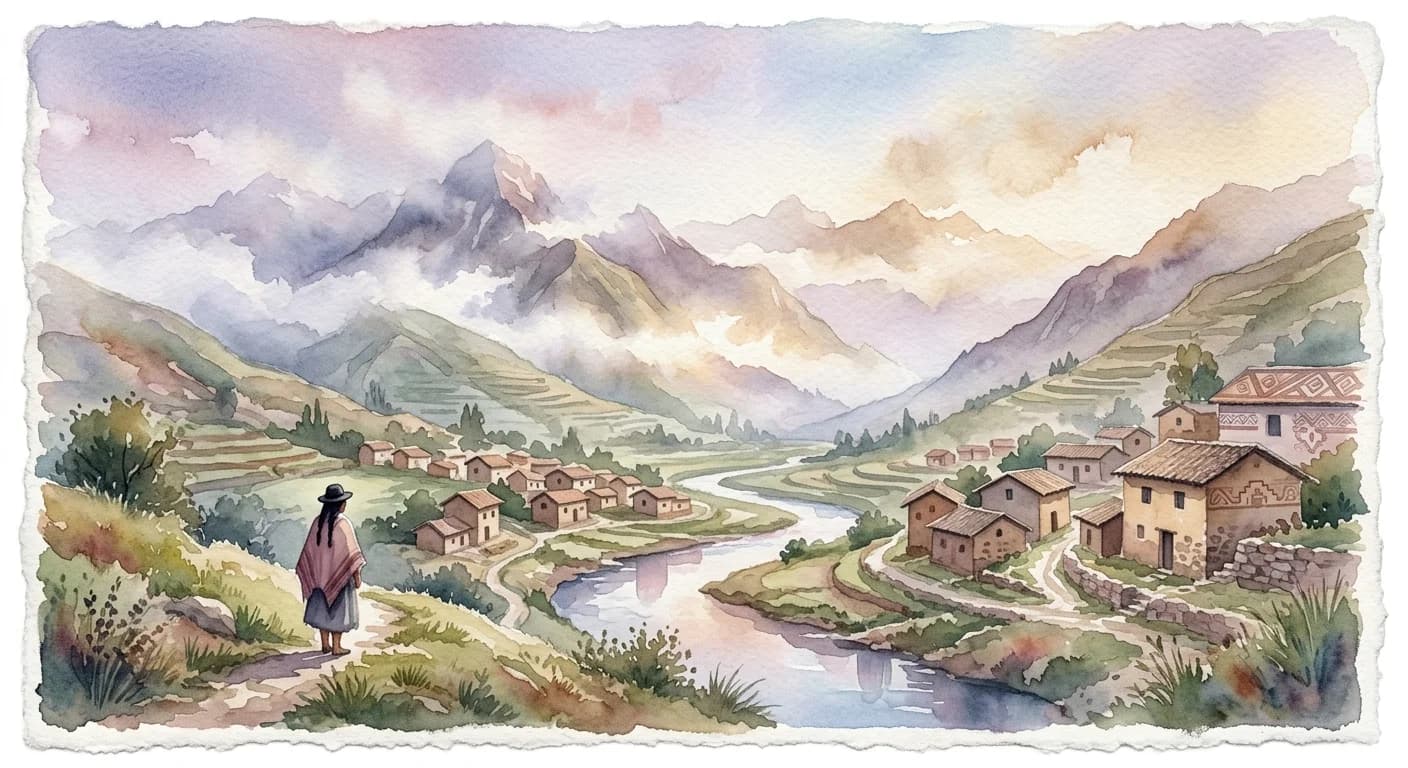
    Artistic representation of Kay Pacha
    Quechua•
    🇧🇴Bolivia🇪🇨Ecuador🇵🇪Peru

    Kay Pacha

    /KAI PAH-cha/

    Meaning

    Kay Pacha is the vibrant, tangible realm where human life unfolds, a dynamic tapestry woven with daily experiences, relationships, and the immediate challenges of existence. It is the 'here and now,' a sacred space where the Andean people interact directly with the natural world – the mountains, rivers, and fertile earth that sustain them. This concept underscores the profound interconnectedness of all living things within this present reality, emphasizing the vital importance of reciprocity (Ayni) and respectful stewardship to maintain cosmic balance.

    Literal Translation

    Middle World / Present World

    The Story Behind the Word

    The Andean cosmovision is fundamentally tripartite, dividing the universe into three interconnected realms: Hanan Pacha (the upper world, celestial), Ukhu Pacha (the inner/lower world, telluric), and Kay Pacha (the middle world, our earthly realm). Kay Pacha is not merely a physical space but a living entity, imbued with spirit and energy. Its existence reflects an ancient understanding that humans are not separate from nature but an integral part of a vast, animate cosmos. The Quechua people traditionally believe that actions taken in Kay Pacha directly impact the balance and well-being of all three realms, necessitating a deep sense of responsibility, gratitude, and a constant striving for harmony with Pachamama (Mother Earth) and the Apus (mountain spirits). This worldview fosters a profound respect for their environment, viewing it as a source of life and wisdom, rather than merely a resource to be exploited.

    Experience It

    Ayni in the Fields

    During harvest season, a Quechua family works tirelessly in their potato fields, sharing tools and labor with their neighbors. This communal effort, rooted in the principle of Ayni, is a direct manifestation of living in harmony with Kay Pacha, ensuring collective well-being and acknowledging their deep connection to the land.

    Offerings to Pachamama

    Before planting, a farmer carefully prepares a small offering of coca leaves, chicha, and seeds, burying it in the earth. This ritual is a heartfelt acknowledgment and request for blessing from Pachamama, recognizing her as the life-giver of Kay Pacha and ensuring a reciprocal relationship for a bountiful harvest.

    The Deeper Meaning

    Kay Pacha embodies a philosophy of active engagement and ethical responsibility within one's lived environment. It rejects detachment, instead promoting the idea that our existence is deeply intertwined with the health and balance of the natural and spiritual worlds. This encourages a worldview centered on reciprocity, community, and a profound reverence for the earth and all its inhabitants as integral parts of a single, living system.

    Did You Know?

    While often translated as 'middle world,' Kay Pacha is more accurately understood as the 'this world' or 'present world,' emphasizing its immediate, tangible reality.

    How It's Used

    Used in philosophical and spiritual discussions within Andean cultures to describe the human realm and its place in the broader cosmos.

    Emotions
    belonging,peace,wonder
    Contexts
    family,nature,work
    🇧🇴Bolivia🇪🇨Ecuador🇵🇪Peru

    by Kwame Nkrumah·Written Mar 10, 2026·Updated Apr 3, 2026

    Related Words

    Explore more
    Dolce far nienteItalian

    Dolce far niente captures the profound joy and effortless pleasure derived from simply existing without obligation or purpose. It's the art of savoring moments of pure, unadulterated idleness – lying in the sun, watching the clouds drift, or enjoying a leisurely coffee – not as a break from work, but as a valuable state in itself. This 'sweetness of doing nothing' is a conscious embrace of stillness and contentment, allowing the soul to breathe and the senses to fully engage with the present.

    SobremesaSpanish

    Sobremesa is the cherished, often extended period immediately following a meal, particularly lunch or dinner, where diners remain seated at the table to enjoy conversation, coffee, and digest not just the food, but the company itself. It’s a dedicated time for unhurried social bonding, storytelling, and shared laughter, transforming a simple meal into a profound communal experience. Far from just clearing the dishes, sobremesa is an integral part of Spanish social life, often lasting for hours.

    Pura vidaSpanish

    More than just 'pure life,' "Pura vida" encapsulates a profound philosophy of embracing the present moment with unwavering optimism and gratitude. It's a daily commitment to finding joy in simple pleasures, accepting life's challenges with a positive spirit, and prioritizing well-being over material possessions. This ubiquitous phrase reflects a national identity built on resilience, community, and an deep appreciation for nature's bounty.

    MamihlapinatapaiYaghan

    Mamihlapinatapai encapsulates that profound, unspoken moment when two individuals lock eyes, each silently acknowledging a mutual desire or intention, yet both hesitate to be the first to act upon it. It's a delicate dance of anticipation, a shared gaze brimming with common understanding and a quiet longing for the other to break the ice. This intricate look carries the weight of a shared, uninitiated potential, a silent conversation where both parties are perfectly aware of what could happen, but neither makes the first move.