Ayllu
/EYE-yoo/
Meaning
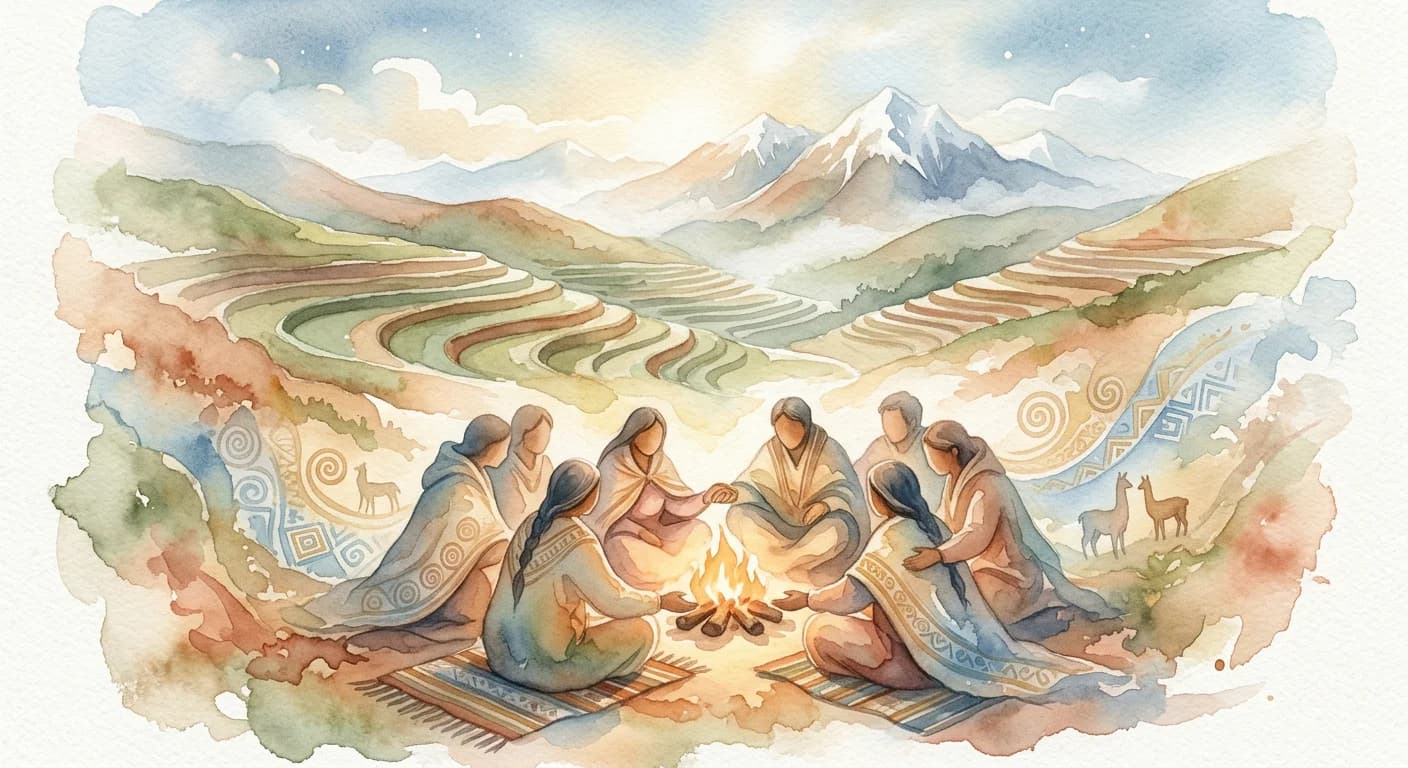
An Ayllu is far more than just a family; it's a vibrant, interconnected community in the Andean highlands, forged by shared ancestry, collective land ownership, and an intricate web of reciprocal obligations. This profound social structure extends outwards from immediate kin to encompass neighbors and the wider village, creating a robust support system essential for survival in challenging environments. It embodies a deep-seated commitment to cooperation, mutual aid, and collective well-being, where individual prosperity is inextricably linked to the prosperity of the whole.
Literal Translation
family, lineage, community
The Story Behind the Word
The Ayllu is the ancient cornerstone of Andean civilization, predating and enduring the Inca Empire, deeply rooted in the agricultural necessities of high-altitude living. Its existence reflects a philosophy where humanity is part of a larger ecological and social cosmos, not separate from it. The concept of 'ayni' (reciprocity) is central, dictating that favors and labor are always returned, ensuring collective survival and mitigating risks in a harsh environment. This shared responsibility for land, resources, and each other fosters a profound sense of belonging and collective identity, where individual autonomy is balanced with communal obligations. The Ayllu is not just a social unit; it's a worldview that prioritizes harmony, balance, and the well-being of the collective over individualistic pursuits, reflecting a deep respect for ancestral traditions and the Pachamama (Mother Earth).
Experience It
Harvesting the Fields
During potato harvest season, Don Pedro's family alone couldn't manage the expansive terraces. True to the Ayllu spirit, neighbors arrived early, lending their hands in a communal effort, knowing that when their own harvest came, Don Pedro and others would reciprocate, ensuring everyone's bounty.
Building a New Home
When a young couple in the village decided to build their house, the entire Ayllu mobilized. Men helped with construction, women prepared food, and children gathered materials. It wasn't a favor; it was an expected, joyous collective endeavor, strengthening their communal bonds.
The Deeper Meaning
The Ayllu encapsulates an Andean cosmovision where life is understood as an intricate web of relationships and mutual dependencies. It challenges Western notions of individualism, positing that true flourishing arises from collective solidarity, reciprocal care, and a deep, respectful connection to ancestral lands. It reveals a philosophy where the community itself is a living, breathing entity, sustained by the constant flow of 'ayni' (reciprocity) and 'minka' (communal work), ensuring balance and continuity across generations.
Did You Know?
Even today, many rural Andean communities legally recognize and operate under Ayllu structures, demonstrating the enduring power and adaptability of this ancient social organization.
How It's Used
Used to describe the traditional social structure and kinship groups in the Andean regions, emphasizing community, shared land, and mutual support.