U.
HomeRegionsLanguagesEmotionsCollections
Find Your Word

“The limits of my language mean the limits of my world.”

— Ludwig Wittgenstein, Philosopher

Untranslatable

A curated collection of the world's most beautiful expressions—words that remind us language is humanity's greatest invention.

  • Home
  • Collections
  • Regions
  • Countries
  • Emotions
  • Tags
  • Contexts
  • Finder
  • Europe
  • Asia
  • Americas
  • Africa
  • Middle East
  • About
  • Contact
  • Privacy Policy
  • Terms of Service

2026 © Untranslatable. All rights reserved.

    /
    /
    1. Home
    2. /
    3. Americas
    4. /
    5. Khipu
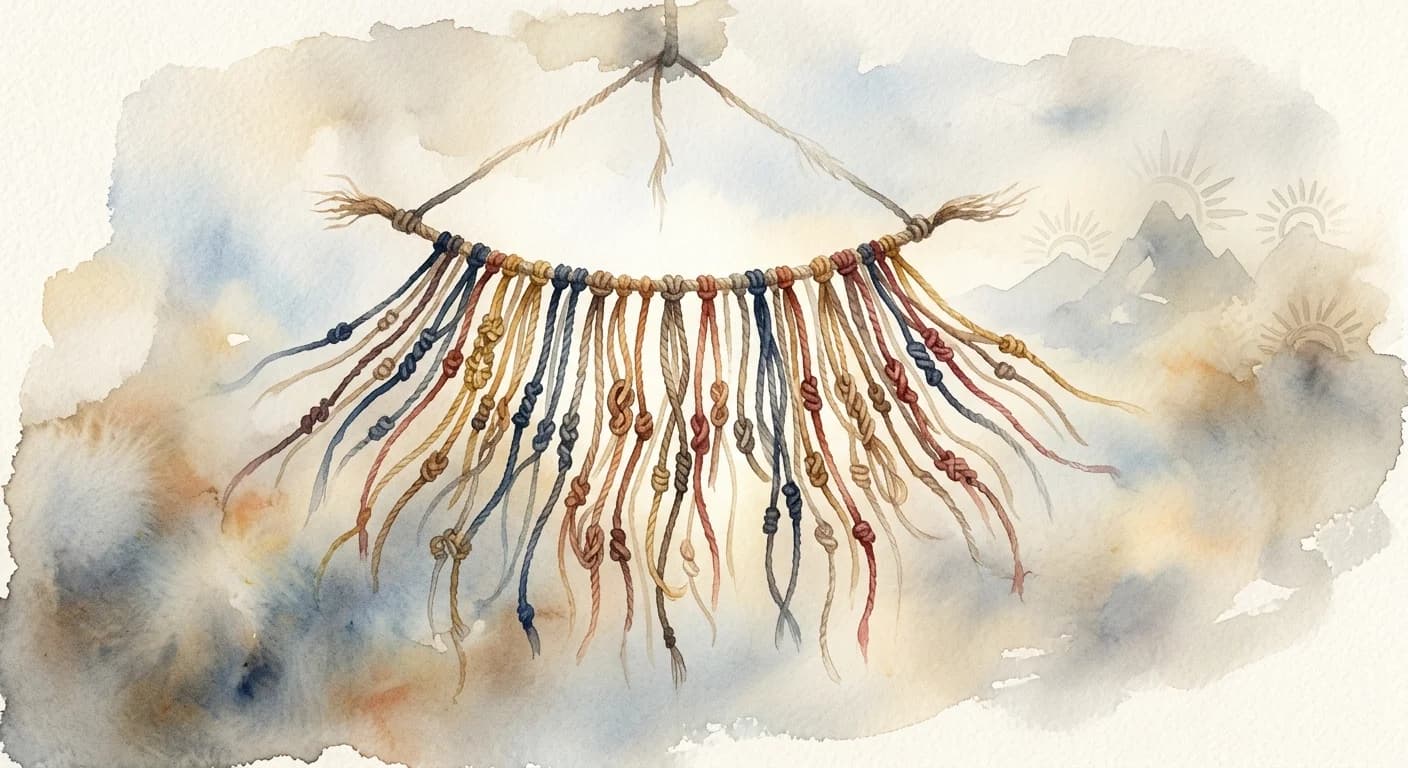
    Artistic representation of Khipu
    Quechua•
    🇧🇴Bolivia🇵🇪Peru

    Khipu

    /KEE-poo/

    Meaning

    Khipu refers to the remarkable system of knotted cords employed by the Inca Empire and earlier Andean civilizations for an astonishing array of record-keeping and communication. Far beyond simple numerical tallies, these intricate devices encoded complex information through the color, fiber type, knot styles, and spatial arrangement of their cords. Each khipu represented a sophisticated, tactile document, embodying administrative data, historical narratives, census figures, and even astronomical observations, making it a cornerstone of Andean intellectual and governmental life.

    Literal Translation

    Knot

    The Story Behind the Word

    The existence of khipu highlights the Inca's genius for organization and their profound understanding of information management without a phonetic writing system. It reflects a culture that valued precision, memory, and the physical embodiment of data. Khipu were central to maintaining the vast Inca empire, facilitating everything from tax collection and resource distribution to the recounting of royal lineages and mythological tales. Their creation and interpretation were the domain of specialized khipukamayuq ('khipu-keepers'), revered figures who held immense power as the guardians of collective memory and state knowledge. This system underscores a worldview where knowledge was not solely abstract, but also tangible and deeply intertwined with the physical world through the manipulation of threads.

    Experience It

    Imperial Census Record

    An Inca official unrolls a complex khipu before the Sapa Inca, its main cord thick with numerous pendant and subsidiary cords. Each knot, color, and ply of fiber meticulously represents populations, ages, and genders across different ayllus, providing a comprehensive demographic snapshot of the empire for taxation and labor allocation.

    Sharing a Story

    A seasoned khipukamayuq sits with younger apprentices, his fingers tracing the knots of an ancient khipu. He doesn't just read numbers; he recites the epic tale of a past emperor's conquests, the specific knots and cord arrangements triggering vivid memories and narratives passed down through generations, effectively 'reading' history from the threads.

    The Deeper Meaning

    The khipu reveals an Andean philosophical perspective where knowledge and memory are not solely confined to abstract symbols or spoken words, but can be physically embodied and manipulated. It suggests a profound respect for materiality as a vehicle for complex thought and a deep appreciation for the tactile and visual dimensions of information, challenging Western notions of literacy and record-keeping.

    Did You Know?

    While many numerical khipu have been deciphered, the possible existence of 'narrative khipu' remains a tantalizing mystery, suggesting a form of three-dimensional writing yet to be fully understood.

    How It's Used

    Used to refer to the physical knotted cord devices and the information system they represented.

    Emotions
    gratitude,wonder
    Contexts
    conversation,history,work
    🇧🇴Bolivia🇵🇪Peru

    by Dr. Kenji Tanaka·Written Mar 10, 2026·Updated Mar 27, 2026

    Related Words

    Explore more
    Pura vidaSpanish

    More than just 'pure life,' "Pura vida" encapsulates a profound philosophy of embracing the present moment with unwavering optimism and gratitude. It's a daily commitment to finding joy in simple pleasures, accepting life's challenges with a positive spirit, and prioritizing well-being over material possessions. This ubiquitous phrase reflects a national identity built on resilience, community, and an deep appreciation for nature's bounty.

    MamihlapinatapaiYaghan

    Mamihlapinatapai encapsulates that profound, unspoken moment when two individuals lock eyes, each silently acknowledging a mutual desire or intention, yet both hesitate to be the first to act upon it. It's a delicate dance of anticipation, a shared gaze brimming with common understanding and a quiet longing for the other to break the ice. This intricate look carries the weight of a shared, uninitiated potential, a silent conversation where both parties are perfectly aware of what could happen, but neither makes the first move.

    TingoPascuense

    Tingo describes the subtle, insidious process of progressively appropriating a neighbor's belongings by habitually requesting to borrow them, only to 'forget' their return. It's not outright theft, but a slow, deliberate erosion of another's possessions, often under the guise of neighborly exchange. This gradual accumulation, piece by piece, ultimately results in a significant transfer of goods without any direct confrontation or formal acknowledgment of the loss. It speaks to a passive-aggressive form of acquisition, where social niceties are weaponized.

    SamfundssindDanish

    Samfundssind is the profound, almost spiritual, commitment to the collective good that transcends individual desires. It's a deeply ingrained societal ethos where citizens instinctively understand their role in maintaining the health and harmony of the community, especially during challenges. This isn't just about following rules; it's an active, empathic engagement with society's needs, fostering a powerful sense of shared destiny and mutual care that underpins Danish social cohesion.