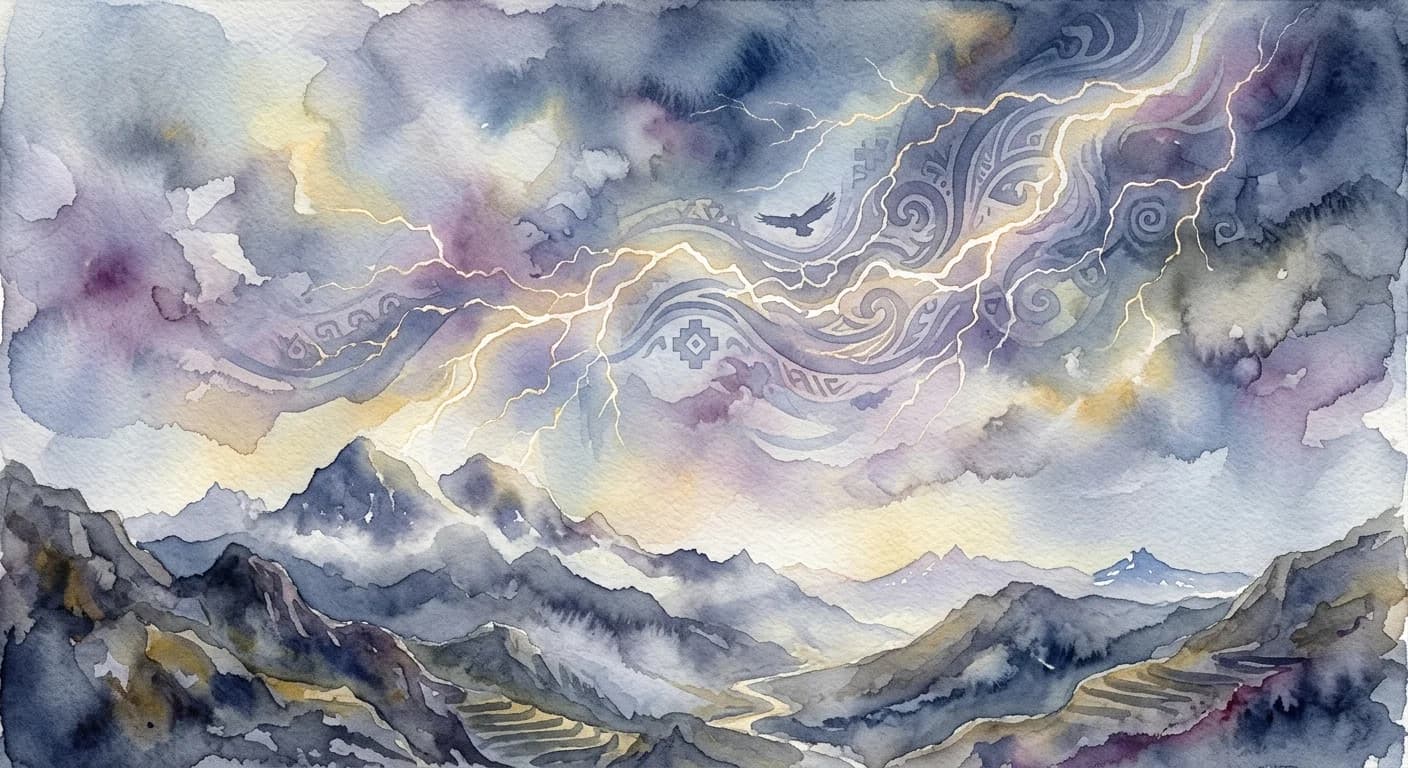
Illapa
/ee-LAH-pah/
Meaning
Illapa is a powerful Quechua term embodying the raw, untamed force of thunder and lightning, far exceeding a mere weather phenomenon. It represents the cosmic energy and divine power that orchestrates the natural world, particularly vital for the life-giving rains crucial to Andean agriculture. This concept invokes a profound sense of reverence and respect for nature's might, reflecting a deep spiritual connection to the earth and sky.
Literal Translation
thunder, lightning, storm
The Story Behind the Word
In Andean cosmology, Illapa is not just a meteorological event but often personified as a potent deity, one of the most significant alongside Inti (Sun) and Pachamama (Mother Earth). This reverence stems from the direct impact of storms on the agricultural cycles that sustain Andean communities. Illapa's destructive power, with its deafening thunder and searing lightning, is balanced by its life-giving aspect, bringing the rains essential for crops like maize and potatoes. This dual nature reflects the Andean worldview that creation and destruction are intertwined, and that all natural forces, even the most fearsome, are part of a sacred order. Rituals and offerings were, and in some areas still are, made to Illapa to ensure favorable weather and abundant harvests, highlighting the deep interdependency between humanity and the natural world.
Experience It
A Farmer's Prayer
As the dry season stretched endlessly, the old farmer looked to the darkening eastern sky. "Oh, great Illapa," he murmured, clasping his hands, "send us your life-giving waters, that our fields may flourish once more and our children not starve."
Mountain Thunderstorm
A sudden, deafening crack echoed through the valley, followed by a brilliant flash that momentarily blinded the travelers. "Illapa is angry today," whispered the guide, pulling his poncho tighter, a mix of fear and awe in his eyes as the downpour began.
The Deeper Meaning
Illapa reveals an Andean philosophy where nature is not merely a resource but a living, divine entity. The capricious yet essential forces of the cosmos are revered, demonstrating a worldview that emphasizes balance, interdependence, and a profound respect for the powerful, sometimes fearsome, rhythms of the natural world, rather than human dominance over it.
Did You Know?
Illapa was sometimes depicted as a warrior god, carrying a war club in one hand and a sling in the other, symbolizing his power to hurl thunderbolts and unleash storms.
How It's Used
Used to refer to thunder and lightning, often personified as a deity or sacred force in Andean cosmology and mythology. It is invoked in prayers and discussions related to weather, agriculture, and the divine.