U.
HomeRegionsLanguagesEmotionsCollections
Find Your Word

“The limits of my language mean the limits of my world.”

— Ludwig Wittgenstein, Philosopher

Untranslatable

A curated collection of the world's most beautiful expressions—words that remind us language is humanity's greatest invention.

  • Home
  • Collections
  • Regions
  • Countries
  • Emotions
  • Tags
  • Contexts
  • Finder
  • Europe
  • Asia
  • Americas
  • Africa
  • Middle East
  • About
  • Contact
  • Privacy Policy
  • Terms of Service

2026 © Untranslatable. All rights reserved.

    /
    /
    1. Home
    2. /
    3. Americas
    4. /
    5. Pukyu
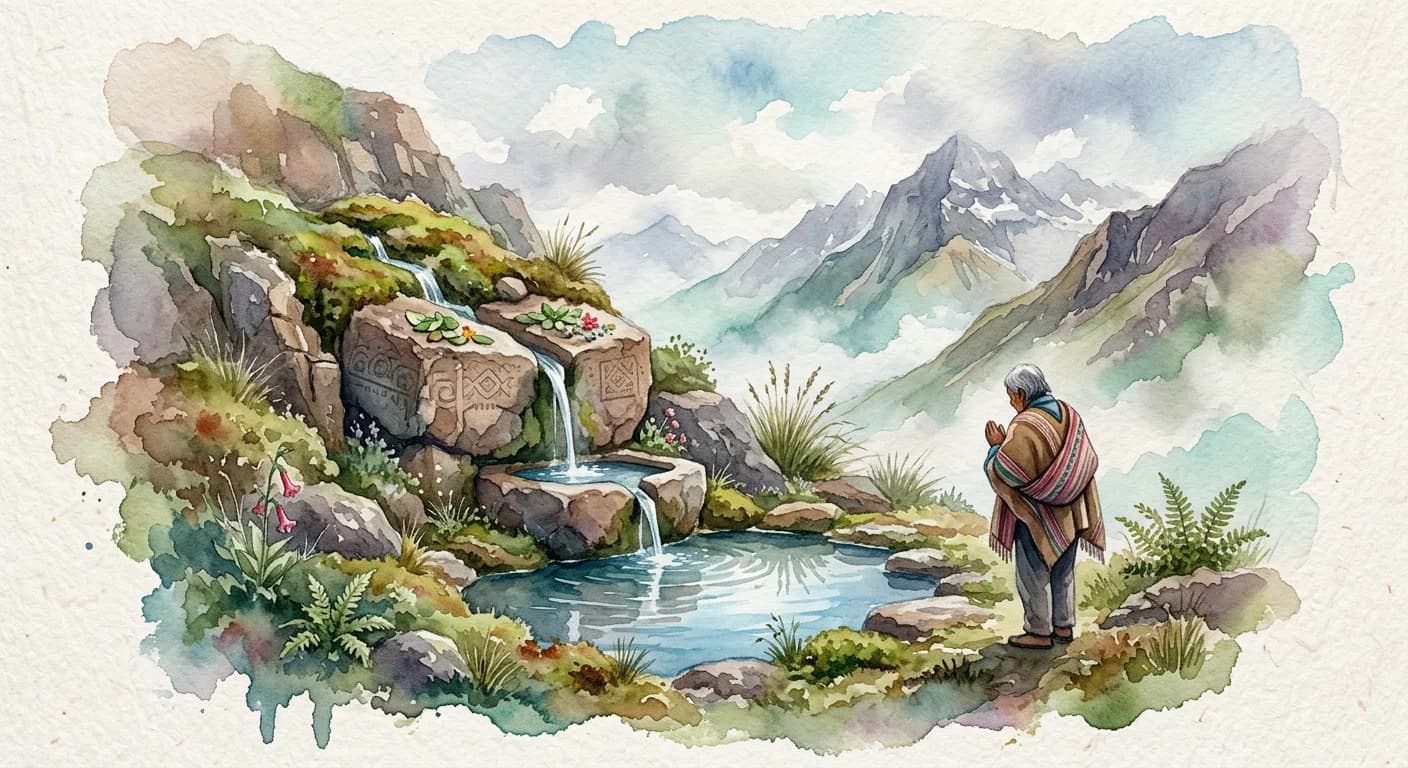
    Artistic representation of Pukyu
    Quechua•
    🇧🇴Bolivia🇪🇨Ecuador🇵🇪Peru

    Pukyu

    /POO-kyoo/

    Meaning

    Pukyu refers to a natural spring, a vital artery of the earth where life-giving water emerges, often nestled within the rugged Andean landscape. It's more than just a geographical feature; it embodies purity, sustenance, and a profound connection to the Pachamama (Mother Earth). This term encapsulates the sacredness indigenous communities attribute to these water sources, recognizing them as essential for the survival and spiritual well-being of all living things, a true font of existence in a challenging environment.

    Literal Translation

    Spring, source of water

    The Story Behind the Word

    The existence of 'pukyu' in Quechua reflects a worldview where nature is imbued with spirit and sacredness. For Andean communities, water is not merely a resource but a living entity, a gift from the Apus (mountain spirits) and Pachamama. Pukyu are often sites of ritual offerings and ceremonies, a place to give thanks and ask for continued blessings, underscoring the reciprocal relationship between humans and the natural world. This word reveals a deep ecological wisdom, where the health of the community is intrinsically linked to the health and abundance of its water sources. The reverence for pukyu is a legacy of ancient Inca and pre-Inca beliefs, where water deities and fertility cults were central to their cosmology, ensuring agricultural prosperity and human survival in high-altitude environments.

    Experience It

    Pilgrimage to the Sacred Pukyu

    A family embarks on a journey to the highest pukyu in their valley, carrying coca leaves and chicha. They offer their gifts to the bubbling spring, asking for good health and bountiful harvests, their voices echoing in the crisp mountain air.

    Life-Giving Waters

    During a harsh dry season, the villagers gather at the steadfast pukyu, its clear waters still flowing steadily. Children play nearby, while elders share stories of how this particular spring has sustained their ancestors for generations, a constant source of hope.

    The Deeper Meaning

    The concept of 'pukyu' reveals an Andean philosophy of interconnectedness and reverence for life. It highlights the belief that existence is sustained by the earth's vital forces, particularly water, which is seen as a conduit for spiritual energy and a symbol of fertility. This worldview emphasizes reciprocity and gratitude, positioning humanity not as a conqueror of nature, but as an integral part of a sacred, living system.

    Did You Know?

    Many ancient Incan and pre-Incan agricultural terraces and settlements were strategically built around pukyu, demonstrating their sophisticated understanding of hydrology and resource management.

    How It's Used

    Used to refer to natural springs, water sources, or fountains, especially in rural or mountainous areas.

    Emotions
    gratitude,peace,wonder
    Contexts
    nature,seasons,travel
    🇧🇴Bolivia🇪🇨Ecuador🇵🇪Peru

    by Anya Petrova·Written Mar 10, 2026·Updated Apr 3, 2026

    Related Words

    Explore more
    Dolce far nienteItalian

    Dolce far niente captures the profound joy and effortless pleasure derived from simply existing without obligation or purpose. It's the art of savoring moments of pure, unadulterated idleness – lying in the sun, watching the clouds drift, or enjoying a leisurely coffee – not as a break from work, but as a valuable state in itself. This 'sweetness of doing nothing' is a conscious embrace of stillness and contentment, allowing the soul to breathe and the senses to fully engage with the present.

    Pura vidaSpanish

    More than just 'pure life,' "Pura vida" encapsulates a profound philosophy of embracing the present moment with unwavering optimism and gratitude. It's a daily commitment to finding joy in simple pleasures, accepting life's challenges with a positive spirit, and prioritizing well-being over material possessions. This ubiquitous phrase reflects a national identity built on resilience, community, and an deep appreciation for nature's bounty.

    MamihlapinatapaiYaghan

    Mamihlapinatapai encapsulates that profound, unspoken moment when two individuals lock eyes, each silently acknowledging a mutual desire or intention, yet both hesitate to be the first to act upon it. It's a delicate dance of anticipation, a shared gaze brimming with common understanding and a quiet longing for the other to break the ice. This intricate look carries the weight of a shared, uninitiated potential, a silent conversation where both parties are perfectly aware of what could happen, but neither makes the first move.

    TingoPascuense

    Tingo describes the subtle, insidious process of progressively appropriating a neighbor's belongings by habitually requesting to borrow them, only to 'forget' their return. It's not outright theft, but a slow, deliberate erosion of another's possessions, often under the guise of neighborly exchange. This gradual accumulation, piece by piece, ultimately results in a significant transfer of goods without any direct confrontation or formal acknowledgment of the loss. It speaks to a passive-aggressive form of acquisition, where social niceties are weaponized.