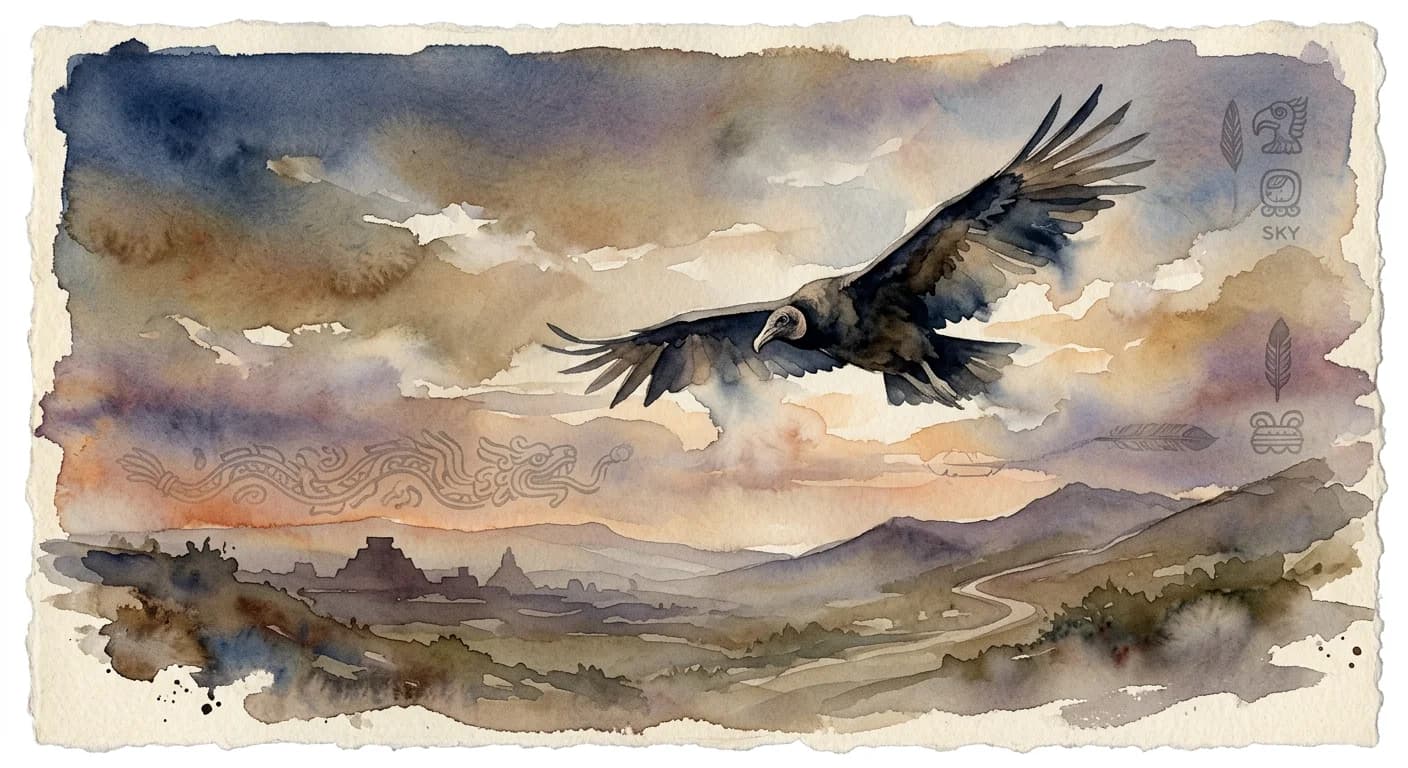
Cozcacuauhtli
/kos-kah-KWAH-tlee/
Meaning
Cozcacuauhtli transcends a mere zoological identification; it embodies the majestic American black vulture, a revered entity in Aztec cosmology. This formidable bird was perceived as a divine messenger, a vital conduit bridging the terrestrial realm with the sacred and often fearsome spiritual planes. Its presence, frequently associated with death, sacrifice, and the underworld's mysteries, simultaneously heralded purification and the profound, ceaseless cycle of life and rebirth. The term thus encapsulates a deep reverence for the natural world, recognizing its intrinsic spiritual power and interconnectedness in a way that defies simple English translation.
Literal Translation
Yellow-ringed vulture/king vulture
The Story Behind the Word
The cozcacuauhtli's significance in Aztec culture stems from a worldview that saw the natural world as deeply intertwined with the divine. Vultures, as scavengers, played a crucial role in the ecosystem, consuming carrion and thus preventing disease. This act of 'cleaning' the world was interpreted spiritually as purification, linking the bird to transformative processes, death, and regeneration. Its ability to soar high above also positioned it as an intermediary, capable of traversing the layers of the cosmos—earth, sky, and underworld. The Aztec calendar, specifically the 16th day sign 'Cozcacuauhtli,' further cemented its importance, associating it with wisdom, old age, and the gathering of knowledge. This word exists because the Aztecs observed nature with profound attention, imbuing every creature, especially those with visible roles in life and death cycles, with symbolic and religious meaning, reflecting a holistic understanding of existence.
Experience It
A Sacred Omen
As the ritual fire smoldered, a lone cozcacuauhtli circled high above the temple pyramid. The high priest, eyes fixed on its silent flight, declared it a favorable omen for the upcoming harvest, interpreting its presence as the gods' acknowledgement of their offerings, promising a cycle of renewal.
Storytelling at Dusk
Grandmother Xochitl recounted tales of the underworld to her grandchildren by the flickering hearth. She described the cozcacuauhtli as the psychopomp, guiding the spirits of the departed, its broad wings carrying them across the dark rivers to Mictlan, ensuring their journey was complete and their essence purified.
The Deeper Meaning
This word reveals an Aztec philosophical perspective where death is not an end but a transformative phase, integral to the cosmic order of renewal. The cozcacuauhtli, by consuming what ceases to live, facilitates the return of energy to the earth, embodying the cyclical nature of existence and the essential balance between destruction and creation. It underscores a worldview that finds sacred meaning in processes often considered grotesque by other cultures, valuing their role in maintaining equilibrium.
Did You Know?
The 'yellow-ringed' aspect of its literal translation likely refers to the King Vulture (Sarcoramphus papa), which has a distinctive colorful wattle, rather than the American Black Vulture, highlighting potential ancient taxonomic distinctions.
How It's Used
The term 'cozcacuauhtli' is used primarily in academic and historical contexts when discussing Aztec culture, mythology, and zoology. It may appear in texts referencing deities, rituals, or the natural environment of ancient Mesoamerica.