Tzitzimitl
/tsee-tsee-MEET-l/
Meaning
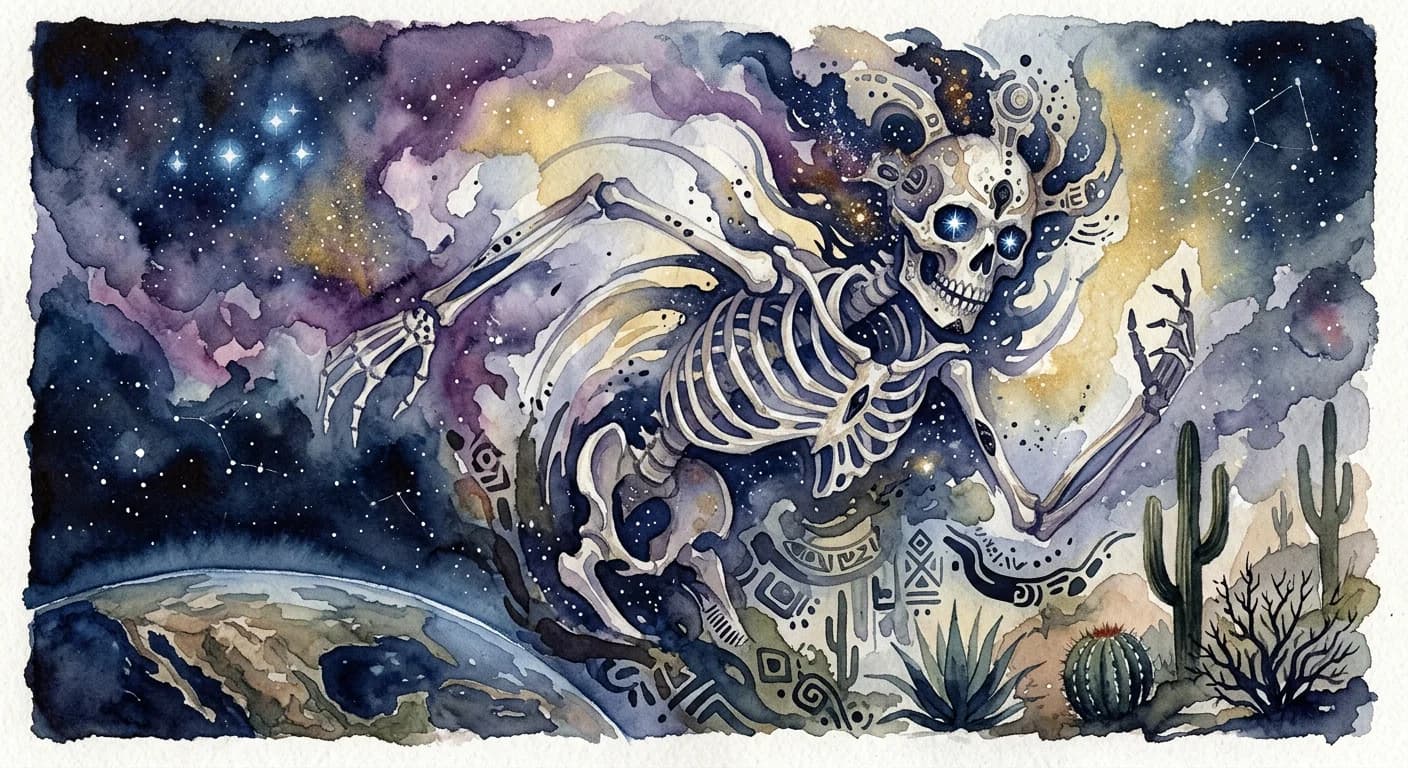
Tzitzimitl refers to a terrifying class of skeletal female deities in Aztec cosmology, often depicted with gaping mouths, clawed hands, and adorned with symbols of death and stars. These formidable beings were believed to inhabit the celestial darkness, descending to Earth during cosmic disruptions like solar eclipses to devour humanity and plunge the world into eternal night. They embody the primal fears of cosmic chaos, death, and the destructive potential inherent even in the divine, challenging human comprehension of existence's cyclical, often terrifying, nature.
Literal Translation
Skeletal women/demons
The Story Behind the Word
The Tzitzimitl are not merely monsters; they are crucial figures in Aztec eschatology and cosmology, reflecting a profound understanding of the universe's precarious balance. Their existence underscores the Aztec belief in a cosmos constantly threatened by destruction and requiring human intervention (through sacrifice) to maintain order. They represent the ultimate 'other' – the chaotic forces that predate and seek to undo creation. The fear they inspired was not irrational; it was a deeply ingrained cultural understanding of the fragility of the world and the ever-present possibility of cosmic collapse, making them a powerful motivator for religious practices aimed at appeasing the gods and averting disaster. Their imagery, often adorned with stars and skulls, links the celestial with the chthonic, revealing a worldview where the heavens are not solely benevolent but hold both life-giving and destructive power.
Experience It
Eclipse of Fear
As the sun began to vanish during the eclipse, a palpable terror gripped the village. Mothers clutched their children, whispering prayers to Tonatiuh, fearing that the Tzitzimitl were descending from the heavens to consume the world in eternal darkness.
Warrior's Vision
A warrior, gravely wounded on the battlefield, saw the skeletal grin of a Tzitzimitl in his fevered dreams. He knew his time was near, and the cosmic devourers were coming to claim his soul, a stark reminder of life's fleeting nature.
The Deeper Meaning
The Tzitzimitl embody the Aztec philosophical concept of 'Ometeotl' – the duality of creation and destruction, life and death. They represent the destructive aspect of the divine, a necessary force in the cyclical renewal of the cosmos. Their existence reminds humanity that even the most terrifying forces are part of the grand design, emphasizing a worldview where balance is achieved through constant negotiation with powerful, often destructive, cosmic energies.
Did You Know?
Despite their fearsome nature, some Tzitzimitl were also associated with fertility and creation, highlighting the Aztec belief that destruction and creation are two sides of the same cosmic coin.
How It's Used
The term 'tzitzimitl' is primarily used in discussions of Aztec mythology, religion, and cosmology, often appearing in ancient codices and scholarly analyses of pre-Hispanic Mexican culture.