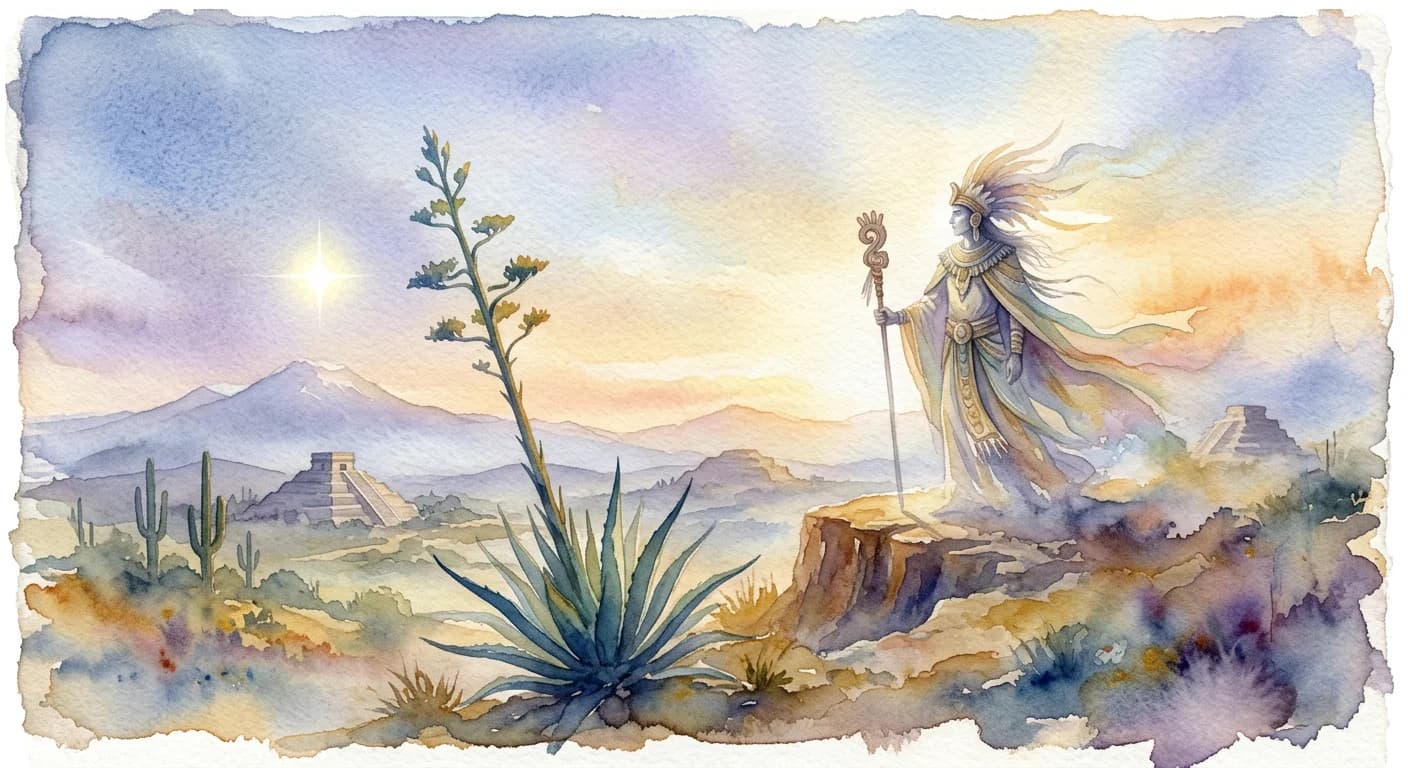
Tlahuizcalpantecuhtli
/tla-HWEES-cal-pan-teh-KOOT-lee/
Meaning
Tlahuizcalpantecuhtli is more than just a name for Venus as the morning star; it embodies the very essence of the dawning sky, a potent celestial entity. This Nahuatl term designates a divine patron of the dawn, a powerful harbinger whose appearance signaled profound transformations and held immense divinatory significance. It encapsulates the ancient Mesoamerican understanding of a living cosmos where astronomical phenomena were direct manifestations of divine will and cosmic order, deeply influencing human endeavors and destiny. The word itself conjures images of shimmering light heralding a new day, imbued with both promise and peril.
Literal Translation
Lord of the House of Dawn
The Story Behind the Word
This word exists because ancient Nahua culture, like many Mesoamerican civilizations, maintained an intricate and profound relationship with celestial cycles. The movements of planets, especially Venus, were not just observed but meticulously recorded and interpreted as direct communications from the gods, dictating agricultural cycles, warfare, and ritual calendars. Tlahuizcalpantecuhtli reveals a worldview where the cosmos was alive, conscious, and directly intertwined with human fate. The cyclical appearance of Venus as morning and evening star represented death and rebirth, a potent symbol for a culture deeply focused on duality and the constant renewal of the world through sacrifice and divine intervention. This deity was often associated with Quetzalcoatl, further elevating its significance as a bringer of knowledge and order, but also a figure of immense power and potential destruction.
Experience It
A Royal Omen
As the first light kissed the pyramids, the priests pointed to the radiant glow in the east. 'Behold! Tlahuizcalpantecuhtli shines brightly this morn!' they declared, interpreting its position as a powerful omen for the new ruler's reign, signaling either prosperity or impending conflict, depending on its specific celestial alignment.
Warrior's Dawn
Before battle, the Jaguar warriors watched the eastern sky with bated breath. The appearance of Tlahuizcalpantecuhtli, the Lord of the House of Dawn, was seen as a divine signal. Its fiery presence could either inspire courage, promising victory, or warn of a dire struggle ahead, influencing their tactical decisions for the day.
What Gets Lost in Translation
English speakers might view this as a purely astronomical term or a simple personification of a planet. However, 'Tlahuizcalpantecuhtli' is neither; it refers to a specific deity or divine aspect, not merely the celestial body itself. It's a title of reverence and power, emphasizing the spiritual agency and omens associated with Venus's morning appearance, rather than just its scientific observation.
Across Cultures
While many cultures observe Venus as the morning star, few imbue it with such a specific, named divine patron status. The Greek 'Eosphoros' (bringer of dawn) or Roman 'Lucifer' (light-bringer) denote the star but lack the direct divine agency. In some Polynesian cultures, Venus (e.g., 'Fetu ao' in Samoan) is significant for navigation and time, but without the explicit 'Lord of the House of Dawn' deity concept.
The Deeper Meaning
The word embodies a philosophy of cosmic interconnectedness, where humanity is not separate from but deeply embedded within the celestial dance. It reveals a worldview where time is cyclical, marked by divine manifestations, and where observation of the heavens provides direct insight into the will of the gods and the unfolding of destiny. This word underscores the ancient Mesoamerican belief that knowledge of the cosmos was paramount for societal order and spiritual guidance.
Did You Know?
Tlahuizcalpantecuhtli was sometimes depicted as a fearsome, skeletal deity armed with dart throwers, symbolizing the potent and sometimes destructive rays of the morning star, capable of bringing both life and ill fortune.
How It's Used
This term was used in ancient Nahuatl to refer to the planet Venus when it appeared in the morning sky, often associated with specific deities or astronomical events.