Macehualli
/mah-seh-WAH-lee/
Meaning
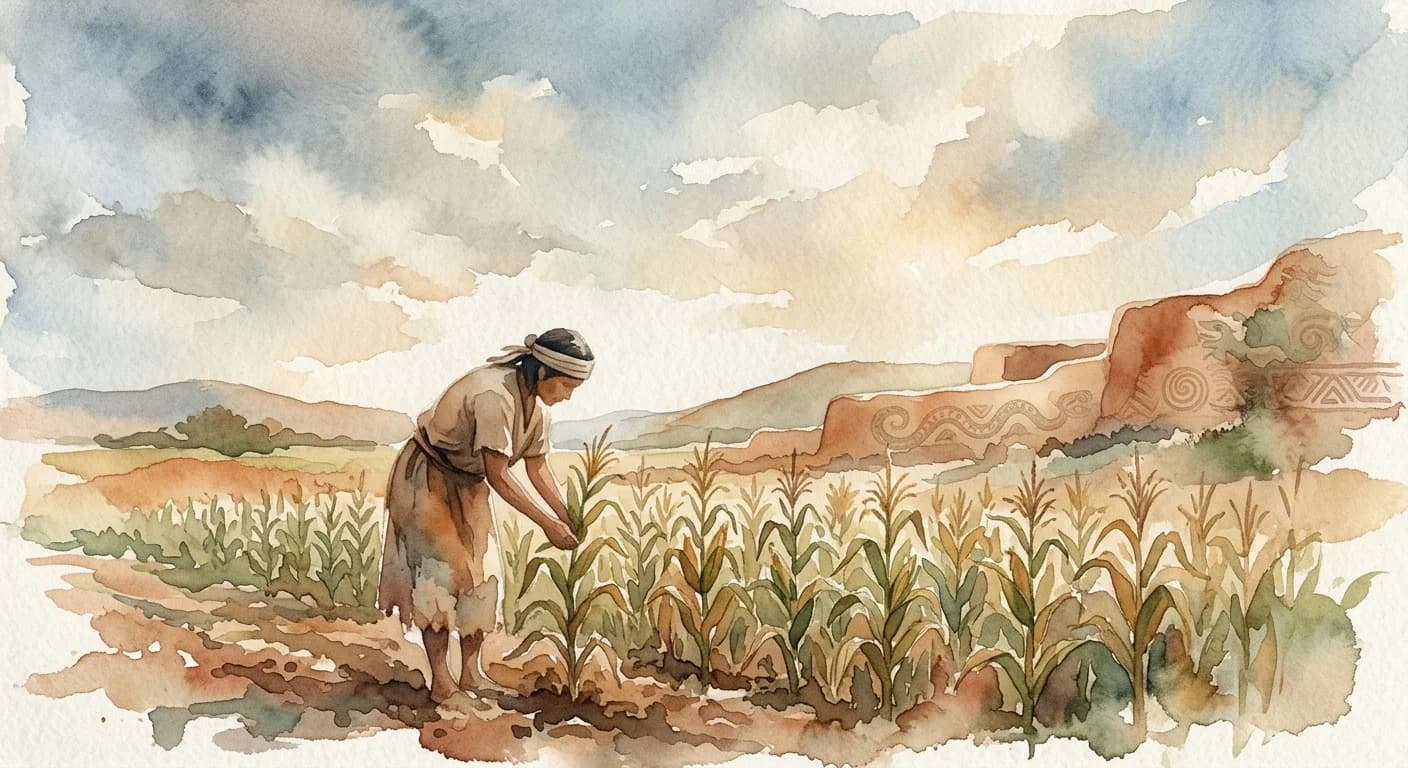
Macehualli refers to the commoner, the sturdy backbone of Aztec society, whose labor in the fields, workshops, and communal projects sustained the entire empire. Far from being merely 'unimportant,' a macehualli was someone who 'merited' their place through hard work and contribution, embodying a profound groundedness and connection to the earth. They were the artisans, farmers, and builders whose daily efforts, though often unsung, were absolutely indispensable to the functioning and prosperity of their civilization, distinguishing them sharply from the noble and warrior elites.
Literal Translation
he/she who merits, he/she who is worthy
The Story Behind the Word
The concept of 'macehualli' is deeply rooted in the Aztec worldview, which emphasized collective responsibility and a hierarchical yet interdependent social structure. The literal meaning, 'he/she who merits' or 'is worthy,' highlights that even commoners held a dignified place, earning their worth through their vital contributions to the altepetl (city-state). This term reveals a society that, while stratified, recognized the essential nature of all labor. The macehualtin were not merely subjects but active participants in the cosmic order, their agricultural efforts mirroring the cyclical nature of life, death, and regeneration, crucial for appeasing the deities and ensuring the world's continuation. Their existence was intrinsically linked to the land and the sustenance of the community, making their role sacred in its own right, despite their lack of political power.
Experience It
Harvesting the Maize
Under the blazing sun, a macehualli family toiled in their chinampa, meticulously tending the maize stalks. The father, his back strong from years of labor, taught his son the ancient rhythms of planting and harvesting, knowing their efforts would feed their kin and contribute to the great city of Tenochtitlan.
Building the Temple
A group of macehualtin, their faces streaked with sweat and dust, hauled massive stones for the new temple. Their synchronized grunts and rhythmic chants echoed across the plaza, a testament to their collective power and the belief that their physical exertion was a form of devotion and service to the gods and their community.
The Deeper Meaning
The word 'macehualli' encapsulates a philosophy of earned worth and communal interdependence in Aztec society. It suggests that dignity is not solely inherited but is also derived from active participation and contribution to the collective good. This worldview underscores the idea that every member, regardless of their social standing, played a crucial, 'merited' role in maintaining the cosmic and societal balance, emphasizing a deep connection between labor, sustenance, and spiritual well-being.
Did You Know?
Despite their commoner status, macehualtin could achieve limited upward mobility, particularly through exceptional military service, where a skilled warrior might earn land or even a minor noble title.
How It's Used
Used to describe a member of the commoner class in Nahuatl society, particularly during the Aztec period.