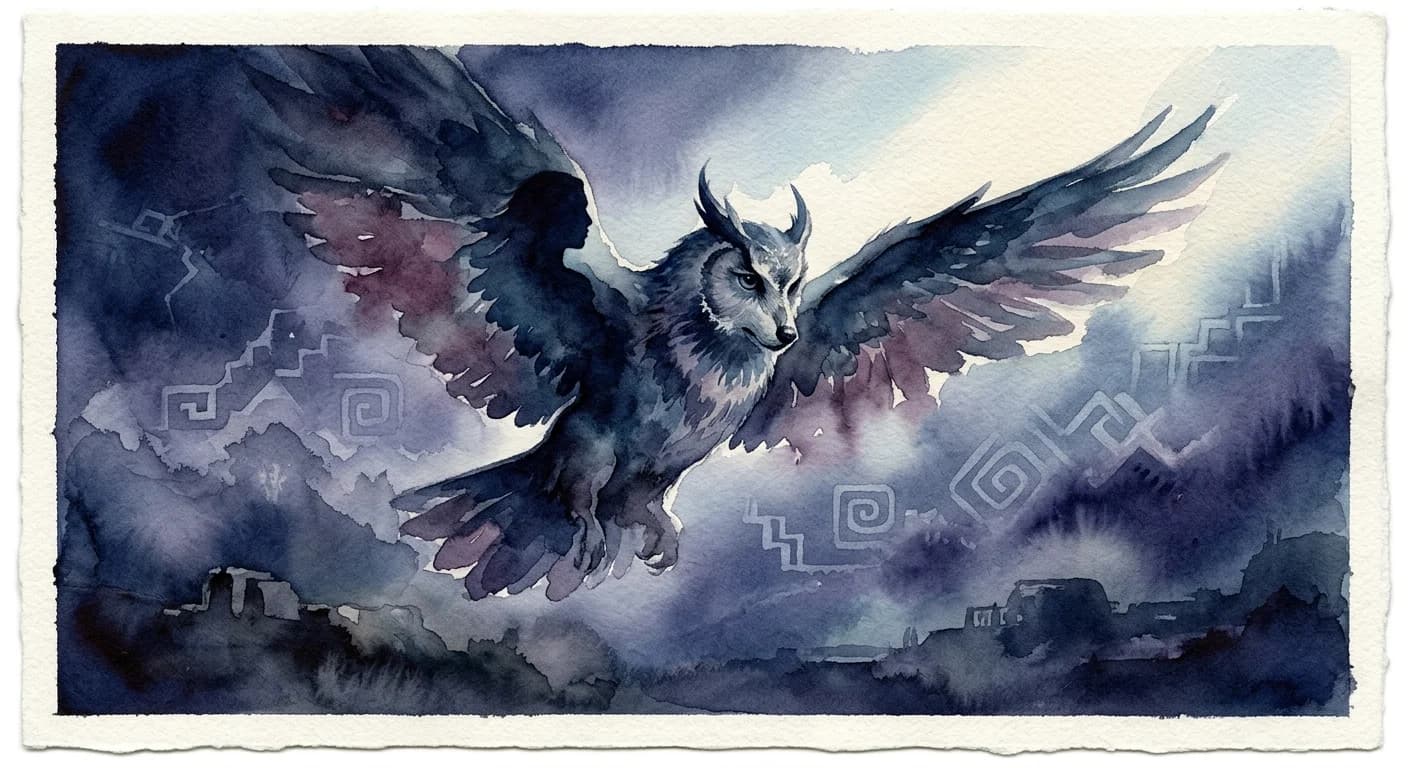
Tlacatecolotl
/tlah-cah-teh-COH-lohtl/
Meaning
A tlacatecolotl is a terrifying figure from Nahuatl cosmology, a shape-shifting sorcerer often manifesting as a man-owl or man-wolf. These beings are not merely malevolent spirits, but embody a profound duality, blurring the lines between human and animal, spirit and flesh. Associated with the night, darkness, and ill omens, they represent a primal, untamed aspect of both nature and the human psyche, reflecting deep-seated cultural fears and anxieties.
Literal Translation
man-owl
The Story Behind the Word
The concept of the tlacatecolotl is deeply rooted in the Mesoamerican worldview, where the boundaries between the human and natural worlds, and between life and death, were fluid. The Nahua believed in a cosmos filled with powerful, often ambivalent forces, and the tlacatecolotl embodies this ambiguity. Their existence reinforces the idea that immense power, whether spiritual or natural, can be wielded for both creation and destruction. The fear of the tlacatecolotl also reflects societal anxieties about those who transgress social norms or possess hidden, dangerous knowledge, serving as a cautionary tale against unchecked ambition or the misuse of spiritual abilities. This figure is a cultural manifestation of the awe and terror inspired by the unknown and the wild.
Experience It
A Frightening Omen
As the sun dipped below the volcanos, a chilling hoot echoed from the ancient ceiba tree. The village elder whispered, 'A tlacatecolotl is near, misfortune follows its shadow.' Fear rippled through the community, children clutching their parents closer.
The Sorcerer's Curse
A farmer's crops withered overnight, his livestock falling ill without explanation. He suspected a rival had sought the dark powers of a tlacatecolotl, weaving a malevolent spell under the cover of night. Only a powerful curandero could hope to counteract such a curse.
The Deeper Meaning
The tlacatecolotl encapsulates the Nahua understanding of power as inherently dualistic and morally neutral, capable of being shaped by human intent. It reflects a worldview where the sacred and profane, natural and supernatural, are not strictly separate but interweave, and where human agency can tap into profound, sometimes dangerous, cosmic forces.
Did You Know?
Intriguingly, the 'owl' aspect of the tlacatecolotl links to pre-Hispanic beliefs that owls were messengers of the underworld and death, solidifying their connection to ill omens and dark magic.
How It's Used
Used in traditional Nahuatl folklore and mythology to describe a supernatural being, specifically a sorcerer or witch with animalistic and shape-shifting abilities, often associated with ill omens or malevolent forces.