Tuurngaq
/TOOR-ngak/
Meaning
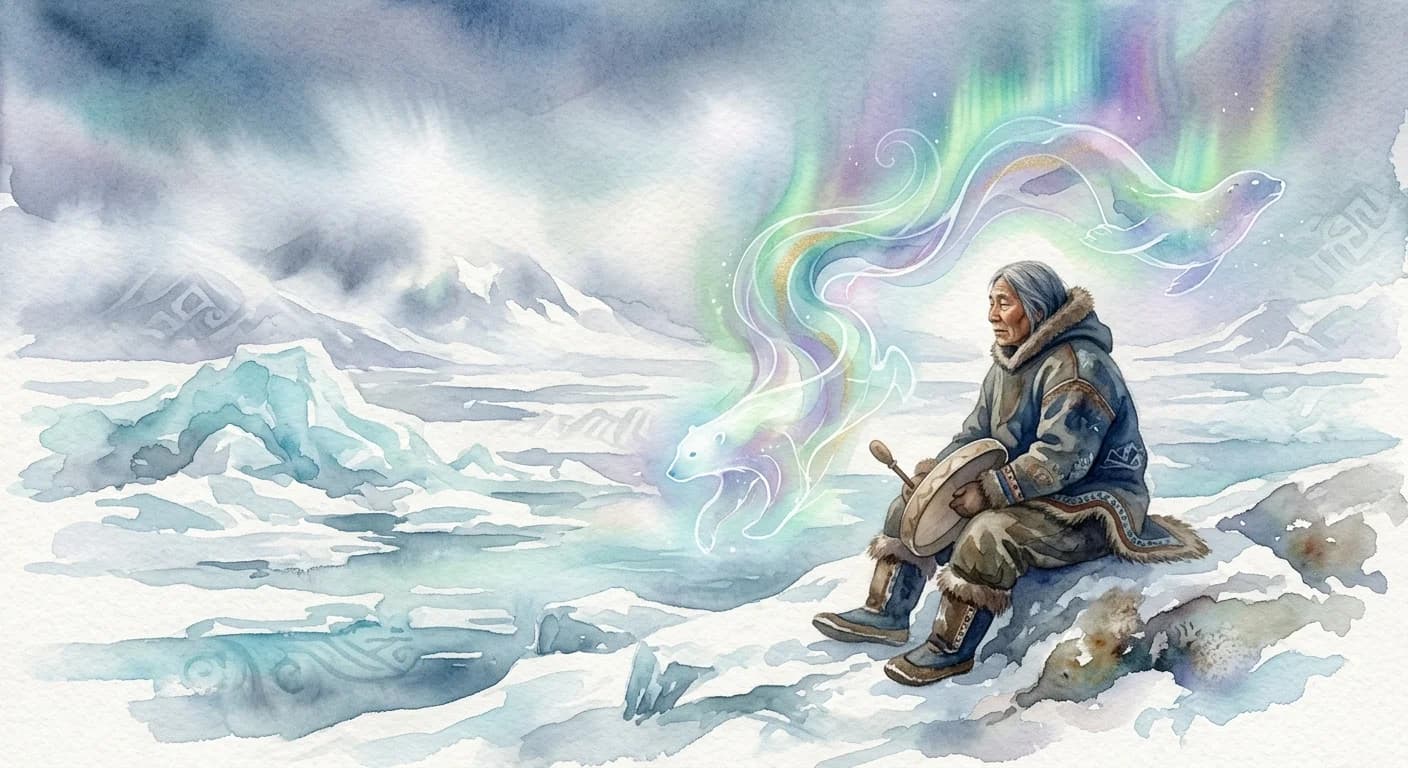
A Tuurngaq is a profound spiritual entity, a familiar or spirit helper intrinsic to Inuit cosmology, particularly within shamanic practices. This powerful being serves as a shaman's guide and protector, enabling them to traverse the intricate pathways between the physical realm and the spirit world for healing, prophecy, and community well-being. The relationship with a Tuurngaq is multifaceted, embodying deep reverence, dependency, and occasionally a palpable sense of awe or even fear, reflecting the profound spiritual connection essential for navigating the Arctic's challenges.
Literal Translation
Spirit helper/familiar
The Story Behind the Word
The Tuurngaq is central to the traditional Inuit worldview, which perceives a fluid, interconnected relationship between the visible world and the invisible spirit realm (Sila). This word exists because survival in the harsh Arctic environment necessitated a deep understanding of unseen forces and the ability to seek guidance and healing beyond the purely physical. It reveals a culture that sees the world as alive with spirits, where humans, animals, and the environment are all part of a dynamic spiritual tapestry. Shamans (Angakkuq) and their Tuurngaq were crucial for maintaining balance, interpreting omens, and addressing illness or communal misfortune, reflecting a profound reliance on spiritual insight for daily life.
Experience It
Healing Journey
The elder, gravely ill, lay still. The Angakkuq began his chant, his Tuurngaq, a powerful polar bear spirit, appearing beside him, ready to guide his soul's journey into the spirit world to retrieve the elder's lost essence and restore health.
Hunting Guidance
When the seals became scarce, the hunters turned to the shaman. Through his Tuurngaq, a wise raven spirit, he received visions of distant hunting grounds, ensuring the community's survival through its spiritual connection to the land and its creatures.
What Gets Lost in Translation
English speakers often mistakenly equate a Tuurngaq with a 'demon' or 'evil spirit' due to its power and sometimes fearsome appearance in stories, but this is a profound misinterpretation. While powerful and sometimes challenging, a Tuurngaq is fundamentally a helper and guide for the shaman, operating within a complex moral framework that emphasizes balance and spiritual connection, not inherent malevolence.
Across Cultures
Similar concepts of spirit guides or familiars exist across various indigenous cultures. The 'nagual' in Mesoamerican traditions, a shapeshifting animal companion, shares some parallels, as do the 'totem animals' of many North American First Nations, which represent spiritual kinship and guidance. Siberian shamanic traditions also feature spirit helpers that assist shamans in their journeys, underscoring a widespread human recognition of spiritual intermediaries.
The Deeper Meaning
The concept of Tuurngaq reveals a worldview deeply rooted in animism and a profound respect for the interconnectedness of all life. It posits that power and wisdom aren't solely human attributes but flow from a vibrant spiritual world accessible through specialized individuals. This underscores a philosophy where humans are not dominant over nature but are integral, interdependent participants in a vast, spiritually charged cosmos.
Did You Know?
Some Inuit legends suggest that a shaman's Tuurngaq could sometimes take on a physical form, appearing as an animal or even a human, though its true nature remained spiritual.
How It's Used
The term 'Tuurngaq' is used within the context of traditional Inuit spiritual beliefs and shamanism.