U.
HomeRegionsLanguagesEmotionsCollections
Find Your Word

“The limits of my language mean the limits of my world.”

— Ludwig Wittgenstein, Philosopher

Untranslatable

A curated collection of the world's most beautiful expressions—words that remind us language is humanity's greatest invention.

  • Home
  • Collections
  • Regions
  • Countries
  • Emotions
  • Tags
  • Contexts
  • Finder
  • Europe
  • Asia
  • Americas
  • Africa
  • Middle East
  • About
  • Contact
  • Privacy Policy
  • Terms of Service

2026 © Untranslatable. All rights reserved.

    /
    /
    1. Home
    2. /
    3. Africa
    4. /
    5. Matatu
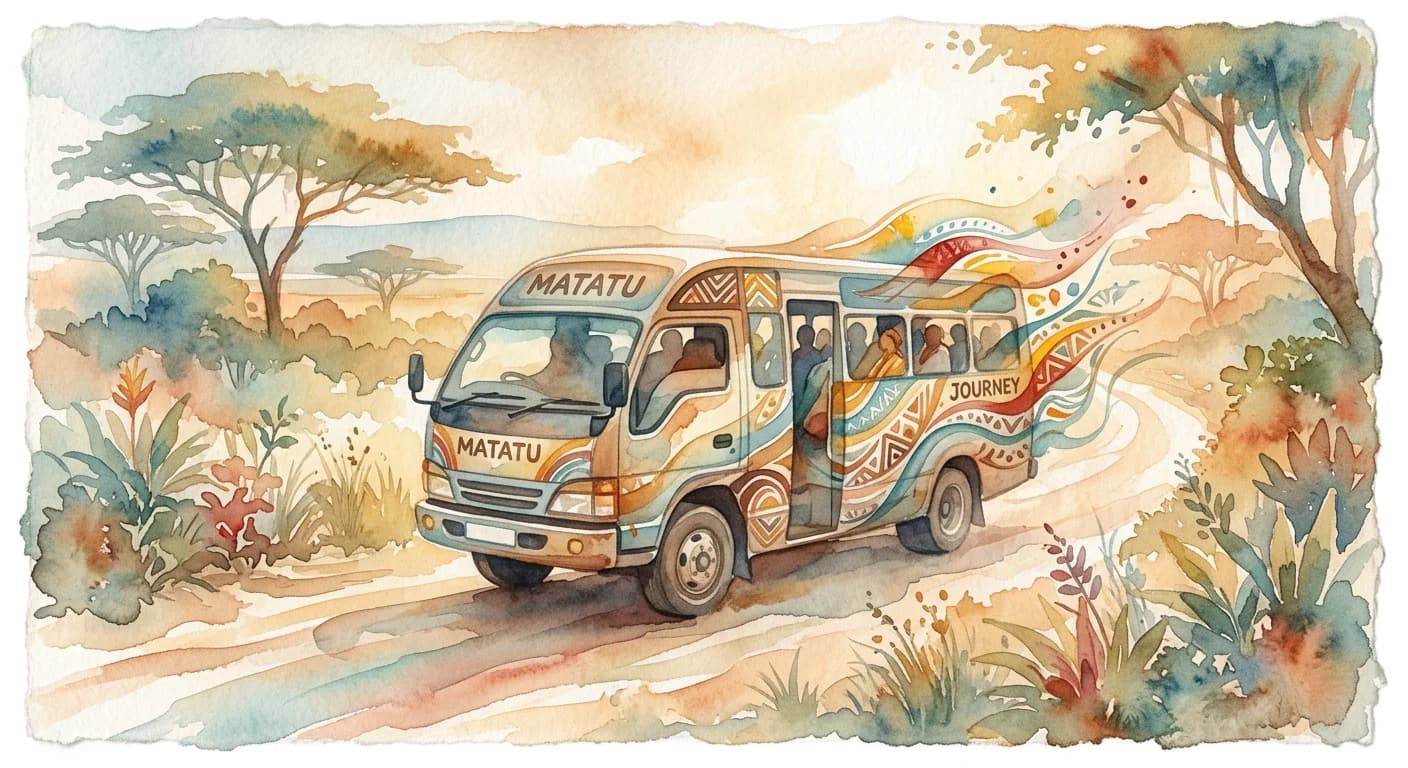
    Artistic representation of Matatu
    Swahili•
    🇰🇪Kenya

    Matatu

    /mah-TAH-too/

    Meaning

    Matatu refers to the ubiquitous public minibuses that serve as a vital mode of transport in Kenya, particularly in Nairobi. Far more than mere vehicles, matatus are vibrant cultural canvases, adorned with elaborate art, booming music, and often provocative political or social commentary, reflecting the nation's dynamic pulse. The experience of riding a matatu is a sensory immersion, characterized by a lively, often boisterous atmosphere that embodies a unique spirit of communal energy, shared journeys, and resilience in the face of daily urban challenges.

    Literal Translation

    The origin of the word 'matatu' is believed to come from the Kikuyu word for 'three', possibly referring to an early fare or route.

    The Story Behind the Word

    The matatu is a quintessential symbol of Kenyan ingenuity, entrepreneurship, and vibrant urban culture. Emerging in the post-independence era as informal transport solutions, they quickly evolved from simple vans into personalized, often extravagantly decorated, expressions of individual and collective identity. The matatu industry, while sometimes associated with chaos, also represents a significant source of employment and a crucial lifeline for millions, connecting communities and fostering a sense of shared experience across socio-economic divides. Their existence highlights a characteristic Kenyan adaptability, transforming basic necessity into a dynamic cultural statement, where even a daily commute becomes a performance of identity and a reflection of societal trends.

    Experience It

    Morning Commute Rush

    A young professional, late for work, flags down a brightly painted matatu blaring gengetone music. She squeezes into a seat, exchanging a quick smile with a fellow passenger as the tout shouts for more fares, the vehicle vibrating with the rhythm of the city and its people.

    Art on Wheels

    A group of tourists marvels at a matatu adorned with intricate graffiti depicting a famous footballer, its interior lit by flashing LED lights. They decide to ride it, eager to experience this unique slice of Kenyan street culture firsthand, feeling the energy of the moving art gallery.

    The Deeper Meaning

    The matatu embodies a philosophical resilience and an embrace of life's inherent chaos and vibrancy. It reflects a worldview where necessity sparks creativity, and shared struggle fosters community. It suggests that even in the mundane act of commuting, there's an opportunity for self-expression, collective identity, and a celebration of the present moment, demonstrating a uniquely Kenyan spirit of 'can-do' and 'making-it-work' amidst challenges.

    Did You Know?

    The elaborate art and designs on matatus are often competitive, with owners investing heavily to make their vehicles stand out, attracting more passengers and fostering a unique subculture of 'matatu art' and dedicated artists.

    How It's Used

    Used to refer to Kenyan minibuses, and by extension, the vibrant culture surrounding them.

    Emotions
    belonging,excitement,gratitude,warmth
    Contexts
    celebration,travel,work
    🇰🇪Kenya

    by Kwame Nkrumah·Written Mar 10, 2026·Updated Apr 3, 2026

    Related Words

    Explore more
    GezelligDutch

    Gezellig encapsulates a profound sense of warmth, belonging, and convivial comfort, extending beyond mere coziness to embrace the social and emotional atmosphere. It's the feeling of being truly at ease, surrounded by good company, laughter, and a shared sense of contentment. This untranslatable term describes not just a physical space, but a holistic experience where time seems to slow down, fostering genuine connection and a deep sense of well-being.

    SobremesaSpanish

    Sobremesa is the cherished, often extended period immediately following a meal, particularly lunch or dinner, where diners remain seated at the table to enjoy conversation, coffee, and digest not just the food, but the company itself. It’s a dedicated time for unhurried social bonding, storytelling, and shared laughter, transforming a simple meal into a profound communal experience. Far from just clearing the dishes, sobremesa is an integral part of Spanish social life, often lasting for hours.

    Pura vidaSpanish

    More than just 'pure life,' "Pura vida" encapsulates a profound philosophy of embracing the present moment with unwavering optimism and gratitude. It's a daily commitment to finding joy in simple pleasures, accepting life's challenges with a positive spirit, and prioritizing well-being over material possessions. This ubiquitous phrase reflects a national identity built on resilience, community, and an deep appreciation for nature's bounty.

    UbuntuZulu/Xhosa

    Ubuntu is a profound African philosophy that translates to 'I am because we are,' signifying that an individual's humanity is inextricably linked to the humanity of others. It embodies the belief that our existence and well-being are deeply intertwined with the community. This concept emphasizes compassion, reciprocity, dignity, and the understanding that true fulfillment is found not in isolation, but through collective flourishing and mutual support. It's a call to recognize and affirm the humanity in everyone, fostering a sense of interconnectedness.