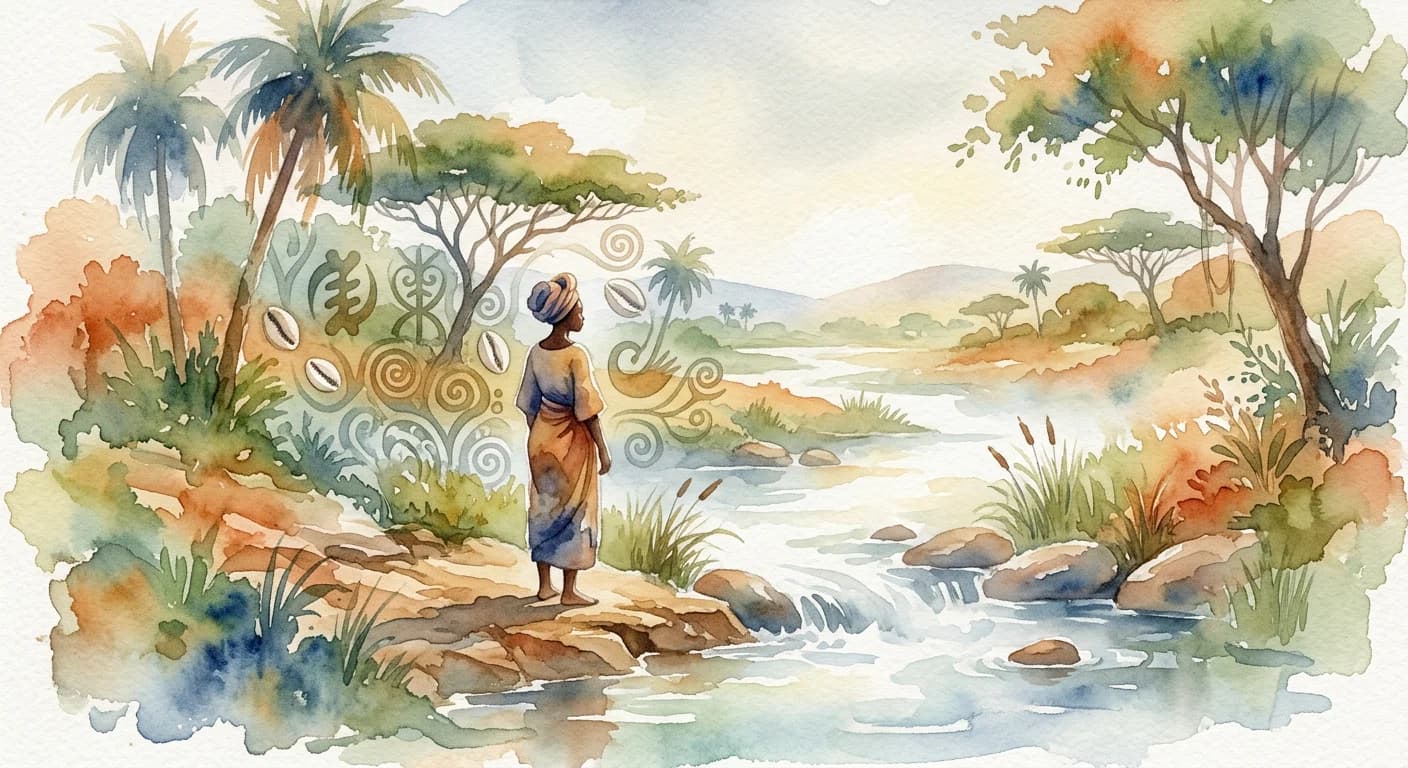
Fújà
/FOO-jah/
Meaning
Fújà embodies a profound, spiritual attunement to nature and the ancestral domain, a sense of belonging so deep it feels woven into one's very being. It signifies recognizing the natural world not merely as resources to exploit, but as a living, breathing entity inherently linked to identity and communal well-being. This concept transcends simple appreciation; it is a reciprocal covenant where humanity nurtures the environment, and in return, the environment sustains, guides, and imbues a powerful sense of peace and rootedness within the individual and community.
Literal Translation
While 'Fújà' itself doesn't have a direct literal translation in English that captures its full essence, it is often associated with concepts of 'sacredness,' 'divine connection,' or 'spiritual grounding' within the Yoruba context.
The Story Behind the Word
The concept of Fújà is deeply embedded in the Yoruba worldview, which traditionally sees no strict separation between the spiritual and physical realms. Land, rivers, trees, and even specific rocks are often considered embodiments of Orisha (deities) or ancestral spirits, making their veneration a crucial aspect of daily life and spiritual practice. This belief system fosters a profound respect for the environment, not out of fear, but from a recognition of its sacred essence and its role in sustaining life and cultural continuity. Fújà reflects the understanding that the health of the individual and community is inextricably linked to the health of the land and the wisdom of the ancestors who walked upon it. It underscores a philosophy of interconnectedness, where humans are stewards, not owners, of the Earth, responsible for maintaining balance and harmony.
Experience It
Ancestral Grove Connection
As Mama Adunni walked through the ancient forest, her hands gently touching the bark of an Iroko tree, a profound sense of Fújà washed over her. She felt the presence of her ancestors in the rustling leaves, the wisdom of generations seeping from the earth, and a deep peace knowing this sacred space continued to thrive under their collective care.
Riverside Reflection
During times of spiritual uncertainty, Bayo often sought solace by the Ogun River. Gazing at its flowing waters, he felt a powerful Fújà, a reminder of the river's enduring spirit and its ancestral significance, guiding him back to a sense of balance and rootedness in his identity and heritage.
The Deeper Meaning
Fújà reveals a worldview where existence is fundamentally relational and interdependent. It posits that true well-being and identity are not isolated but are deeply interwoven with the natural world and the legacy of previous generations. This philosophy advocates for a stewardship that goes beyond conservation, embracing active participation in maintaining the spiritual and physical health of the shared environment, recognizing it as a living, conscious entity.
Did You Know?
The practice of Fújà often involves rituals and offerings made to specific natural elements, such as sacred trees or rivers, reinforcing the reciprocal relationship between humans and the environment.
How It's Used
Used to describe the feeling of deep connection and respect for nature and ancestral lands, often invoked during discussions about environmental stewardship, cultural heritage, or spiritual practices.