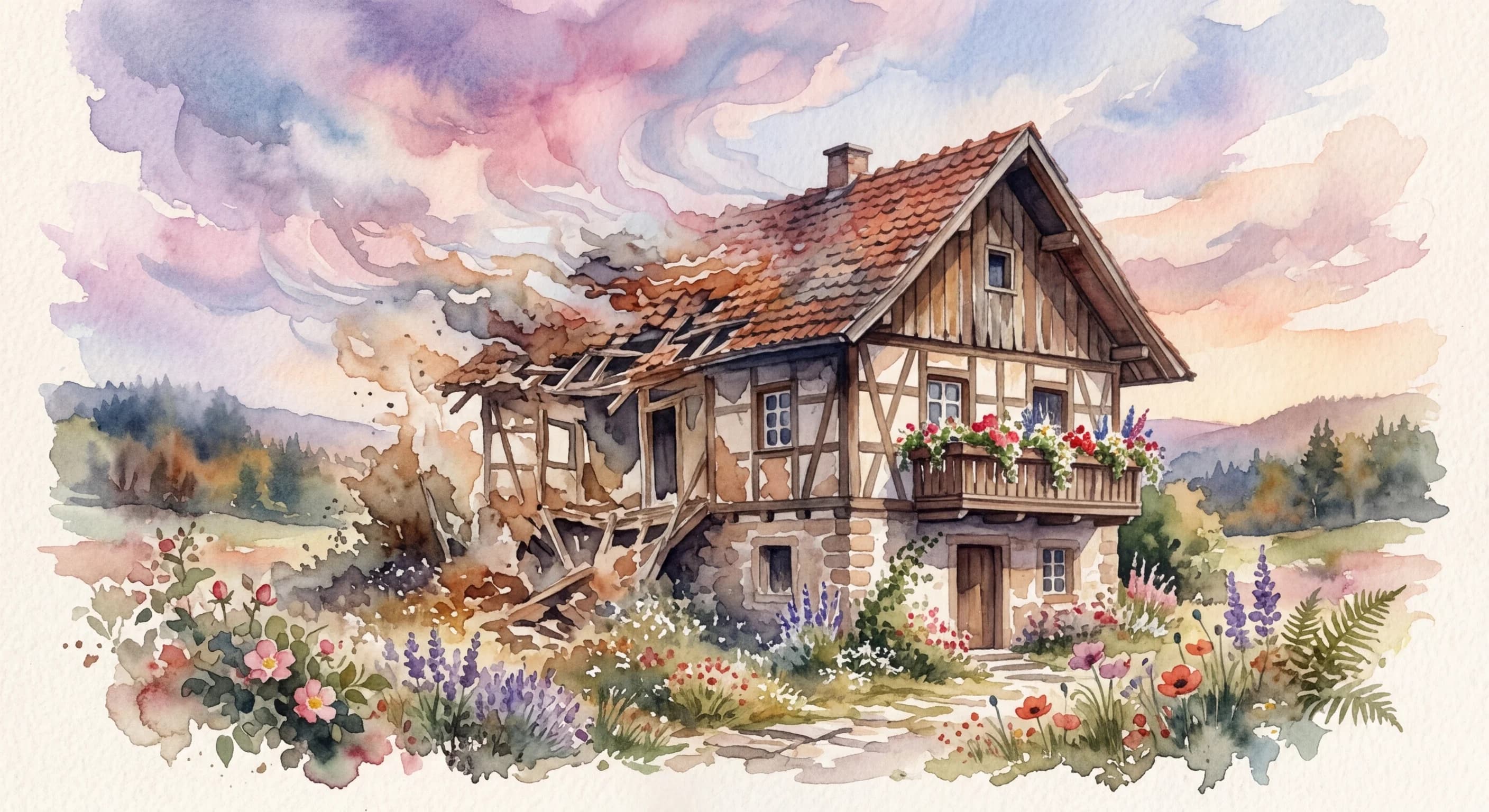
Kladderadatsch
/KLAD-uh-ra-datsch/
Meaning
Kladderadatsch is a vibrant German onomatopoeic word that masterfully encapsulates the sudden, often catastrophic, sound and aftermath of something collapsing or breaking apart. It evokes the cacophony of a loud, clattering crash, but extends beyond mere noise to describe the ensuing chaos and complete disarray. This word paints a picture of abrupt disruption, whether it's a stack of dishes toppling or a meticulously planned project spiraling into utter failure, signifying both the sonic event and the subsequent mess. It's the moment when order dissolves into pandemonium, leaving behind a scene of wreckage and confusion.
Literal Translation
Clatter-smash
The Story Behind the Word
The existence of "Kladderadatsch" in German culture speaks to a particular appreciation for precision, order, and the dramatic impact of their disruption. German engineering and planning are often associated with meticulousness, making the sudden, chaotic failure implied by "Kladderadatsch" particularly jarring and noteworthy. It reflects a cultural sensitivity to both sonic detail and the consequences of things going awry, embodying a collective sigh or exasperated exclamation when systems or objects fail spectacularly. The word also gained prominence as the title of a satirical German weekly magazine from 1848, which used the term to mock political chaos and societal upheaval, embedding it deeply in the national consciousness as a descriptor for calamitous events, both personal and political. This historical usage solidifies its role as a cultural shorthand for complete and utter disarray.
Experience It
Kitchen Catastrophe
During the dinner party, the overloaded serving tray slipped from the host's hands, sending plates, glasses, and cutlery crashing to the tiled floor. "Oh, der reine Kladderadatsch!" she exclaimed, surveying the glittering shards and spilled food.
Project Failure
After months of meticulous planning, the new software launch was riddled with bugs and system crashes on day one. The CEO could only shake his head, muttering, "Das ist ja ein Kladderadatsch!" as the entire project unraveled.
The Deeper Meaning
This word subtly reflects a German worldview that values order and structure, making the sudden, chaotic breakdown it describes particularly salient. It acknowledges the fragility of meticulously built systems and the unpredictable nature of reality, where even the best-laid plans can devolve into immediate, noisy disarray. "Kladderadatsch" is the linguistic expression of an unexpected rupture in equilibrium, highlighting the human experience of witnessing (or causing) an abrupt shift from order to chaos.
Did You Know?
The word "Kladderadatsch" was famously the title of a highly influential German satirical magazine published from 1848 to 1944, often lampooning political and social "crashes" of its time.
How It's Used
Used to describe a loud, clattering noise, often associated with something breaking, falling, or collapsing. It can also refer to a complete failure or a chaotic situation.