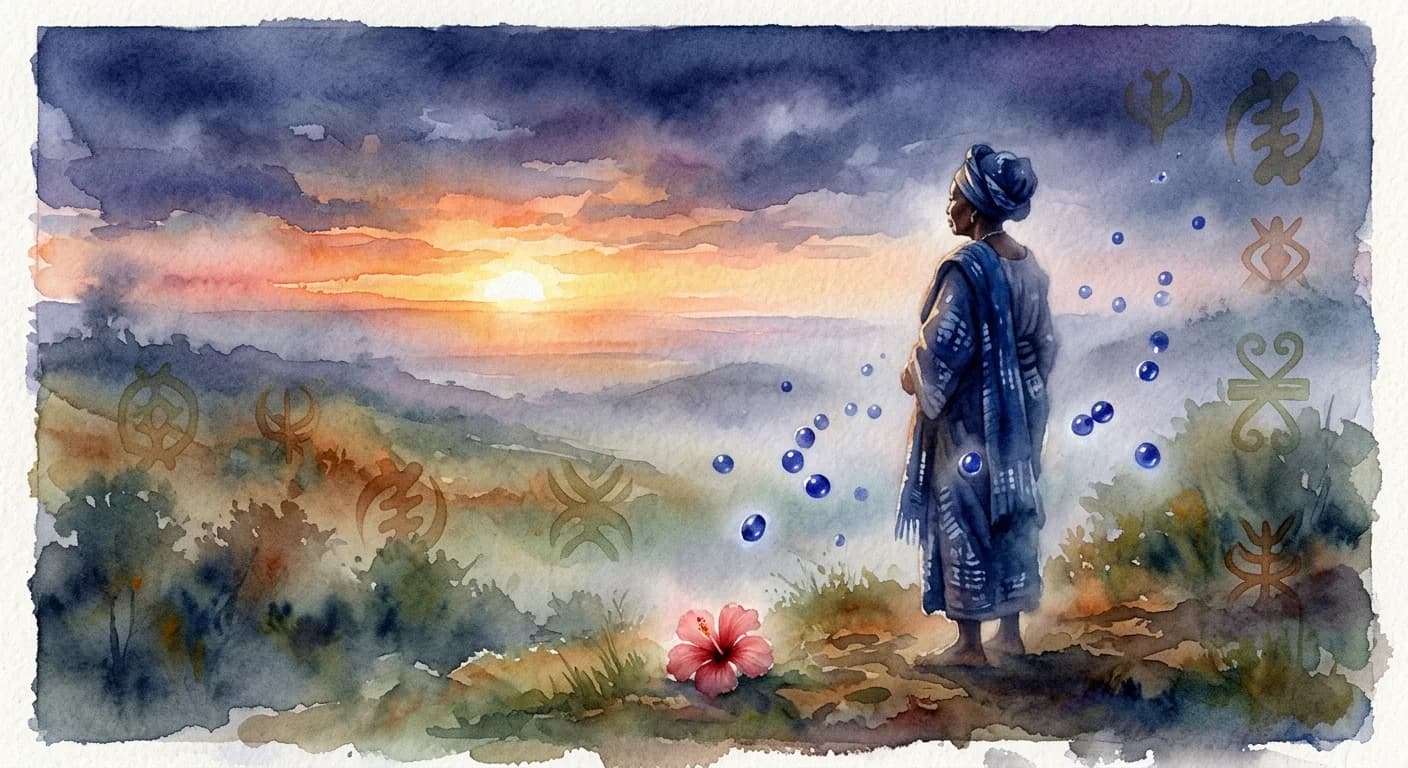
Ọ̀fọ̀
/AW-faw/
Meaning
Ọ̀fọ̀ encapsulates a profound, agonizing sense of loss that transcends mere individual bereavement. It signifies the shattering of a collective identity, the irrevocable erosion of cultural pillars, or the vanishing of cherished traditions that once defined a community's essence. This visceral grief is often intertwined with a deep sense of injustice, a lament for a golden age lost, and a longing for what can never be restored, reverberating through generations as a collective wound.
Literal Translation
loss, bereavement
The Story Behind the Word
The concept of Ọ̀fọ̀ is deeply embedded in Yoruba communal life, where individual identity is inextricably linked to family, lineage, and cultural continuity. Its existence reflects a worldview that values heritage, tradition, and collective well-being above all else. When a significant aspect of this collective fabric is lost—be it a revered elder, an ancient ritual, or a historical landmark—it's not just an individual's sorrow, but a communal Ọ̀fọ̀. This word underscores the Yoruba belief that the past is not merely prologue, but a living, breathing entity that shapes the present and future. The lamentation associated with Ọ̀fọ̀ is a way of acknowledging the rupture, preserving the memory of what was, and sometimes, a call to action to prevent further cultural decay.
Experience It
Loss of Sacred Grove
When the ancient sacred grove, where generations had performed vital rites, was bulldozed for development, the community felt a profound Ọ̀fọ̀. It wasn't just trees; it was the spiritual heart of their identity, now forever silenced.
Vanishing Dialect
As the last fluent speakers of their unique dialect passed away without passing it on, a deep Ọ̀fọ̀ settled over the village. A piece of their ancestral soul, their unique way of seeing the world, had been irrevocably lost.
The Deeper Meaning
Ọ̀fọ̀ reveals a Yoruba philosophy that views culture, history, and community as living, organic entities that can sicken and even die. It emphasizes the interconnectedness of all things and the profound impact that the loss of one element can have on the entire collective. It's a reminder that true wealth lies not just in material possessions, but in the preservation of heritage and identity.
Did You Know?
Ọ̀fọ̀ is sometimes used in traditional incantations as a plea to the ancestors, not just for solace, but for intervention against forces that threaten cultural survival.
How It's Used
Used to express deep sorrow and lamentation over a significant loss, often in a communal or cultural context.