Gada
/GAH-dah/
Meaning
Gada refers to the profound indigenous democratic system of the Oromo people, a complex socio-political and age-set structure that meticulously governs all facets of community life, from law and justice to social order and spiritual rites. It manifests as a unique form of self-governance, where leadership transitions cyclically through elected councils based on age-grades, ensuring shared responsibility and accountability. Far more than just a political system, Gada embodies a living cultural heritage that champions principles of equality, collective decision-making, and justice, serving as the very bedrock of Oromo identity and a testament to their enduring self-determination.
Literal Translation
Gada (Gadaa) can also refer to 'era' or 'age' in Oromo, reflecting its connection to age-sets.
The Story Behind the Word
The Gada system is a testament to the Oromo people's ancient wisdom and their sophisticated approach to societal organization, predating many modern democratic ideals. Rooted in ecological and cosmological principles, it reflects a worldview that sees humanity as intrinsically linked to nature and the divine, emphasizing balance, harmony, and cyclical renewal. Its existence reveals a people who valued collective well-being over individual ambition, where leadership was earned through merit, wisdom, and service, not inherited. Gada provided a framework for conflict resolution, resource management, and the protection of rights, illustrating a deep commitment to justice and sustainable living. It's not merely a historical artifact but a dynamic system that has adapted and continues to inspire Oromo identity and resilience.
Experience It
Gada Council Deliberation
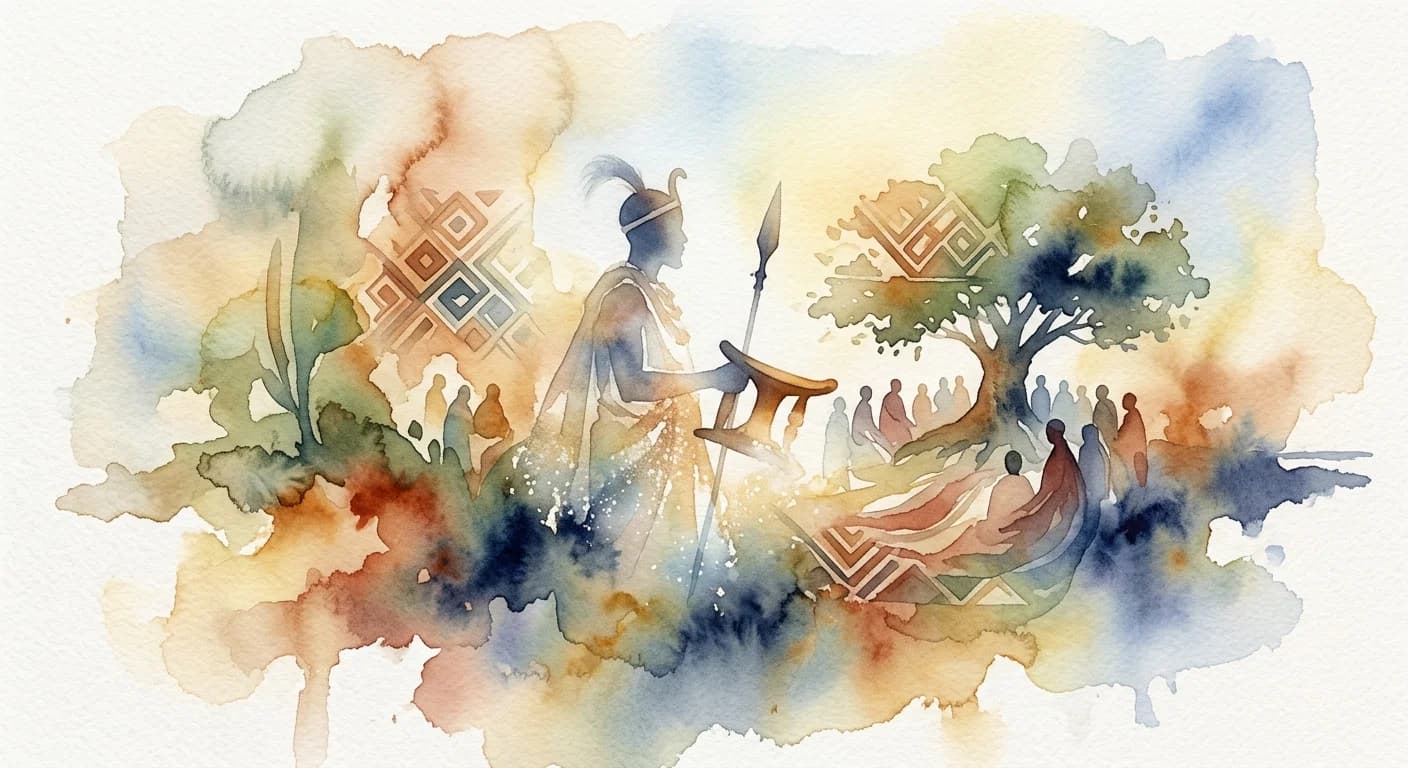
In a village square, elders of different age-sets gather under a large tree. They are discussing a communal land dispute, with each Gada grade presenting arguments and seeking a fair resolution, demonstrating the system's emphasis on consensus and justice.
New Gada Leader Inauguration
A vibrant ceremony unfolds as a new Abba Gada (father of Gada) is inaugurated. He takes an oath before the community, promising to uphold the laws and traditions of Gada, symbolizing the peaceful transfer of power and collective trust.
The Deeper Meaning
Gada embodies a philosophy of cyclical governance and intergenerational responsibility. It posits that wisdom and leadership capacity evolve with age and experience, necessitating regular transitions of power. This ensures that diverse perspectives guide the community, preventing stagnation and promoting adaptability. It's a profound statement on collective ownership, justice as a shared pursuit, and the belief that a well-ordered society is achieved through continuous dialogue and equitable participation.
Did You Know?
The Gada system was inscribed by UNESCO in 2016 on the Representative List of the Intangible Cultural Heritage of Humanity, recognizing its unique democratic principles and cultural significance.
How It's Used
Gada is used to refer to the entire Oromo system of governance, its principles, and its historical significance. It is invoked in discussions about Oromo culture, history, and political structures, particularly when highlighting their unique democratic traditions and customary laws.