Lebensgefühl
/LAY-bens-guh-FEWL/
Meaning
Lebensgefühl transcends a fleeting mood; it is the deep-seated, pervasive sentiment that colors one's entire existence, a unique filter through which life is perceived and experienced. It encompasses an individual's core outlook, emotional resonance with the world, and their fundamental way of being, shaping everything from daily interactions to long-term aspirations. This term captures the holistic, subjective essence of living, reflecting a rich inner world and a distinctive philosophy that is intrinsically woven into one's identity. It's the profound, often unspoken, understanding of what it means to be alive in a particular moment or phase of life.
Literal Translation
life feeling
The Story Behind the Word
Lebensgefühl is deeply rooted in German Romanticism and philosophical traditions that emphasize inner experience, subjectivity, and the individual's relationship with the world. Thinkers like Goethe and Schiller explored the profound emotional and spiritual dimensions of human existence, paving the way for a term that acknowledges the complex, often ineffable, nature of one's lived experience. Its existence reveals a culture that values introspection, emotional depth, and a nuanced understanding of subjective reality. It’s not enough to simply 'live'; Germans often seek to understand and articulate the qualitative 'feeling' of that living, whether it's the specific mood of an era (Zeitgeist) or a personal sense of contentment or longing. This word grants legitimacy to the profound, often melancholic or deeply reflective, aspects of human experience, indicating a cultural acceptance of life's inherent complexities.
Experience It
A New Chapter's Embrace
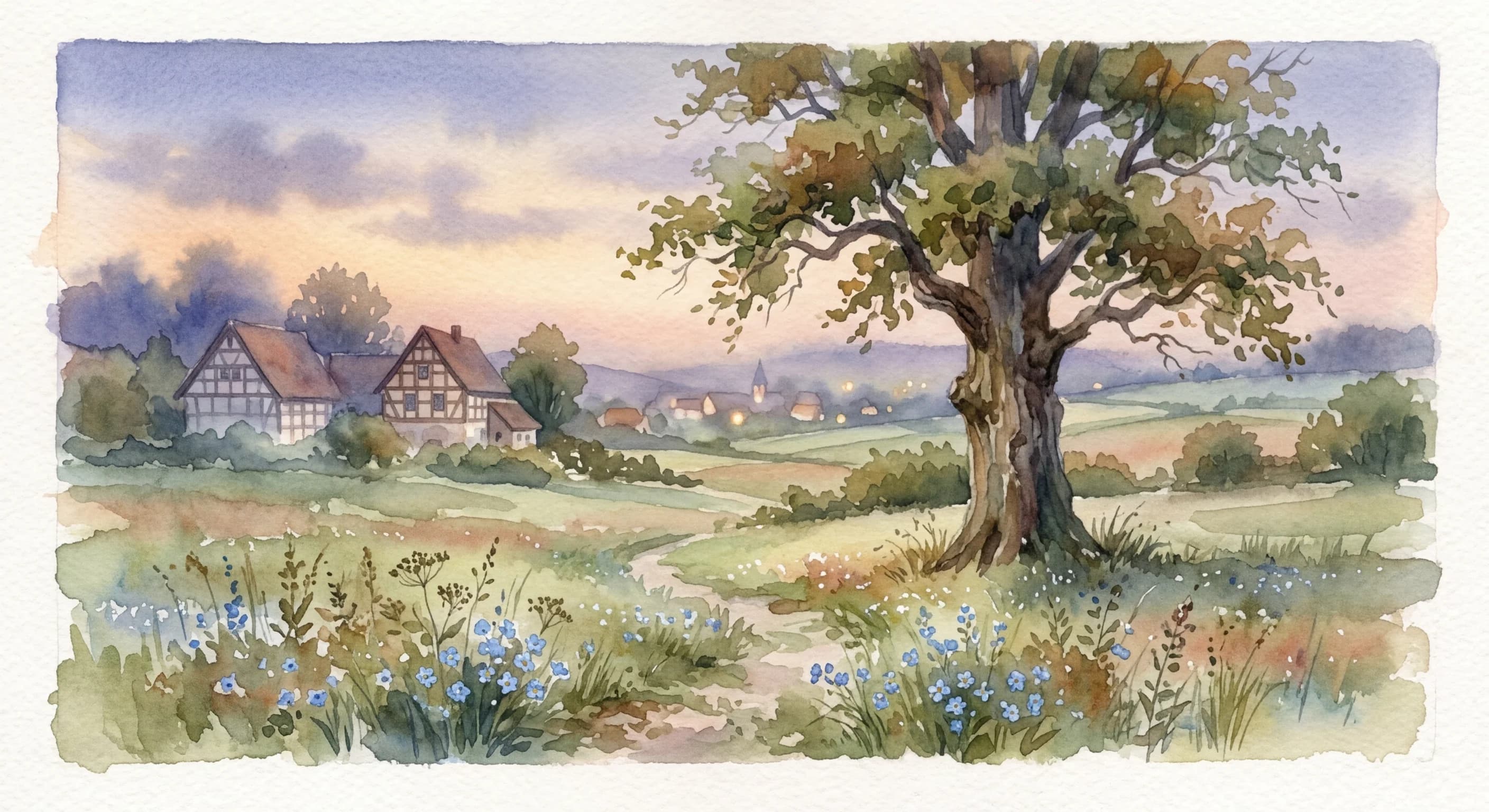
After moving to the tranquil countryside, Sarah felt a profound shift. The quiet mornings and close-knit community cultivated a new Lebensgefühl of peace and belonging, a stark contrast to her previous hectic city life. She found herself smiling more, feeling a deep contentment settle within her.
Youthful Urban Vibe
The vibrant energy of Berlin in the 1920s, with its jazz clubs and intellectual ferment, created a distinctive Lebensgefühl for its young artists. It was a mixture of exhilarating freedom, creative urgency, and a hint of decadent melancholy, shaping their art and their lives. They lived with a passionate intensity unique to that era.
What Gets Lost in Translation
English speakers often reduce Lebensgefühl to 'attitude towards life' or 'mood,' missing its profound depth. It's not just a cognitive perspective or a transient emotional state. The nuance lost is its holistic, embodied nature – it's a feeling that permeates one's very being, influencing one's entire way of interacting with the world, rather than a conscious choice or a temporary sentiment. It's less about 'how I feel about life' and more 'how life feels to me'.
Across Cultures
While direct equivalents are rare, some cultures offer glimpses into similar concepts. Japanese 'ikigai' touches on purpose and reason for being, contributing to one's overall sense of life. The Danish 'hygge' describes a particular cozy, contented atmosphere that can foster a positive Lebensgefühl. French 'joie de vivre' captures a zest for life, a specific manifestation of a joyful Lebensgefühl. None fully encapsulate the German term's broad, subjective, and deeply personal 'feeling of life' itself.
The Deeper Meaning
Lebensgefühl underscores a worldview that prioritizes subjective experience and the inherent 'felt' quality of existence over purely objective reality. It suggests that life is not merely a series of events but a continuous, evolving emotional and spiritual state that profoundly shapes perception and identity. This term highlights a philosophical lean towards existentialism and phenomenology, where the individual's unique encounter with being is central to understanding human nature and the meaning of life itself.
Did You Know?
The concept of Lebensgefühl gained particular prominence during the early 20th century, as people sought to articulate the complex emotional and psychological landscapes of modernity, reflecting a growing introspection in German society.
How It's Used
Used to describe a person's general outlook on life, their subjective experience of living, or the characteristic atmosphere of a place or time. It can be applied to an individual's personal philosophy or a collective sentiment.