Dabke
/DAHB-keh/
Meaning
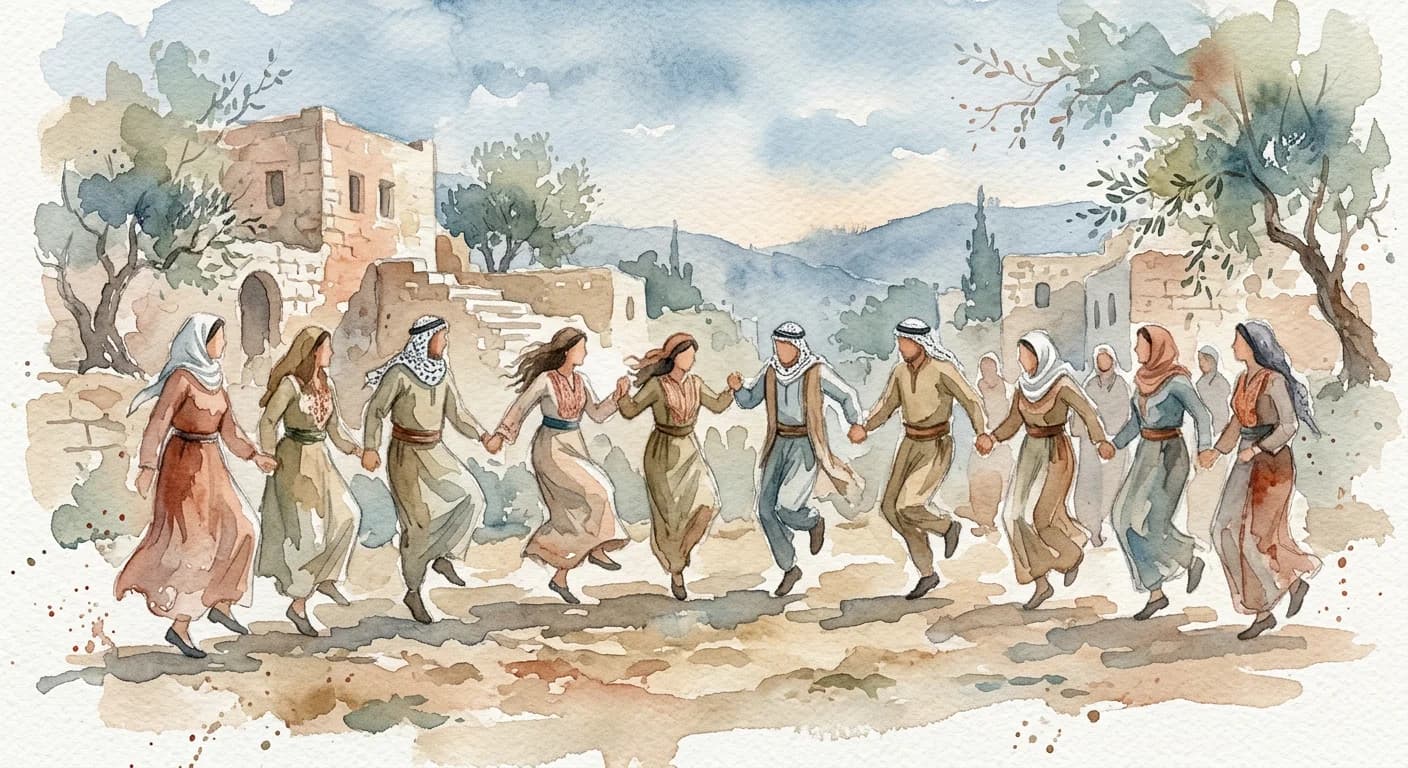
Dabke is a pulsating Levantine folk dance, a powerful communal ritual that transcends mere entertainment to embody the very spirit of Arab resilience and joy. With dancers linked arm-in-arm or shoulder-to-shoulder, its rhythmic stomps and synchronized steps create a mesmerizing spectacle of collective energy. It's an affirmation of shared identity and cultural pride, transforming celebrations like weddings and festivals into vibrant expressions of unity and defiant hope.
Literal Translation
Stomping
The Story Behind the Word
Dabke's roots are deeply embedded in the agricultural history of the Levant. Originally, the stomping likely served a practical purpose: compacting earth roofs to prevent leaks during winter rains. Over time, this practical act evolved into a communal dance, becoming a cornerstone of social gatherings and celebrations. In Palestine, in particular, Dabke has taken on profound political and nationalistic significance; it's a vibrant, living symbol of Palestinian identity, steadfastness (sumud), and cultural resistance against displacement. Performing Dabke is an act of reclaiming space, affirming heritage, and visibly demonstrating an unbreakable bond with the land and community, revealing a worldview where collective strength and cultural continuity are paramount.
Experience It
Wedding Celebration
The wedding hall erupted as the band struck up a familiar Dabke tune. Cousins and friends rushed to form a line, hands clasped, their synchronized stomps shaking the floor. The bride and groom watched, beaming, as their community danced their joy into existence.
Festival of Heritage
At the annual cultural festival, a group of young men, dressed in traditional attire, launched into an electrifying Dabke performance. Their powerful kicks and shouts drew a massive crowd, who clapped along, feeling a deep connection to their shared heritage and the vibrant energy of their ancestors.
The Deeper Meaning
Dabke embodies a profound philosophy of collective strength and interconnectedness. It teaches that individual joy is amplified through shared experience, and that cultural identity is not a static concept but a dynamic, living tradition sustained by communal participation. The linked hands and unified steps symbolize a society that moves forward, not as individuals, but as an unbreakable, supportive unit, especially in the face of adversity.
Did You Know?
Some believe the energetic stomping of Dabke historically helped to solidify mud roofs during heavy rains, turning a necessary chore into a communal, rhythmic activity that fostered community bonds.
How It's Used
Dabke is performed in a line or circle, with dancers holding hands or shoulders, moving in unison with rhythmic stomps and kicks. It's a staple at joyous occasions like weddings, festivals, and family gatherings across the Levant.