Shab-e-Yalda
/SHAH-beh YAL-dah/
Meaning
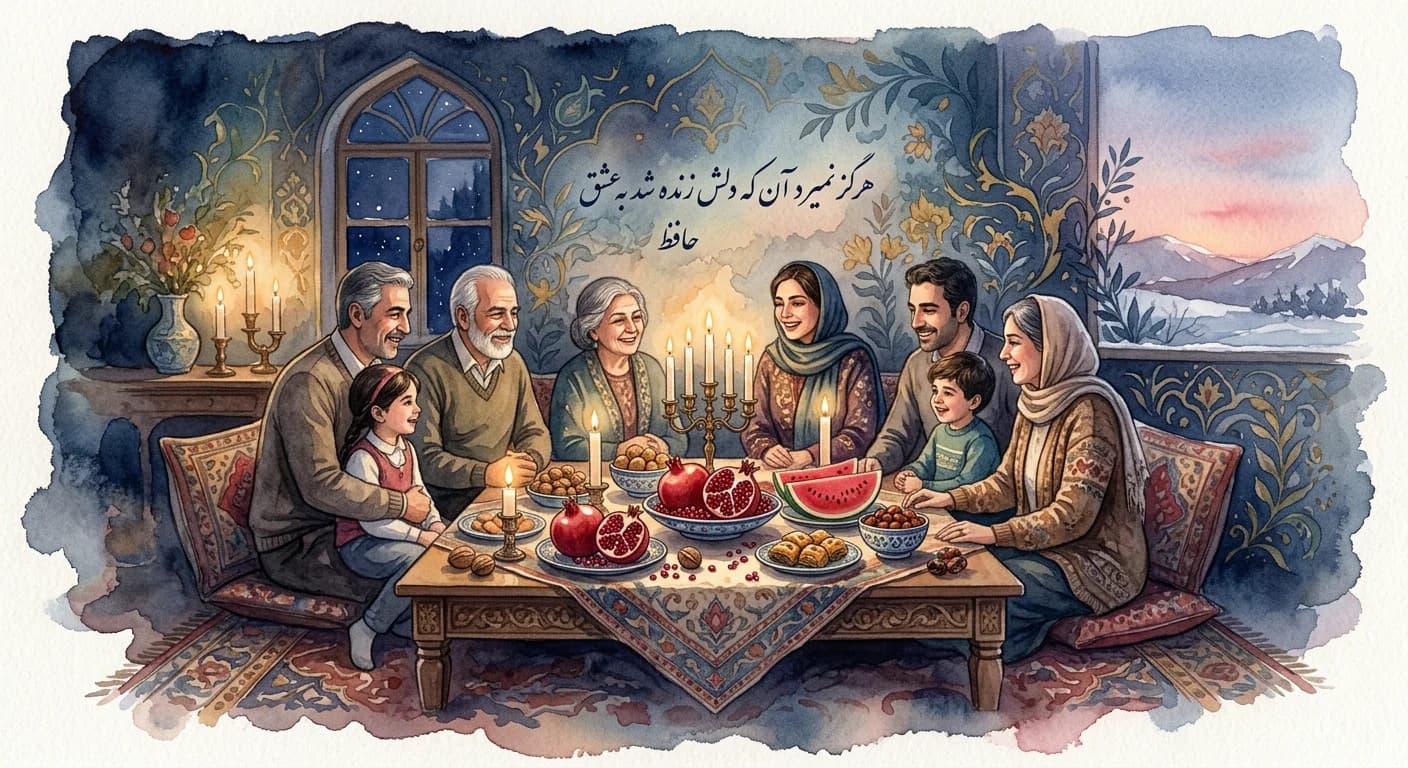
Shab-e-Yalda, or 'Night of Birth,' is a profound Persian celebration marking the winter solstice, the longest and darkest night of the year. It's a cherished tradition where families and friends gather, defying the encroaching darkness by staying awake, sharing laughter, and feasting on symbolic fruits like pomegranates and watermelons. The night is illuminated by the recitation of ancient poetry, particularly from Hafez, fostering a deep sense of togetherness, hope, and the anticipation of longer, brighter days to come.
Literal Translation
Night of Birth
The Story Behind the Word
Shab-e-Yalda is deeply rooted in ancient Zoroastrian traditions, predating Islam, celebrating the triumph of light over darkness. It honors Mithra, the ancient Persian sun god, whose 'birth' was believed to occur at this time, signifying the sun's gradual return. This celebration reveals a worldview profoundly connected to nature's cycles and an inherent optimism, where even the deepest darkness is seen as a prelude to light. It underscores the importance of family, poetry, and shared human connection as bulwarks against adversity, embodying the Persian spirit of resilience and hope through millennia of cultural shifts.
Experience It
Family Yalda Gathering
The aroma of roasted nuts and sweet pomegranates filled Grandma's house. Young children, usually asleep by now, giggled as their uncle recited a Hafez poem, explaining its meaning, while everyone savored watermelon, stretching the Shab-e-Yalda celebrations deep into the night.
A Yalda Blessing
As the clock neared midnight on Shab-e-Yalda, Sarah's father placed a hand on her shoulder. 'May this night, the longest of the year, remind you that even in the darkest times, the light always returns,' he whispered, offering a piece of watermelon, symbolizing the warmth of summer.
The Deeper Meaning
Shab-e-Yalda embodies a profound philosophical understanding of duality – light and darkness, good and evil – and the perennial human quest for hope. It teaches that even at the peak of darkness, the seeds of light are already germinating, encouraging resilience and the communal celebration of life's cyclical nature. It's a testament to finding joy and connection amidst the longest night, trusting in the eventual return of warmth and prosperity.
Did You Know?
The red colors of pomegranates and watermelon consumed during Shab-e-Yalda symbolize the crimson hues of dawn and the glow of life, offering a powerful visual metaphor for the returning sun.
How It's Used
Celebrated annually on the night of the winter solstice (December 20/21). Families and friends gather for a special supper, often including specific fruits and nuts, and spend the night socializing, reading poetry, and playing games.