Haft sin
/HAFT seen/
Meaning
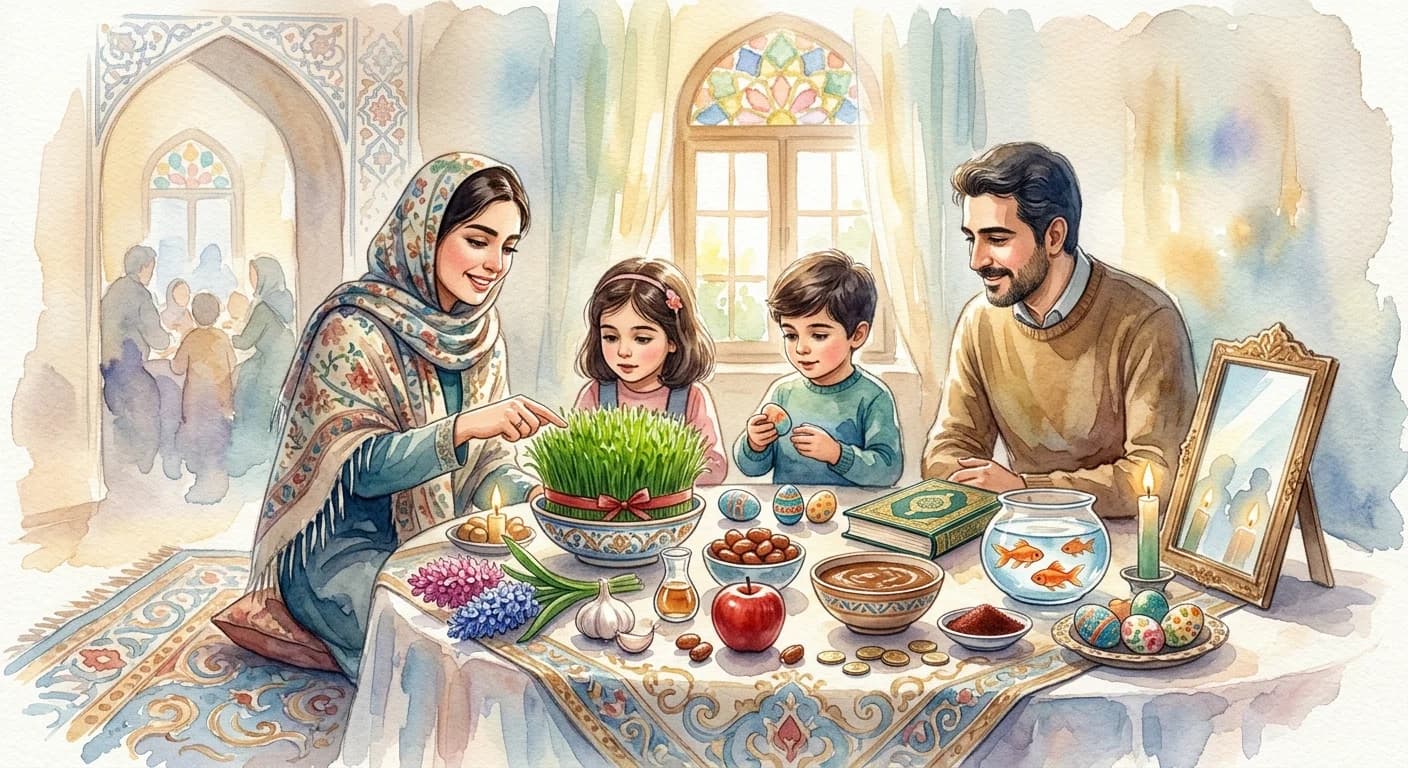
Haft Sin, meaning 'seven S's', is the vibrant and deeply symbolic traditional spread central to the Persian New Year (Nowruz) celebrations. Each of the seven core items, whose Persian names begin with the letter 'S', represents a profound wish for the year ahead, such as rebirth (sabzeh), health (sir), prosperity (sekkeh), and patience (senjed). More than mere decoration, this meticulously arranged tableau is a sacred ritual, embodying the spirit of renewal, gratitude for nature's bounty, and an ancient connection to Zoroastrian traditions.
Literal Translation
Seven S's
The Story Behind the Word
The Haft Sin's roots delve deep into ancient Persia, intertwined with Zoroastrianism, a pre-Islamic religion that revered nature and its cycles. Nowruz, the vernal equinox, marks the triumph of light over darkness and the renewal of life, a concept central to Zoroastrian philosophy. The choice of seven items is significant, as 'seven' has long been considered a mystical and auspicious number in Persian culture, symbolizing creation, perfection, and immortality. The Haft Sin thus reflects a worldview deeply connected to the rhythm of the seasons, emphasizing harmony with nature, the pursuit of good thoughts, words, and deeds, and an enduring optimism for life's continuous rebirth. It's a tangible expression of hope and a link to a rich, continuous cultural heritage.
Experience It
Setting the Haft Sin
A few days before Nowruz, the entire family gathers. Children eagerly help arrange the Haft Sin, carefully placing the sabzeh (sprouted wheat) in the center, polishing the sekkeh (coins), and recounting what each 'S' represents. The air is filled with anticipation and the sweet smell of hyacinths.
Nowruz Moment
As the exact moment of the vernal equinox approaches, the family sits quietly around the beautifully adorned Haft Sin. The television counts down the seconds, and as the new year begins, hugs and well wishes are exchanged, followed by gifts, all centered around this symbol of renewal and hope.
The Deeper Meaning
The Haft Sin embodies a profound philosophy of cyclical renewal and interconnectedness. It teaches that prosperity, health, and joy are not merely gifts but outcomes of harmony with natural cycles and a positive outlook. Each item, from the burgeoning life of sabzeh to the patience of senjed, encourages introspection and a conscious commitment to growth and well-being, reflecting a worldview where personal and communal flourishing is deeply tied to reverence for life and the anticipation of new beginnings.
Did You Know?
Beyond the seven 'S' items, the Haft Sin often includes a mirror (reflecting on the past year), candles (light and warmth), a goldfish (life), painted eggs (fertility), and a holy book or poetry by Hafez (wisdom).
How It's Used
Haft Sin is the centerpiece of the Nowruz celebration, typically set up a few days before the Persian New Year and remains displayed for about two weeks. Families gather around it to observe the exact moment of the vernal equinox and exchange gifts.