Sizdah Bedar
/SIZ-dah beh-DAR/
Meaning
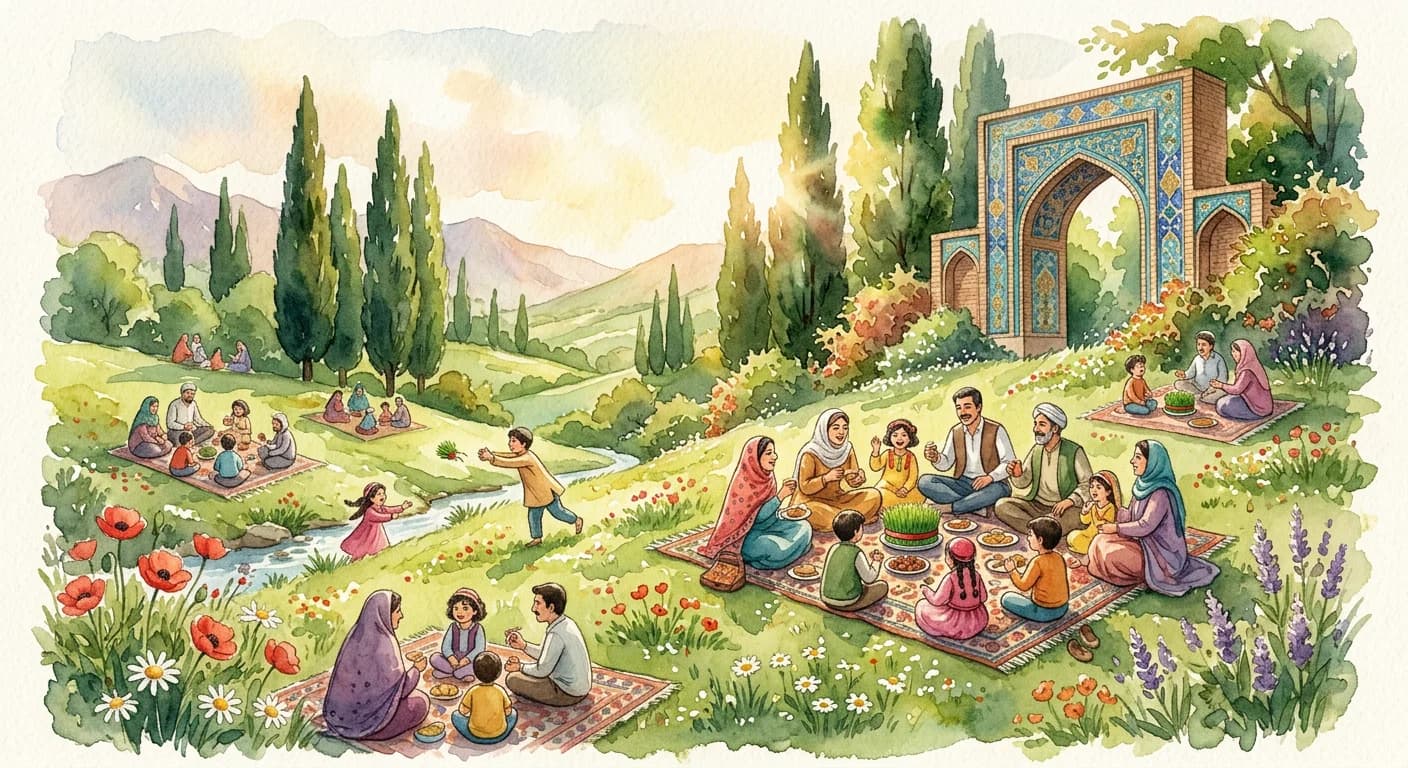
Sizdah Bedar, literally 'Thirteenth Day Out,' is a vibrant Persian festival marking the joyful culmination of the Nowruz (Persian New Year) celebrations. Observed on the thirteenth day of Farvardin (April 1st or 2nd), it's a day when families and friends collectively spill out of their homes into nature, embracing the outdoors for picnics, games, and music. This communal exodus is rooted in an ancient Zoroastrian belief to ward off the perceived ill fortune associated with staying indoors on the thirteenth day, transforming potential bad luck into a day of exuberant communion with nature and loved ones.
Literal Translation
Thirteenth Day Out
The Story Behind the Word
Sizdah Bedar is deeply embedded in ancient Zoroastrian traditions, reflecting a profound connection to nature and a worldview where harmony with the environment is paramount. The number thirteen, while considered ominous in many cultures, is actively 'defied' through collective joy and outdoor revelry, transforming potential negativity into a celebration of life. This festival reveals a cultural ethos that values community, resilience, and an active engagement with fate, rather than passive acceptance. It's a testament to the Persian spirit of turning potential adversity into an opportunity for collective happiness and renewal, emphasizing that human connection and nature are potent antidotes to misfortune. The ritual of tying grass knots and releasing them into water symbolizes casting away problems and embracing new beginnings, highlighting a cyclical understanding of life and renewal.
Experience It
Riverside Family Feast
Ahmad's family, laden with blankets and baskets, staked out a prime spot by the river. His grandmother, with knowing eyes, instructed the children on how to tie knots in the tall grass, whispering wishes for health and prosperity before they gleefully tossed them into the flowing water, symbolizing the casting away of any lingering misfortunes from the old year.
Park Games & Laughter
The park buzzed with energy as groups of friends played volleyball and backgammon. Leila and her friends, after a hearty lunch, joined a spontaneous circle dance, their laughter echoing through the trees. It was a day of pure, unadulterated joy, a collective sigh of relief and celebration after the solemnity of the New Year rituals, fully embracing the open sky.
What Gets Lost in Translation
English speakers often misunderstand Sizdah Bedar as merely a picnic day, missing its profound spiritual and cultural underpinnings. It's not just a casual outing; it's a deliberate, symbolic act of purification and renewal, a communal rejection of negativity, and a reaffirmation of life's vitality after the New Year. The 'bad luck' aspect isn't about superstition in a simple sense, but rather a deeply ingrained cultural practice of actively transforming potential misfortune through collective joy and connection to nature.
Across Cultures
While specific to Persian culture, the concept of outdoor festivities to mark seasonal changes or ward off ill omens resonates across various cultures. Japan's Hanami (cherry blossom viewing) shares the spirit of communal outdoor celebration of nature's beauty. Many European traditions, like May Day festivals, also involve outdoor gatherings and symbolic rituals for good fortune and fertility. The idea of collectively 'shooing away' bad luck through social rituals can be found in various folk traditions worldwide.
The Deeper Meaning
Sizdah Bedar embodies a philosophy of active engagement with fate and a deep reverence for the natural world. It reflects a belief that collective joy, communion with nature, and symbolic actions can transform potential negativity into positive energy. This festival underscores a worldview where humans are not passive recipients of destiny but active participants in shaping their well-being through communal celebration, resilience, and a profound connection to the earth's cycles.
Did You Know?
Did you know that the tradition of throwing 'sabzeh' (sprouted greens from the Nowruz Haft-Sin table) into running water on Sizdah Bedar symbolizes returning nature's bounty to the earth and carrying away any bad luck?
How It's Used
Celebrated outdoors, typically with picnics in parks, mountains, or by rivers. Families and friends gather, share food, play music, and engage in outdoor games. It's also a day for tying knots in blades of grass and making wishes, then throwing the grass into running water to symbolically cast away bad luck.