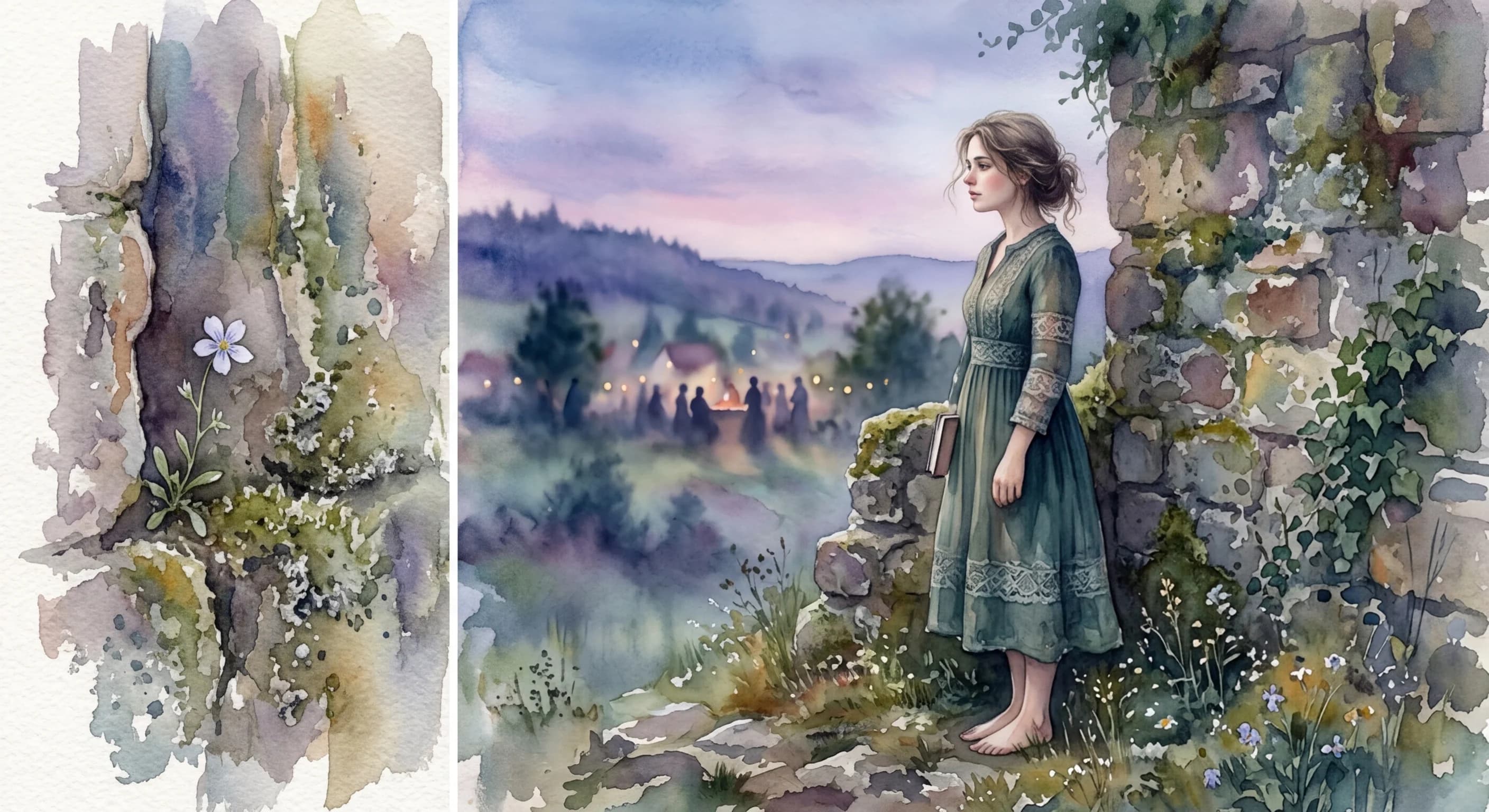
Mauerblümchen
/MOW-er-bloo-m-shen/
Meaning
A "Mauerblümchen" is not merely shy; it embodies a tender, almost poetic timidity, often a young woman, who gracefully recedes into the background of social gatherings. Like a delicate bloom nestled against a wall, she observes the vibrant dance of interaction from a quiet distance, her presence felt more as an ethereal observer than an active participant. This term carries a gentle melancholy, recognizing a quiet soul whose inherent charm and depth might be overlooked amidst the boisterous social currents, yet possesses a unique, understated beauty.
Literal Translation
wall little flower
The Story Behind the Word
The existence of "Mauerblümchen" in German culture reflects a nuanced appreciation for introversion and a recognition of inner worlds. Unlike some cultures that might exclusively valorize extroversion, German society, while valuing directness, also provides space for quiet contemplation and observation. This word doesn't necessarily imply a negative judgment; rather, it often evokes a sense of protective empathy, acknowledging that not everyone is suited for the spotlight. It speaks to a cultural understanding that depth can reside in stillness, and that some individuals find their comfort and expression not in outward display, but in quiet reflection and keen observation. This word, therefore, subtly critiques the singular focus on social dominance and celebrates the intricate beauty of a reserved spirit, often seen as possessing a refined sensibility.
Experience It
The Ball's Edge
At the annual university ball, Lena, in her elegant but understated dress, found herself near the potted palms. She watched the couples twirl and the laughter erupt, a faint, knowing smile playing on her lips. She was the quintessential Mauerblümchen, content to absorb the atmosphere rather than plunge into the fray.
Family Gathering
During the boisterous family reunion, little Clara clung to her mother's skirt, her eyes wide as she took in the cacophony of voices and games. She wasn't sad or bored, just absorbing every detail, a tiny Mauerblümchen observing the joyful chaos from her safe haven.
The Deeper Meaning
The "Mauerblümchen" highlights a philosophical acceptance of diverse social temperaments, challenging the notion that active participation is the sole measure of engagement or worth. It underscores a recognition of the value in observation, reflection, and the quiet dignity of those who find their strength not in outward expression but in the rich tapestry of their inner lives. It suggests that society is richer for encompassing both the vibrant and the subtly profound.
Did You Know?
The 'little flower' suffix (-blümchen) adds a diminutive, almost affectionate quality, making it less harsh than a simple 'wallflower' and hinting at a delicate, cherished quality.
How It's Used
Used to describe someone, typically a woman or girl, who is shy and tends to stay on the sidelines at parties or social events, often observing rather than engaging.