İmece
/ee-meh-JEH/
Meaning
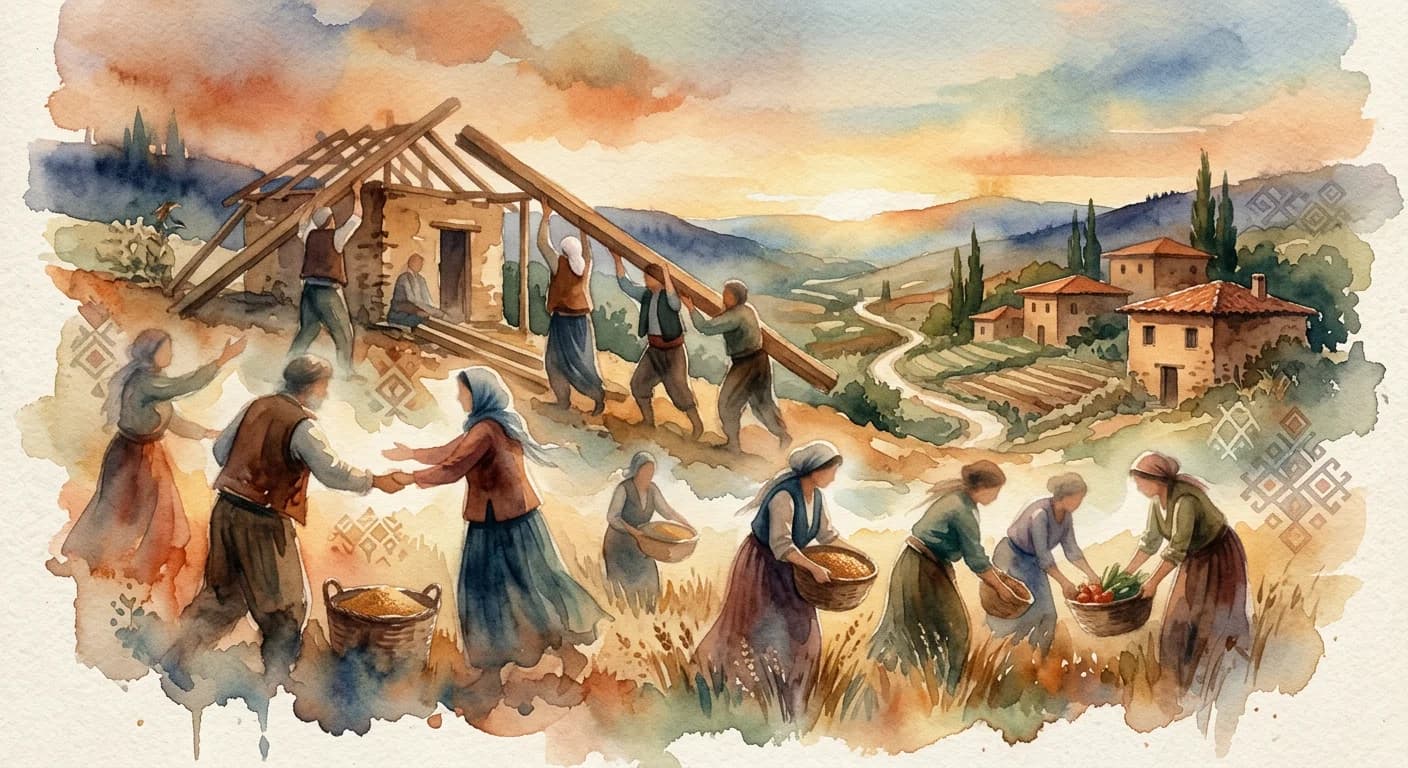
İmece is the vibrant pulse of communal solidarity in Turkey, particularly in its rural heartlands. It signifies the spontaneous, unpaid outpouring of collective labor from neighbors and friends, converging to tackle tasks too grand for any single family—be it constructing a new home, bringing in a bountiful harvest, or orchestrating a wedding feast. More than mere assistance, it is a living testament to shared responsibility, where every hand contributes to the well-being of the whole, forging unbreakable social bonds and a profound sense of belonging.
Literal Translation
Collectivistic work / Mutual aid
The Story Behind the Word
The concept of İmece is deeply rooted in Turkey's agrarian history and the necessity of collective survival in often challenging rural environments. For centuries, villages relied on mutual aid to complete large, labor-intensive tasks that were crucial for community sustenance and prosperity. This practice predates modern state structures and formal institutions, emphasizing an organic, grassroots form of governance and social security. İmece reveals a worldview where individual fate is inextricably linked to the community's well-being, where reciprocal obligations are understood and honored without explicit contracts. It embodies the Turkish value of 'komşuluk' (neighborliness) and 'dayanışma' (solidarity), fostering resilient communities through shared effort and trust.
Experience It
Harvesting the Wheat Field
The sun beat down on Mehmet's vast wheat field, threatening to spoil the crop before he could harvest it alone. Suddenly, a stream of villagers, young and old, arrived with scythes and sacks. They worked tirelessly side-by-side, their laughter mingling with the rustle of wheat, completing the monumental task by dusk, fueled by shared tea and bread.
Building a New House
When Ayşe and Ali's old house collapsed, the entire village rallied. Men hauled stones and mixed mortar, while women prepared endless pots of food and cared for the children. Within weeks, the walls rose, and a new roof was laid, a testament to the community's collective will and unwavering support for its own.
The Deeper Meaning
İmece embodies a profound understanding of interdependence and the strength found in unity. It reflects a philosophy where collective well-being precedes individual gain, and where social capital—the bonds of trust, reciprocity, and shared values—is seen as the most valuable asset. This worldview emphasizes that true prosperity and resilience emerge from a community's ability to act as a single, cohesive unit, providing a safety net and fostering a sense of shared destiny.
Did You Know?
İmece is so integral to Turkish culture that even modern cooperative movements and local government initiatives sometimes adopt the term to evoke a sense of traditional collective action and community spirit.
How It's Used
Typically used to describe collective, voluntary work where community members help each other with tasks that are too large for one person or family to handle alone. It reflects a cooperative spirit vital for the functioning of many villages and communities.