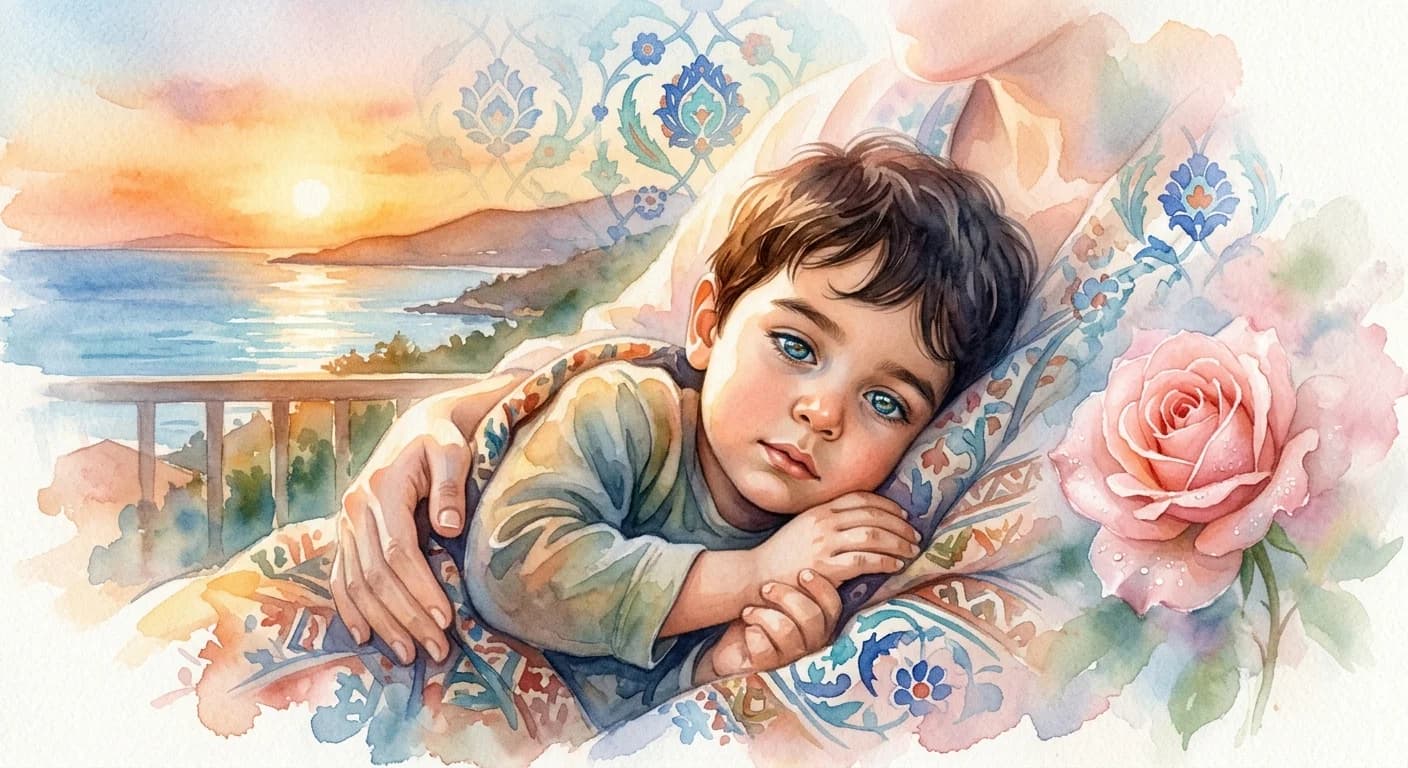
Şımarmak
/shi-mar-MAK/
Meaning
Şımarmak captures the essence of being spoiled, not in a purely negative sense, but with an underlying current of endearment and affection. It describes the state of someone, often a child or a beloved adult, who has been showered with so much love, attention, and indulgence that they begin to exhibit petulant, demanding, or overly confident behavior. This resulting attitude, while potentially annoying, is often tolerated and even implicitly cherished as a byproduct of deep love and care, highlighting a complex interplay between spoiling and affection within close relationships.
Literal Translation
to be spoiled
The Story Behind the Word
The existence of 'şımarmak' in Turkish culture reflects a deep-seated value placed on familial bonds, hospitality, and the expression of affection, particularly towards children and guests. Turkish society often embraces a nurturing, somewhat indulgent approach to raising children, where showering them with attention and fulfilling their desires is seen as a natural extension of love. This word encapsulates the understanding that such boundless affection can lead to a child's 'şımarmak'—a state that is acknowledged, sometimes gently chided, but rarely condemned outright. It reveals a cultural acceptance of the idea that love, in its purest form, can sometimes manifest in an excess that leads to charmingly demanding behavior, rather than outright malice. It also highlights a communal responsibility for the emotional well-being of individuals, where 'şımarmak' is often a sign of feeling secure and loved within one's social circle.
Experience It
Grandma's Little Prince
Little Ayşe, after spending a week at her grandmother's house where every whim was catered to, returned home and refused to eat anything but chocolate. Her mother sighed, 'Ah, Ayşe has şımarmak at her grandma's again!'
Spoiled by Love
Can, after receiving lavish gifts and constant praise from his fiancée, started expecting her to anticipate his every need without him asking. His friends teased him, saying, 'You've really şımarmak with all of Elif's attention!'
The Deeper Meaning
This word subtly reveals a cultural philosophy that acknowledges the delicate balance between unconditional love and its potential consequences. It suggests that true affection isn't always about strict discipline, but sometimes involves an indulgence that, while leading to 'şımarmak,' is ultimately seen as a testament to the depth of care. It embraces the idea that certain 'flaws' born from love are more endearing than truly problematic, offering a nuanced view of human relationships and the expressions of affection.
Did You Know?
The root 'şımar-' is believed to be onomatopoeic, possibly mimicking the sound of someone acting pompous or overly pleased with themselves, adding a playful dimension to its meaning.
How It's Used
Typically used to describe children or pets who are overly indulged and become demanding, but also used affectionately for adults who are spoiled by their partners or families.