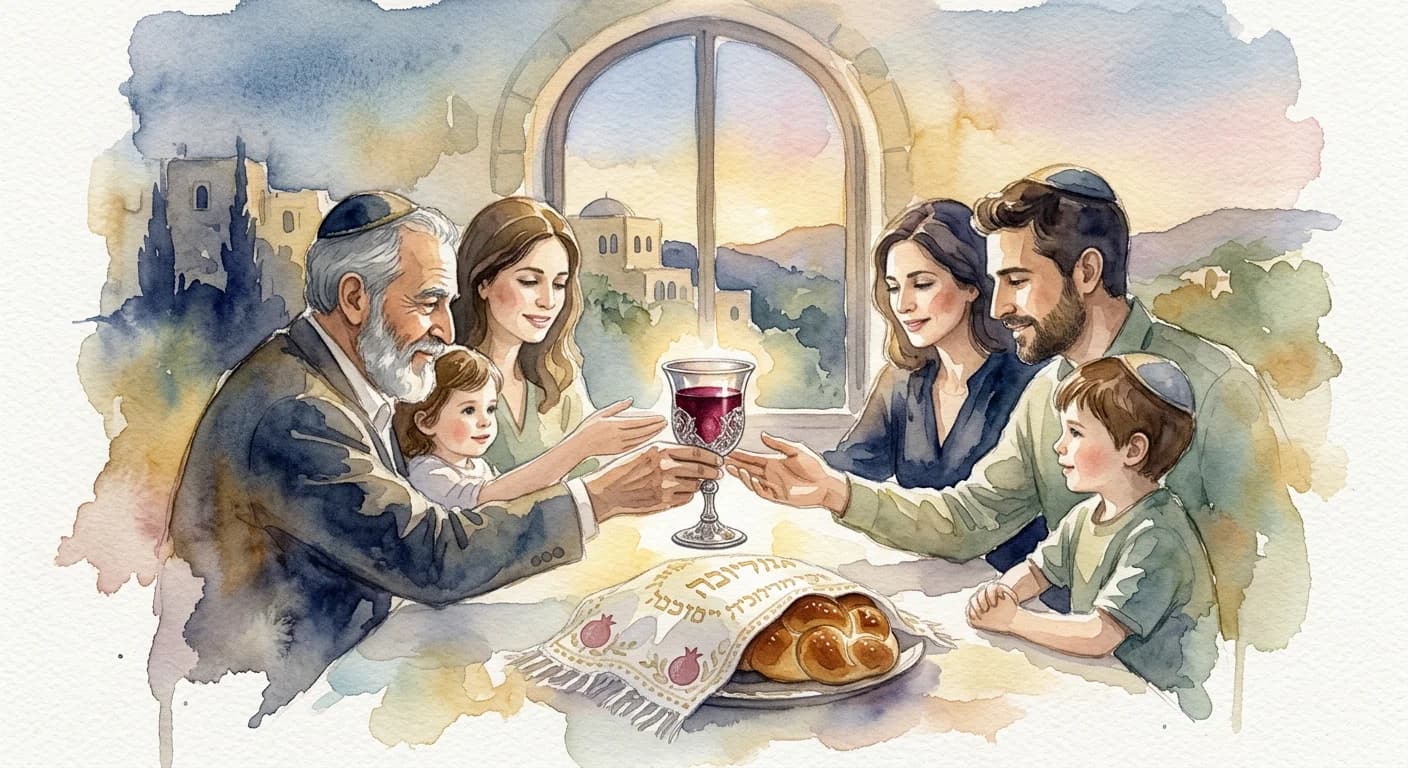
Kiddush
/KID-oosh/
Meaning
Kiddush, meaning 'sanctification,' is a profound Jewish ritual blessing recited over wine or grape juice, serving as a spiritual gateway to the Sabbath and Jewish holidays. It's far more than a mere prayer; it's a sacred act of intentional separation, elevating the mundane into the holy and marking a transformative transition from the week's toil to a period of rest, reflection, and deep spiritual connection. This shared moment imbues an ordinary drink with holiness, fostering a powerful sense of community, continuity, and belonging within Jewish tradition, anchoring individuals to millennia of heritage.
Literal Translation
Sanctification
The Story Behind the Word
The concept of Kiddush is deeply rooted in the biblical command to 'remember the Sabbath day, to keep it holy.' It emerged as a rabbinic institution, solidifying around the destruction of the Second Temple, to ensure the sanctity of Shabbat and festivals remained central even without a Temple cult. Kiddush embodies the Jewish worldview that holiness is not confined to sacred spaces but can be brought into the home and infused into everyday life through intention and ritual. It reflects a profound understanding of time – that certain periods are inherently sacred and must be actively welcomed and distinguished from the profane. This ritual underscores the value of family, community, and the deliberate creation of sacred time as essential components of Jewish identity and survival throughout history, providing a stable anchor in a changing world.
Experience It
Welcoming Shabbat Peace
As the sun dipped below the horizon, signaling the start of Shabbat, the family gathered around the candlelit table. Father held the silver Kiddush cup aloft, his voice resonating with the ancient blessing, transforming the simple wine into a symbol of the day's holiness and ushering in an atmosphere of peace and togetherness.
Holiday Joy and Connection
At the Passover Seder, after the initial blessings, the community raised their cups for Kiddush, a collective declaration of the holiday's sanctity. The shared recitation, children's voices echoing, deepened their connection to the story of liberation and to each other, marking the beginning of the festive meal.
The Deeper Meaning
Kiddush reveals a profound philosophy of sanctification: that holiness is not just inherent but also actively created and declared through human intention and ritual. It posits that time itself can be made sacred, distinguishing the ordinary from the extraordinary. This act underscores the human capacity to elevate the mundane, infusing everyday elements like wine with spiritual significance, thereby transforming perception and experience within a sacred framework.
Did You Know?
Traditionally, the wine used for Kiddush must be kosher, and the person reciting the Kiddush must drink at least a 'meló lugmav' (a cheekful) to fulfill the obligation for everyone present.
How It's Used
Recited on Friday night to welcome the Sabbath, on Saturday during meals, and before holidays and festivals.