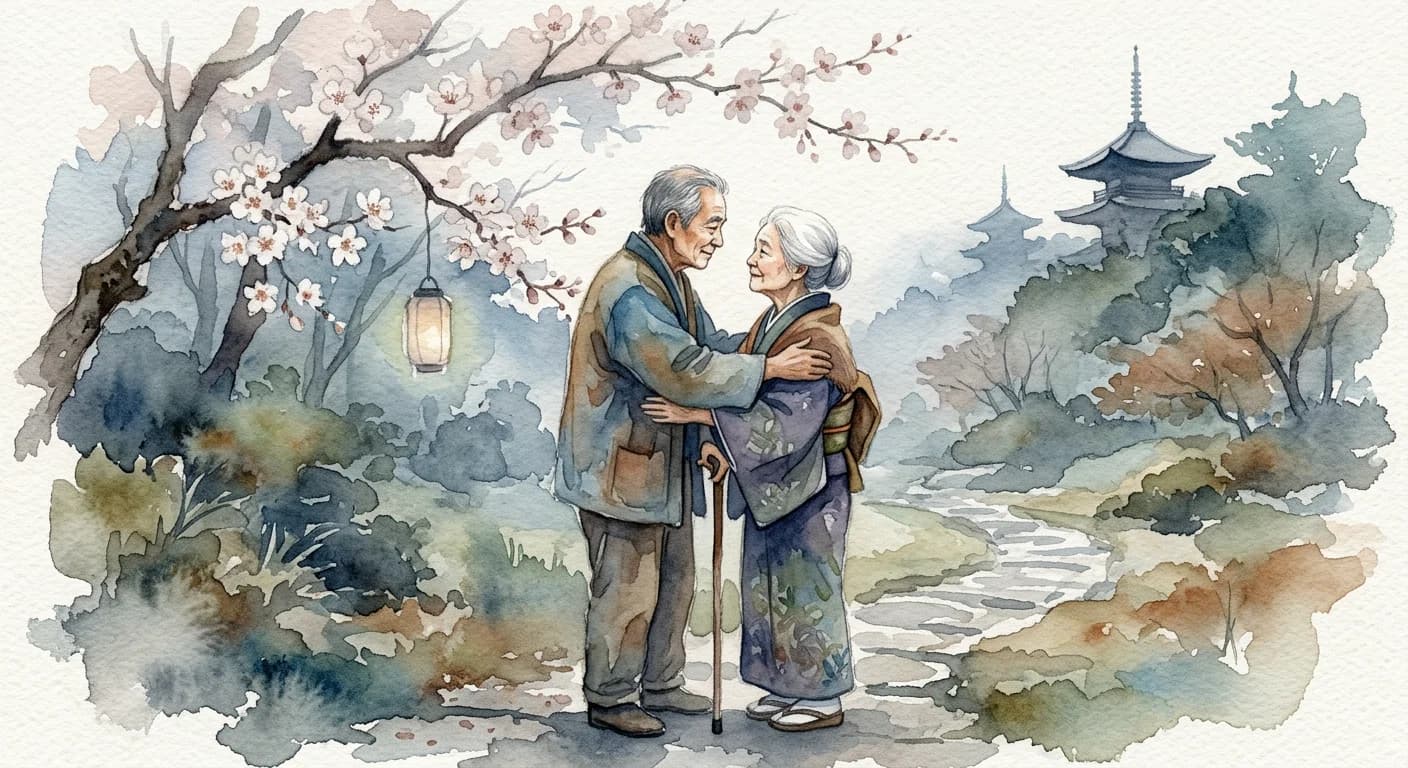
Age-otori
/AH-geh-OH-toh-ree/
Meaning
Age-otori captures the subtle, almost imperceptible transformation in one's appearance over time, particularly when encountering a familiar face after a long hiatus. It's not about drastic changes, but rather the delicate etchings of experience—a faint line at the corner of an eye, a softened jawline, or a newfound depth in one's gaze. This term evokes a complex blend of recognition, nostalgia, and the gentle melancholy of lives lived uniquely, reflecting on shared history and individual journeys through the quiet passage of time.
Literal Translation
Age-butterfly
The Story Behind the Word
The existence of 'age-otori' in Japanese culture speaks to a profound appreciation for the ephemeral nature of beauty and the passage of time, central tenets in aesthetics like 'wabi-sabi' and 'mono no aware.' Japanese culture often emphasizes subtle observation and sensitivity to natural processes, including aging. Unlike Western cultures that might focus on combating or reversing aging, 'age-otori' acknowledges and even subtly honors the marks of time as an integral part of life's narrative. It reflects a societal value placed on quiet contemplation and the unspoken understanding between individuals who share a history, recognizing that every wrinkle and softened feature tells a story of lived experience.
Experience It
Reunion on the Train
After two decades, Kenji spotted his old high school friend, Hiroshi, across the train platform. Hiroshi's smile was the same, but Kenji noticed a gentle 'age-otori' in the slight silvering at his temples and the quiet wisdom in his eyes, a testament to the years that had passed.
Sister's Homecoming
When Mika returned home from abroad, her younger sister, Aiko, greeted her. Aiko, now a young woman, carried a subtle 'age-otori' in the more defined contours of her face and the mature way she held herself, a beautiful evolution Mika hadn't witnessed day-to-day.
The Deeper Meaning
This word beautifully encapsulates the Japanese philosophical concept of 'mono no aware' – the pathos of things, a gentle melancholy and wistful appreciation for the transient nature of beauty and life. It encourages an acceptance of change and aging not as decay, but as a natural, beautiful, and emotionally rich part of existence, inviting reflection on the impermanence of all things.
Did You Know?
Despite its resonant meaning, 'age-otori' is a relatively modern coined term, reflecting a contemporary desire to articulate a deeply felt, yet previously unnamed, nuanced observation.
How It's Used
Used when meeting someone after a significant period, and noticing the subtle physical changes that have occurred due to aging.