U.
HomeRegionsLanguagesEmotionsCollections
Find Your Word

“The limits of my language mean the limits of my world.”

— Ludwig Wittgenstein, Philosopher

Untranslatable

A curated collection of the world's most beautiful expressions—words that remind us language is humanity's greatest invention.

  • Home
  • Collections
  • Regions
  • Countries
  • Emotions
  • Tags
  • Contexts
  • Finder
  • Europe
  • Asia
  • Americas
  • Africa
  • Middle East
  • About
  • Contact
  • Privacy Policy
  • Terms of Service

2026 © Untranslatable. All rights reserved.

    /
    /
    1. Home
    2. /
    3. Americas
    4. /
    5. Pana Po'o
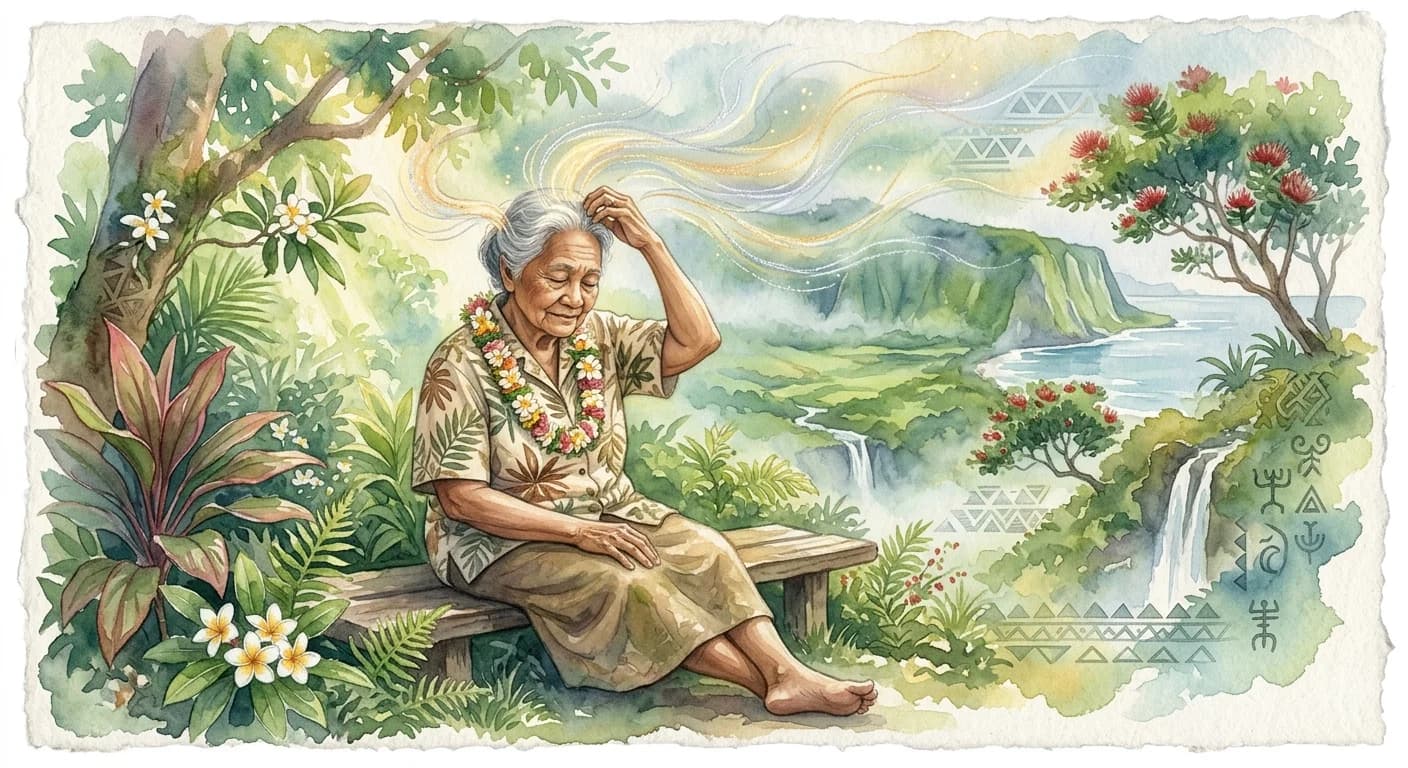
    Artistic representation of Pana Po'o
    Hawaiian•
    🇺🇸United States

    Pana Po'o

    /PAH-nah POH-oh/

    Meaning

    Pana Po'o describes the instinctive action of gently scratching one's head, not out of itchiness, but as a deliberate, almost ritualistic gesture to summon a memory or evoke a thought. It's a physical conduit for accessing deep-seated knowledge, whether recalling a forgotten name, a cherished story, or a detail from the past. This act embodies a mindful pause, a silent conversation with one's inner wisdom, and signifies the patient, respectful process of memory retrieval deeply valued in Hawaiian culture.

    Literal Translation

    Pana (to touch, to strike, to scratch) Po'o (head)

    The Story Behind the Word

    The existence of 'Pana Po'o' in Hawaiian culture reveals a profound respect for memory, oral tradition, and the internal wellspring of knowledge. In a society where stories, genealogies, and practical wisdom were passed down through generations, the ability to recall accurately was paramount. This gesture isn't just a physical tic; it's a cultural acknowledgment that memory isn't always readily available and sometimes requires a gentle coaxing. It reflects a worldview where the mind is seen as a vast repository, and the act of 'pana po'o' is a respectful inquiry into that sacred space. It also subtly connects to the concept of 'mana' (spiritual power or essence), suggesting that true understanding and recall might require a certain alignment or focus, which the physical act helps to achieve. It speaks to patience, introspection, and the value of contemplative thought in accessing one's intellectual and ancestral heritage.

    Experience It

    Recalling an Ancestor's Name

    Auntie Leilani was sharing family stories when she paused, her brow furrowed. She gently began to pana po'o, her fingers lightly raking her scalp, as she tried to recall the name of a distant great-uncle, the missing piece of her genealogy.

    Searching for a Lost Lyric

    Kekoa was strumming his 'ukulele, trying to remember the second verse of an old hula song. He stopped, closed his eyes for a moment, then started to pana po'o, hoping to coax the forgotten lyrics from his memory.

    The Deeper Meaning

    Pana Po'o underscores a philosophy where memory is not merely a cognitive function but a living connection to the past and a wellspring of wisdom. It embodies the belief that knowledge is often latent, requiring mindful effort and a respectful, almost reverent, approach to be brought forth. It highlights the value of introspection and patience in the pursuit of understanding, reflecting a culture that cherishes deep thought and the rich tapestry of inherited knowledge.

    Did You Know?

    While often subconscious, the physical act of pana po'o is believed by some to literally stimulate blood flow to the brain, subtly aiding the memory retrieval process.

    How It's Used

    Used colloquially in Hawaii when someone is trying to remember something, often accompanied by the physical act of scratching their head.

    Emotions
    belonging,nostalgia,serenity
    Contexts
    conversation,history,storytelling
    🇺🇸United States

    by Anya Petrova·Written Mar 14, 2026·Updated Apr 3, 2026

    Related Words

    Explore more
    SobremesaSpanish

    Sobremesa is the cherished, often extended period immediately following a meal, particularly lunch or dinner, where diners remain seated at the table to enjoy conversation, coffee, and digest not just the food, but the company itself. It’s a dedicated time for unhurried social bonding, storytelling, and shared laughter, transforming a simple meal into a profound communal experience. Far from just clearing the dishes, sobremesa is an integral part of Spanish social life, often lasting for hours.

    Pura vidaSpanish

    More than just 'pure life,' "Pura vida" encapsulates a profound philosophy of embracing the present moment with unwavering optimism and gratitude. It's a daily commitment to finding joy in simple pleasures, accepting life's challenges with a positive spirit, and prioritizing well-being over material possessions. This ubiquitous phrase reflects a national identity built on resilience, community, and an deep appreciation for nature's bounty.

    MamihlapinatapaiYaghan

    Mamihlapinatapai encapsulates that profound, unspoken moment when two individuals lock eyes, each silently acknowledging a mutual desire or intention, yet both hesitate to be the first to act upon it. It's a delicate dance of anticipation, a shared gaze brimming with common understanding and a quiet longing for the other to break the ice. This intricate look carries the weight of a shared, uninitiated potential, a silent conversation where both parties are perfectly aware of what could happen, but neither makes the first move.

    UbuntuZulu/Xhosa

    Ubuntu is a profound African philosophy that translates to 'I am because we are,' signifying that an individual's humanity is inextricably linked to the humanity of others. It embodies the belief that our existence and well-being are deeply intertwined with the community. This concept emphasizes compassion, reciprocity, dignity, and the understanding that true fulfillment is found not in isolation, but through collective flourishing and mutual support. It's a call to recognize and affirm the humanity in everyone, fostering a sense of interconnectedness.