U.
HomeRegionsLanguagesEmotionsCollections
Find Your Word

“The limits of my language mean the limits of my world.”

— Ludwig Wittgenstein, Philosopher

Untranslatable

A curated collection of the world's most beautiful expressions—words that remind us language is humanity's greatest invention.

  • Home
  • Collections
  • Regions
  • Countries
  • Emotions
  • Tags
  • Contexts
  • Finder
  • Europe
  • Asia
  • Americas
  • Africa
  • Middle East
  • About
  • Contact
  • Privacy Policy
  • Terms of Service

2026 © Untranslatable. All rights reserved.

    /
    /
    1. Home
    2. /
    3. Asia
    4. /
    5. Yugen
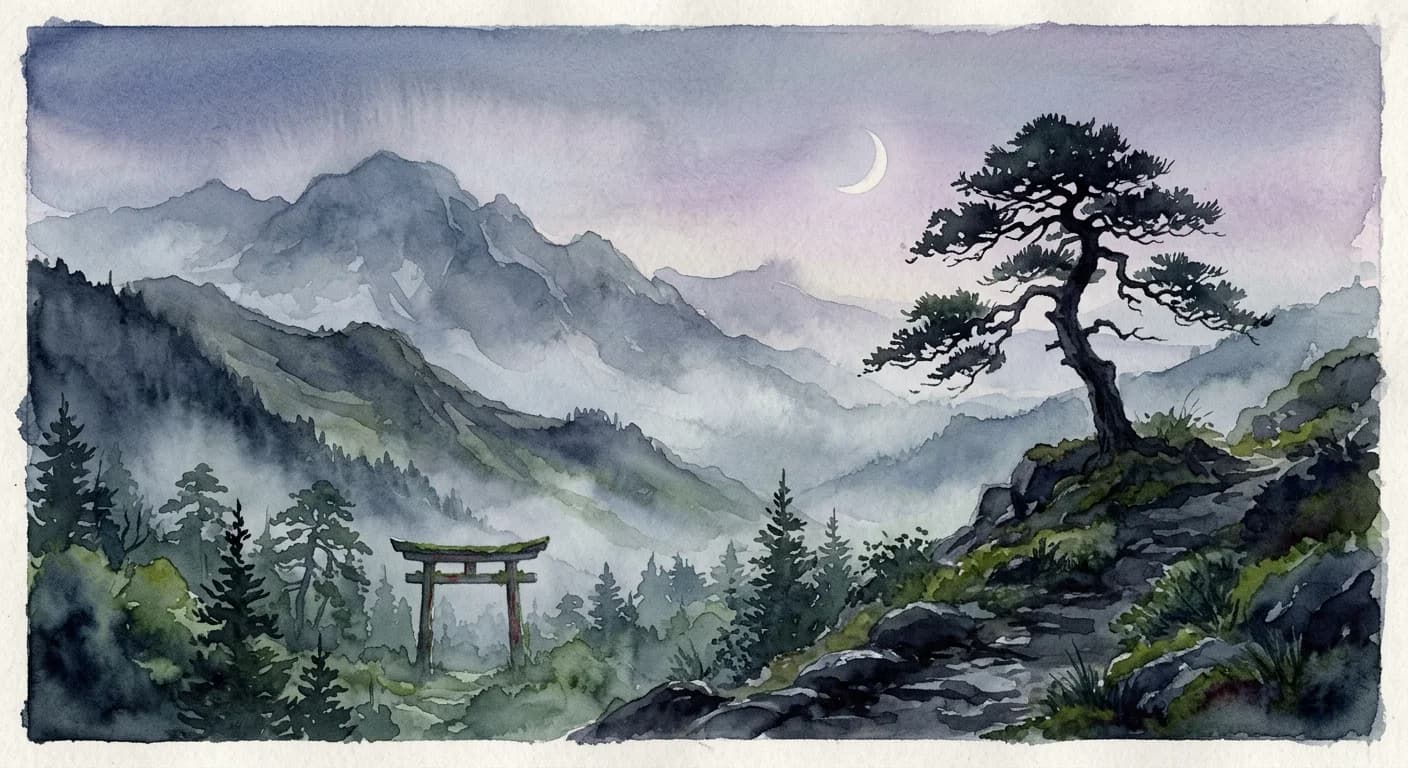
    Artistic representation of Yugen
    Japanese•
    🇯🇵Japan

    Yugen

    /YOO-gen/

    Meaning

    Yugen captures the profound, ineffable beauty of the universe, often felt as a mysterious undercurrent in nature or art. It's an awareness of a deeper reality that lies just beyond direct perception, a subtle profundity that evokes awe, contemplation, and a poignant sense of the ephemeral. This aesthetic points to a hidden spiritual dimension, suggesting an eternal beauty that transcends the visible and stirs the soul with its elusive grace.

    Literal Translation

    profound grace, subtle profundity

    The Story Behind the Word

    Yugen's roots are deeply entwined with Zen Buddhism and classical Japanese aesthetics, emerging prominently in the Heian period. It was formalized by poets and dramatists like Zeami Motokiyo in Noh theater, advocating for performances that hint at profound emotion and meaning rather than explicitly displaying them. This concept reflects a worldview that values suggestion over declaration, the unseen over the seen, and the transient nature of existence. It reveals a cultural appreciation for understated elegance, the power of silence, and the profound beauty found in impermanence and the subtle shifts of the natural world, encouraging introspection and a connection to something larger than oneself.

    Experience It

    Moonlit Garden Path

    Walking through a moonlit moss garden, the faint outline of a stone lantern emerges from the mist. The soft glow and the hush of the night evoke a sense of yugen, hinting at ancient stories and the quiet mystery of time passing.

    Noh Play's Climax

    During a Noh performance, a masked actor's slow, deliberate movement and a single, sustained flute note create an atmosphere of profound stillness. The audience feels the unexpressed sorrow and the spectral presence of the character, a deep yugen resonating through the minimalist stage.

    The Deeper Meaning

    Yugen embodies a philosophy that truth and beauty are not always overt but often reside in the subtle, the suggested, and the unseen. It encourages a contemplative approach to life and art, where one seeks deeper meaning beyond surface appearances. This worldview values intuition and emotional resonance over strict logic, fostering a profound appreciation for the interconnectedness of existence and the transient, yet eternal, nature of beauty.

    Did You Know?

    The concept of Yugen is so elusive that even classical Japanese aestheticians struggled to define it precisely, often using metaphors like 'a white cloud floating in a blue sky' or 'a bird flying across a vast, empty sea' to convey its essence.

    How It's Used

    Yugen is often used in discussions of Japanese art, literature, and aesthetics, particularly in relation to poetry, theater (like Noh), and visual arts. It describes a mood or atmosphere that evokes a sense of mystery and profound depth, rather than explicit representation.

    Emotions
    melancholy,serenity,wonder
    Contexts
    nature,seasons,solitude
    🇯🇵Japan

    by Sofia Rossi·Written Mar 14, 2026·Updated Apr 3, 2026

    Related Words

    Explore more
    SaudadePortuguese

    Saudade encapsulates a profound, melancholic longing for something or someone cherished that is absent, often with the bittersweet knowledge that it may never return. It's a deep emotional state tinged with nostalgia, evoking a sense of loss for past experiences, places, or people, yet also holding a tender appreciation for the beauty of what once was. This yearning is not merely sadness, but a complex tapestry of desire, memory, and a poignant acceptance of absence, holding the beloved in a warm, persistent embrace within the heart.

    Wabi-sabiJapanese

    Wabi-sabi is the profound appreciation for the ephemeral, the imperfect, and the incomplete aspects of existence. It is about discovering beauty in the subtle textures of age, the unique character of flaws, and the gentle decay that marks the passage of time. This philosophy encourages a quiet acceptance of impermanence and a mindful connection to the natural world, finding elegance in simplicity and authenticity.

    IkigaiJapanese

    Ikigai is more than just a reason to get out of bed; it's a deeply personal and evolving sense of purpose that brings genuine fulfillment and joy to one's life. It represents the sweet spot where your passions, talents, needs of the world, and what you can be paid for beautifully converge. Discovering your ikigai often leads to a life lived with intentionality, resilience, and a profound connection to one's contributions. It's the intrinsic motivation that fuels a meaningful existence, regardless of external circumstances.

    NunchiKorean

    Nunchi is the sophisticated, almost telepathic, ability to instantly grasp the unspoken dynamics of any social situation, anticipating others' thoughts and feelings, and then responding with impeccable grace and timing. It's an acute form of social intuition, allowing one to navigate complex interpersonal landscapes by reading subtle cues like body language, tone, and context. Possessing good nunchi means effortlessly understanding the underlying emotional currents and adjusting one's behavior to maintain harmony and effectiveness, often without a single word exchanged.