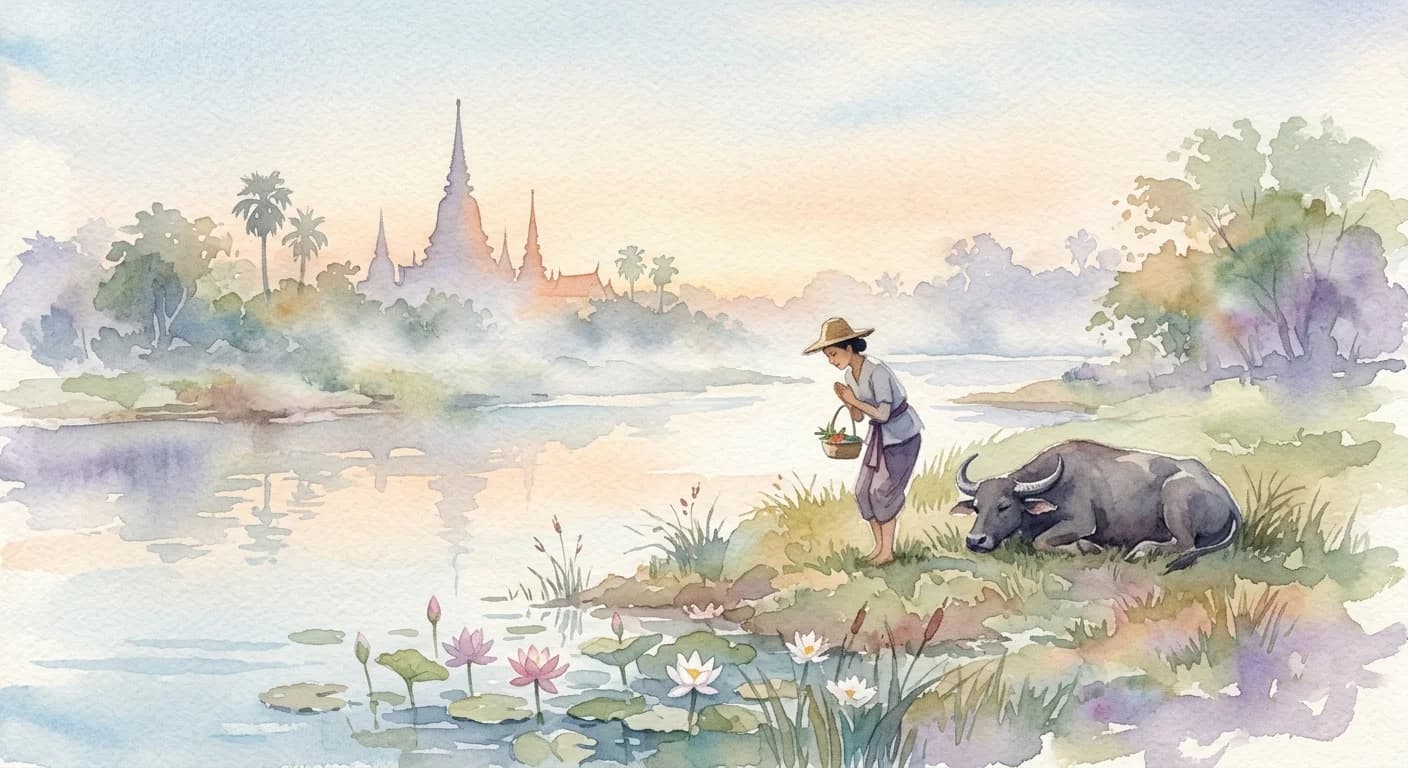
Greng-jai
/GRENG-jai/
Meaning
Greng-jai encapsulates a profound sense of self-restraint and thoughtful consideration for others, manifesting as a deep-seated reluctance to impose, inconvenience, or burden anyone. It's an internal barometer that gauges the potential impact of one's actions, leading individuals to often prioritize the comfort and peace of those around them, even at personal cost. This nuanced feeling extends beyond mere politeness, reflecting a genuine desire to maintain social harmony by avoiding any perceived imposition or disruption. It's a spontaneous, almost instinctive, hesitation to ask for favors or accept offerings if it might cause even the slightest trouble.
Literal Translation
To be inhibited or to be hesitant out of consideration
The Story Behind the Word
Greng-jai is a cornerstone of Thai social etiquette, deeply rooted in the collectivist and hierarchical nature of Thai society, heavily influenced by Theravada Buddhism. The concept emphasizes interdependence and the importance of maintaining 'naa' (face) and social harmony (ความสงบสุข, kwaam sa-ngop suk). This cultural value discourages direct confrontation or open imposition, fostering an environment where individuals are expected to anticipate and mitigate potential inconveniences for others. It reflects a worldview where personal desires often take a backseat to group well-being and the smooth functioning of social interactions, acting as a lubricant for relationships and a guardian of collective peace. The absence of greng-jai is often seen as rude or uncaring, highlighting its central role in defining proper social conduct.
Experience It
The Reluctant Ride
Pim's friend offers her a ride home, but Pim lives slightly out of the way. Despite being tired, Pim insists it's no trouble and tries to decline, feeling greng-jai because she doesn't want to inconvenience her friend with an extra stop, even though the friend genuinely doesn't mind.
Quiet Discomfort
At a restaurant, a waiter accidentally bumps into Somchai, spilling a little water. Somchai, feeling greng-jai, immediately assures the waiter it's 'mai pen rai' (no problem) and tries to clean it himself, not wanting to make the waiter feel bad or cause further fuss, even if he's a bit wet.
The Deeper Meaning
Greng-jai reveals a deeply humanistic philosophy centered on empathy and the interconnectedness of individuals within a community. It underscores the belief that personal well-being is intrinsically linked to the harmony of the collective, advocating for a constant awareness of how one's actions ripple through the social fabric. This concept champions a subtle, non-verbal communication of care and respect, prioritizing the emotional comfort and dignity of others above one's immediate needs or desires, thereby fostering a culture of mutual consideration and peace.
Did You Know?
The feeling of greng-jai can sometimes lead to an 'over-politeness' where both parties are so concerned about inconveniencing the other that a simple task or request becomes surprisingly complicated!
How It's Used
Used in social interactions, particularly when someone is considering asking for a favor, or when someone is offering something and the other person feels reluctant to accept due to not wanting to inconvenience the giver.