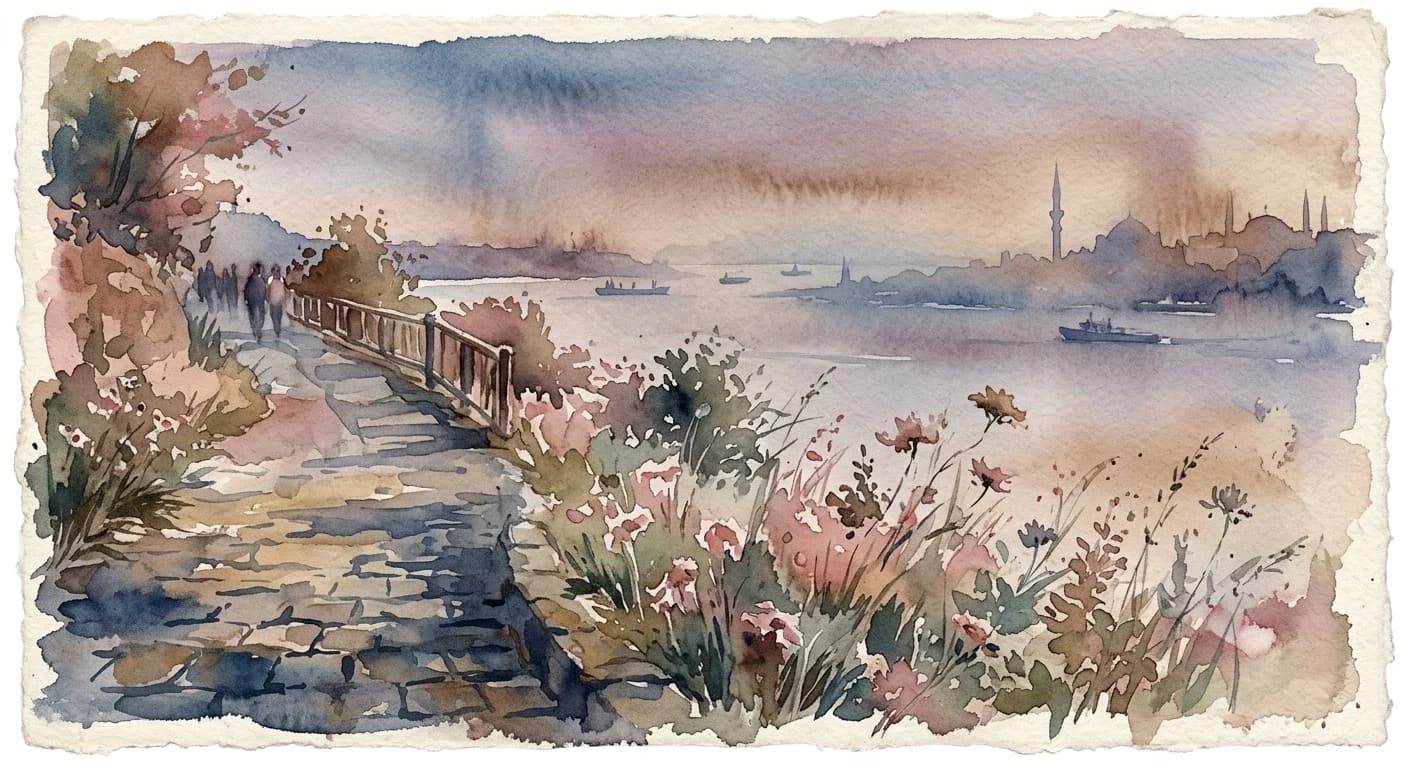
Hüzün
/HOO-zun/
Meaning
Hüzün is a profound, almost spiritual melancholy, deeply woven into the fabric of Turkish culture, particularly Istanbul's soul. It transcends mere sadness, encapsulating a complex tapestry of loss, longing, and a bittersweet appreciation for life's fleeting beauty and inherent impermanence. This shared, communal sentiment acknowledges the beauty of the world alongside its inevitable sorrows, offering a strangely comforting, wistful acceptance of the human condition's delicate balance between joy and fragility.
Literal Translation
melancholy, sadness
The Story Behind the Word
The concept of Hüzün is deeply rooted in Istanbul's historical layers, from the grandeur and eventual decline of empires to the city's unique geographical position straddling continents and eras. It's influenced by Sufi mysticism, which embraces a melancholic yearning for the divine, and by Ottoman classical music (Türk Sanat Müziği) with its often mournful makams. For centuries, Istanbulites have observed the Bosphorus's ceaseless flow, the decay of once-magnificent structures, and the passage of countless generations, fostering a collective consciousness that finds beauty in transience and introspection in sorrow. Hüzün reveals a culture that doesn't shy away from sadness but rather embraces it as an integral, even noble, part of existence, a lens through which to appreciate life's depth and impermanence.
Experience It
Bosphorus Twilight Reverie
An elderly man sits by the Bosphorus as the sun dips below the horizon, casting crimson hues over the ancient city. He watches the ferries glide by, their lights twinkling, and feels a deep hüzün — a quiet ache for times gone by, for the countless stories whispered by the wind, yet also a profound appreciation for the enduring beauty of Istanbul.
Rainy Day Nostalgia
A young woman sips tea in a historic café on a rainy afternoon, the streets outside glistening. She observes the muted colors and the hurried pace of passersby, feeling a familiar hüzün wash over her. It's not personal despair, but a shared sense of wistfulness for a simpler past, a melancholic comfort in the city's enduring spirit.
The Deeper Meaning
Hüzün embodies a profound philosophical acceptance of life's dualities: beauty alongside decay, joy intertwined with sorrow, and existence's inherent impermanence. It suggests that true wisdom lies not in escaping sadness, but in acknowledging and even embracing it as a vital component of the human experience. This allows for a deeper appreciation of fleeting moments and a more grounded, empathetic connection to the shared human condition.
Did You Know?
Nobel laureate Orhan Pamuk dedicated an entire book, 'Istanbul: Memories and the City,' to exploring the concept of hüzün as the defining spirit of his hometown.
How It's Used
Hüzün is often used to describe a collective mood or atmosphere, particularly in relation to the city of Istanbul and its history. It can be evoked by observing the Bosphorus, remembering past glories, or simply contemplating the fleeting nature of beauty and life.