Karelu
/KAH-reh-loo/
Meaning
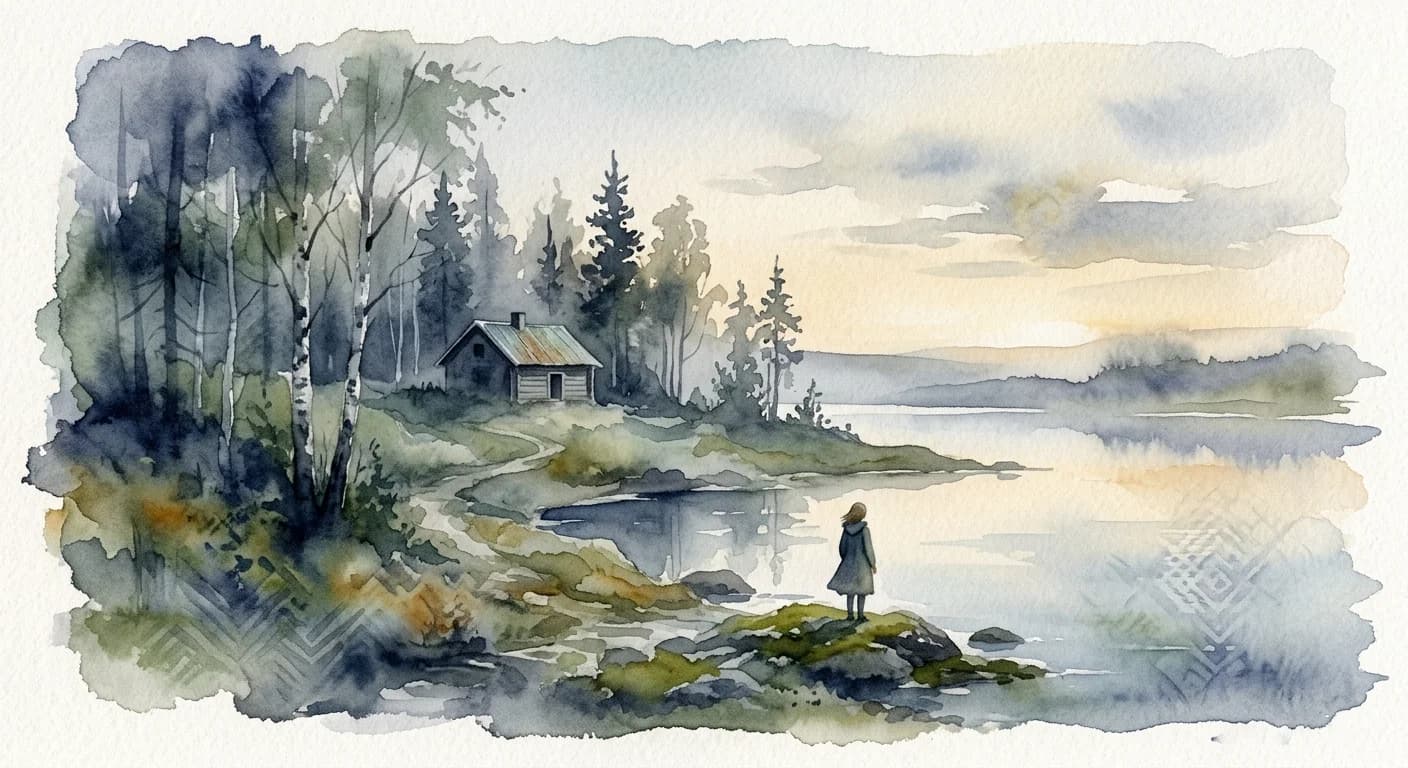
Karelu encapsulates a profound, often melancholic, yearning for a past one has never personally experienced. It's a wistful longing for an idealized or imagined history, perhaps conjured by the fading sepia of old photographs, the strains of ancient folk melodies, or the evocative tales of bygone eras. This emotion transcends mere nostalgia, as it doesn't require personal memory; instead, it taps into a shared cultural consciousness or a deeply romanticized vision of what might have been, fostering a bittersweet connection to a time that exists primarily in the heart and imagination.
Literal Translation
There is no direct literal translation to English; it is a conceptual term.
The Story Behind the Word
The existence of 'karelu' in Finnish culture speaks to a deep historical consciousness and perhaps a national character shaped by significant periods of change, conflict, and a strong connection to nature and tradition. Finland's past, marked by struggles for independence, periods of foreign rule, and rapid modernization, has fostered a collective introspection. Karelu reflects a yearning for simpler times, perhaps an agrarian past, or an idealized 'golden age' of Finnish identity, before the complexities of modern life. It suggests a culture that values its roots and finds comfort or inspiration in contemplating a romanticized heritage, even if that heritage is more imagined than historically accurate. This emotion can also be linked to the concept of 'sisu' – a uniquely Finnish stoic determination – where the imagined past provides a wellspring of resilience and identity.
Experience It
Echoes of Old Helsinki
Sitting in a quaint café, listening to a gramophone play an old Finnish tango from the 1930s, Elina felt a wave of karelu wash over her. She imagined herself walking those same cobbled streets, dressed in vintage fashion, living a life she'd only ever seen in historical dramas – a bittersweet longing for an era she never knew.
Ancestral Farmstead Dream
While visiting her great-grandparents' abandoned farm, now just ruins overgrown with moss, Marko experienced a powerful karelu. He envisioned the bustling life that once filled these fields, the laughter, the hard work, feeling a profound connection and a pang of sorrow for a robust, self-sufficient existence that was never his.
The Deeper Meaning
Karelu highlights a human tendency to seek meaning and identity not just in personal experience but also in collective memory and imagined histories. It suggests that our emotional landscape is deeply intertwined with narratives of the past, even those we construct ourselves. This word reveals a philosophical inclination to romanticize what has been, perhaps as a way to cope with the present or to envision alternative futures, underscoring the power of imagination in shaping our emotional reality.
Did You Know?
While karelu isn't tied to a specific historical event, its emotional resonance is amplified by Finland's often dramatic and romanticized national epic, 'The Kalevala', which paints vivid pictures of an ancient, heroic past.
How It's Used
Karelu is typically used to describe a personal, introspective feeling, often experienced when reflecting on historical periods, family legacies, or romanticized notions of simpler times. It can be triggered by art, music, literature, or even a specific atmosphere that evokes a sense of pastness.