Koyaanisqatsi
/KOY-ah-nee-SKAH-tsee/
Meaning
Koyaanisqatsi is a profound Hopi term describing a state of existence characterized by profound chaos, disharmony, and a severe departure from the natural order. It vividly portrays a life accelerated to an unsustainable, frantic pace, leading to a spiritual and environmental imbalance. This word acts as a powerful indictment of modern civilization's relentless pursuit of progress at the expense of ecological and human well-being, suggesting a trajectory towards ultimate destruction if equilibrium is not restored.
Literal Translation
life out of balance
The Story Behind the Word
The concept of Koyaanisqatsi is deeply interwoven with the Hopi worldview, which emphasizes balance, harmony (Hopi: 'sumi'nangwa'), and living in accordance with natural and spiritual laws. For the Hopi, all life is interconnected, and disrupting this delicate balance, whether through excessive resource extraction, rapid technological advancement, or a focus on individual gain over communal well-being, directly leads to 'koyaanisqatsi.' This word reflects millennia of observation of natural cycles and a profound reverence for the Earth, serving as a cautionary tale within their oral traditions. It underscores the Hopi belief that humanity is merely a custodian of the land, not its master, and that disrespecting this sacred trust invites imbalance and suffering.
Experience It
Urban Sprawl's Shadow
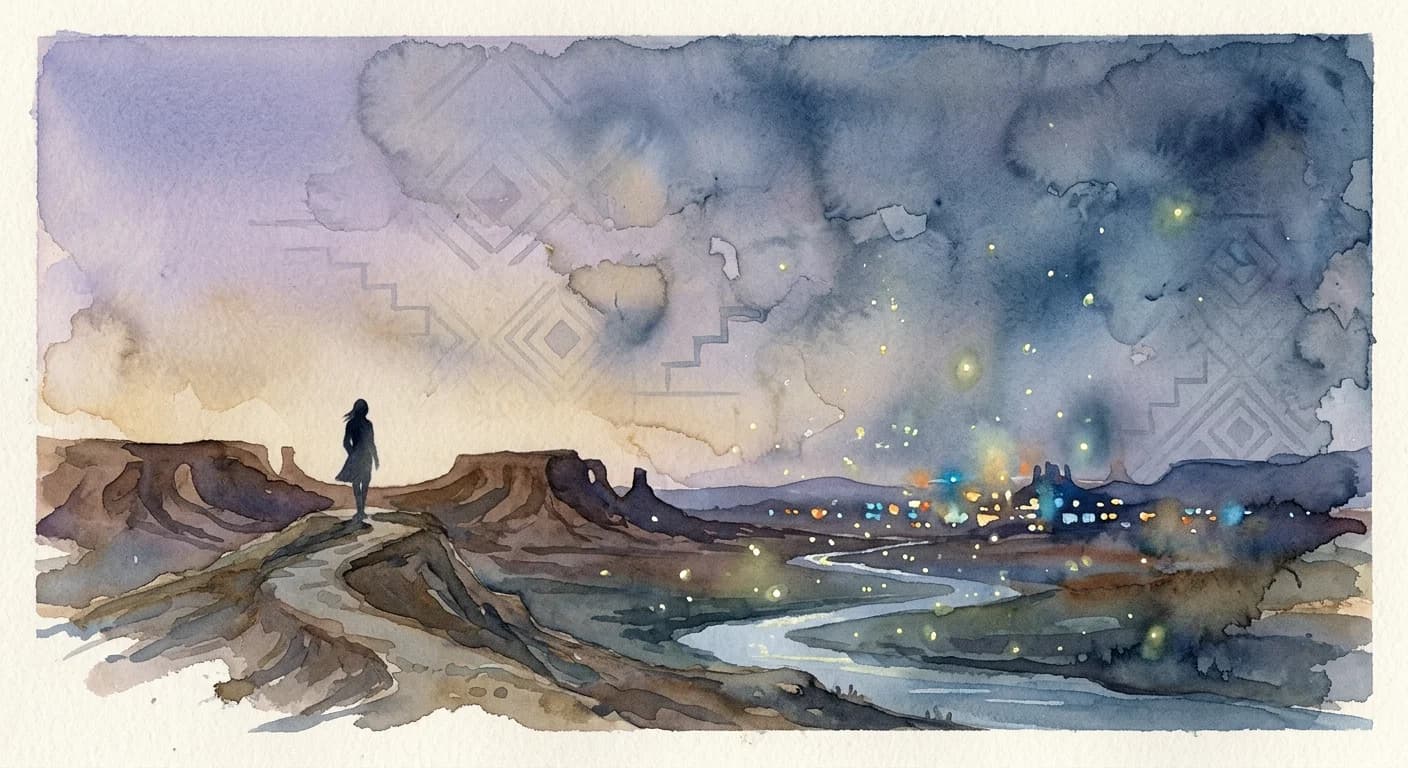
Vast stretches of desert, once teeming with diverse life, are now paved over with endless highways and identical housing developments. The constant hum of traffic and the artificial glow of city lights obscure the stars, embodying a profound Koyaanisqatsi as nature is systematically devoured by unchecked expansion.
Digital Overload
A young professional juggles multiple screens, constantly bombarded by notifications, emails, and social media updates. Sleep is sacrificed, relationships are strained, and a persistent anxiety gnaws at their spirit, illustrating a personal Koyaanisqatsi where technology dictates a frantic, disorienting pace of life.
The Deeper Meaning
Koyaanisqatsi embodies a fundamental philosophical stance that views humanity not as separate from nature, but as an integral part of a larger, interconnected system. It posits that true well-being and sustainability are achieved through living in harmony with natural rhythms and respecting ecological limits. The word critiques anthropocentric views that prioritize human desires above all else, advocating instead for a balanced existence where spiritual, environmental, and social health are inextricably linked.
Did You Know?
The word "Koyaanisqatsi" is actually composed of three Hopi words: 'koyaanis' (corrupted, out of balance), 'qatsi' (life), and a third element, 'qatsi' (life), implying a state of life that is so unbalanced it's almost a 'life of another kind of life' – a corrupted one.
How It's Used
The term 'Koyaanisqatsi' was popularized by the 1982 film of the same name directed by Godfrey Reggio. It is used to describe a way of life that is characterized by chaos, imbalance, and a departure from natural rhythms, often in the context of modern, industrialized society.