U.
HomeRegionsLanguagesEmotionsCollections
Find Your Word

“The limits of my language mean the limits of my world.”

— Ludwig Wittgenstein, Philosopher

Untranslatable

A curated collection of the world's most beautiful expressions—words that remind us language is humanity's greatest invention.

  • Home
  • Collections
  • Regions
  • Countries
  • Emotions
  • Tags
  • Contexts
  • Finder
  • Europe
  • Asia
  • Americas
  • Africa
  • Middle East
  • About
  • Contact
  • Privacy Policy
  • Terms of Service

2026 © Untranslatable. All rights reserved.

    /
    /
    1. Home
    2. /
    3. Africa
    4. /
    5. Mbuki-mvuki
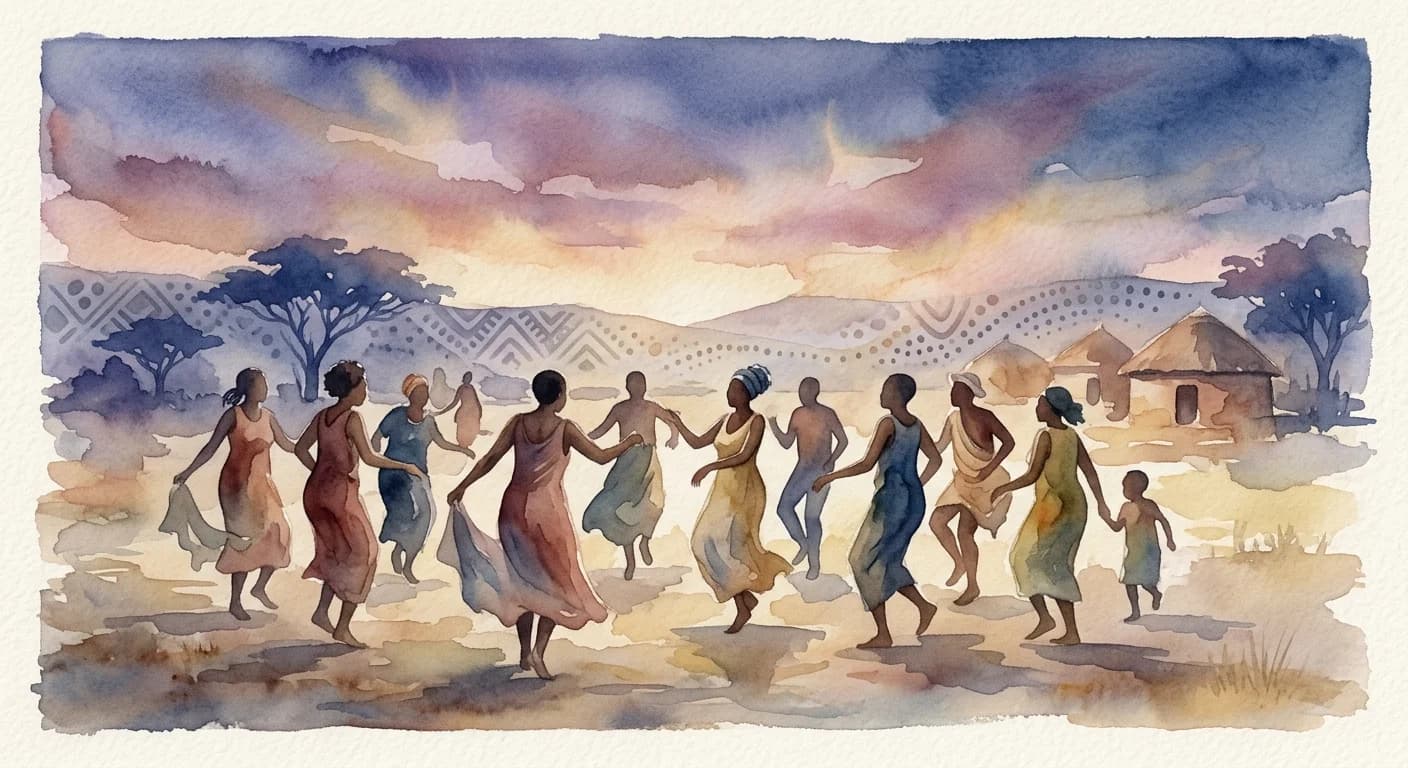
    Artistic representation of Mbuki-mvuki
    Xhosa•
    🇿🇦South Africa

    Mbuki-mvuki

    /m-BOO-kee m-VOO-kee/

    Meaning

    Mbuki-mvuki captures the exhilarating, uninhibited act of shedding one's clothes to dance with complete freedom and joyous abandon. It's an expression of primal, unadulterated self-expression, often witnessed in communal celebrations or moments of profound personal liberation. This phrase describes not merely undressing, but a conscious, spirited release from societal constraints, embracing the pure, rhythmic flow of movement and the vibrant spirit of Southern African festivity.

    Literal Translation

    To take off clothes (as in preparation for a dance)

    The Story Behind the Word

    The existence of 'Mbuki-mvuki' in Xhosa culture speaks volumes about the value placed on communal celebration, emotional release, and the body as an instrument of expression. In many Southern African traditions, dance is not just entertainment; it's a vital part of rituals, storytelling, healing, and social bonding. The act of shedding clothes can symbolize a return to a more natural, unadorned state, stripping away the artificial layers of identity to connect more authentically with the community, the rhythm, and one's own spirit. It reflects a worldview where joy is communal, expression is physical, and liberation is celebrated openly, revealing a deep connection to ancestral practices where clothing might have been minimal during energetic dances or spiritual ceremonies.

    Experience It

    Festival's Peak Energy

    At the annual Umhlanga Reed Dance, after hours of vibrant singing and rhythmic drumming, the eldest women, overcome by the collective energy, began to Mbuki-mvuki, inspiring the younger generations to shed their inhibitions and join the ecstatic dance, their bodies moving freely under the moonlit sky.

    Liberation Celebration

    After the final exam results were announced, a group of students, overwhelmed with relief and joy, spontaneously started to Mbuki-mvuki on the university lawn, turning their celebratory shouts into an impromptu, uninhibited dance of freedom and triumph.

    The Deeper Meaning

    This word encapsulates a philosophy that views the body as a vessel for unbridled joy and expression, unburdened by external judgments. It suggests that true liberation comes from within, manifested physically through movement, and that shedding superficial layers allows for a deeper connection to self, community, and the essential rhythms of life. It’s a testament to the power of embodied experience.

    Did You Know?

    While often associated with public gatherings, 'Mbuki-mvuki' can also describe a private, personal moment of intense, joyful release, where one sheds clothes to dance freely in the solitude of their own space.

    How It's Used

    Used to describe the spontaneous act of removing one's clothing to dance freely, especially in a social or celebratory context.

    Emotions
    belonging,comfort,joy,warmth
    Contexts
    celebration,nature,relaxation,social interaction
    🇿🇦South Africa

    by Kwame Nkrumah·Written Mar 14, 2026·Updated Apr 3, 2026

    Related Words

    Explore more
    GezelligDutch

    Gezellig encapsulates a profound sense of warmth, belonging, and convivial comfort, extending beyond mere coziness to embrace the social and emotional atmosphere. It's the feeling of being truly at ease, surrounded by good company, laughter, and a shared sense of contentment. This untranslatable term describes not just a physical space, but a holistic experience where time seems to slow down, fostering genuine connection and a deep sense of well-being.

    SobremesaSpanish

    Sobremesa is the cherished, often extended period immediately following a meal, particularly lunch or dinner, where diners remain seated at the table to enjoy conversation, coffee, and digest not just the food, but the company itself. It’s a dedicated time for unhurried social bonding, storytelling, and shared laughter, transforming a simple meal into a profound communal experience. Far from just clearing the dishes, sobremesa is an integral part of Spanish social life, often lasting for hours.

    JayusIndonesian

    Jayus describes that peculiar moment when a joke is so utterly devoid of humor, so poorly delivered, or so nonsensical that its very ineptitude triggers an involuntary, almost sympathetic burst of laughter. It's not laughter at the joke itself, but rather a reaction to the sheer awkwardness and the unexpected, delightful absurdity of someone failing so spectacularly to be funny. The humor stems from the meta-experience of witnessing a comedic train wreck, transforming discomfort into a shared moment of mirth.

    UbuntuZulu/Xhosa

    Ubuntu is a profound African philosophy that translates to 'I am because we are,' signifying that an individual's humanity is inextricably linked to the humanity of others. It embodies the belief that our existence and well-being are deeply intertwined with the community. This concept emphasizes compassion, reciprocity, dignity, and the understanding that true fulfillment is found not in isolation, but through collective flourishing and mutual support. It's a call to recognize and affirm the humanity in everyone, fostering a sense of interconnectedness.