Otium
/OH-tee-um/
Meaning
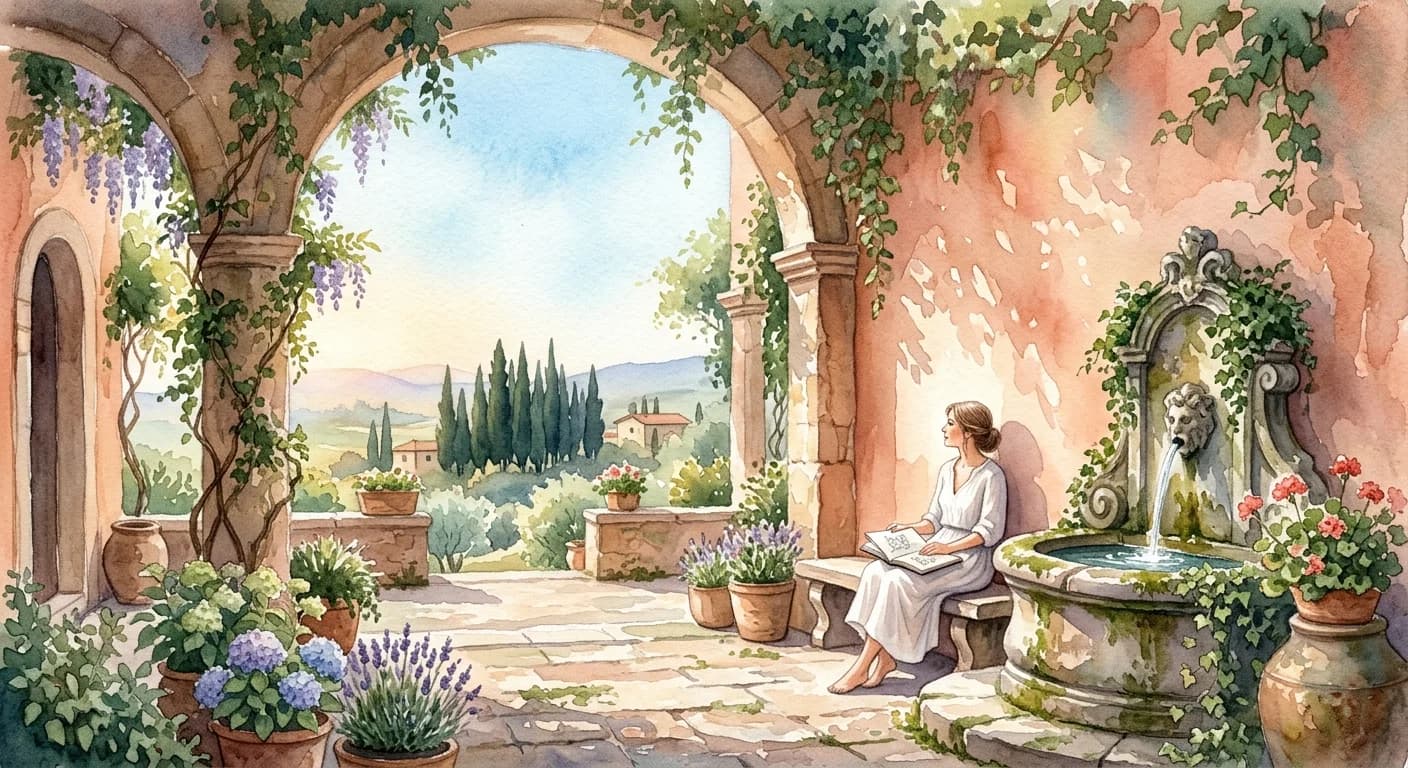
Otium, in ancient Rome, was a highly valued state of cultivated leisure and intellectual repose, far removed from mere idleness. It represented the deliberate pursuit of activities that enriched the mind and soul, such as philosophical discourse, reading, writing poetry, or engaging with nature, all free from the demands of work or social obligation. This wasn't 'downtime' but a productive and essential component of a well-lived life, crucial for personal growth, civic virtue, and the development of wisdom. It was a conscious withdrawal to a space of personal flourishing and profound contemplation.
Literal Translation
Leisure, ease, rest
The Story Behind the Word
The concept of otium is deeply embedded in the Roman worldview, reflecting a society that valued both active civic engagement (negotium) and contemplative personal development. For Roman elites, otium was not just a privilege but a duty – a period necessary for reflection, study, and the cultivation of virtues that would ultimately make them better citizens and leaders. Philosophers like Seneca extolled its virtues, seeing it as the only true path to wisdom and inner peace, contrasting it sharply with the relentless pressures of public life. Its existence highlights a sophisticated understanding of human well-being, where intellectual and spiritual nourishment were deemed as vital as political or military achievements. It underscores a belief that true productivity could emerge from stillness and thoughtful engagement, rather than constant activity.
Experience It
A Philosopher's Retreat
Cicero, having concluded his day in the Forum, retires to his villa in Tusculum. He spends the afternoon not sleeping, but immersed in deep philosophical texts, dictating letters on ethics, and engaging in lively debates with visiting scholars. This is his otium, a period of intellectual nourishment essential for his public life.
The Poet's Inspiration
Horace, seeking inspiration for his odes, retreats to his Sabine farm, far from the clamor of Rome. He walks through vineyards, observes nature, and dedicates his time to crafting verses, unburdened by worldly cares. This cultivated solitude and creative pursuit is the essence of his otium.
The Deeper Meaning
Otium reveals a profound Roman philosophical insight: that a truly fulfilling life requires a deliberate balance between active engagement with the world (negotium) and contemplative withdrawal. It suggests that genuine productivity and personal growth are not solely found in relentless work, but equally in periods of thoughtful reflection, intellectual pursuit, and spiritual enrichment, elevating leisure from mere idleness to a virtuous and essential human endeavor.
Did You Know?
The word 'negotiate' comes from the Latin 'negotium' (ne-otium), literally meaning 'not leisure' or 'business,' highlighting the ancient Roman contrast between duty and deliberate repose.
How It's Used
Used to describe a state of fulfilling leisure and intellectual pursuit, often contrasted with 'negotium' (business or duty).