Ramé
/RAH-may/
Meaning
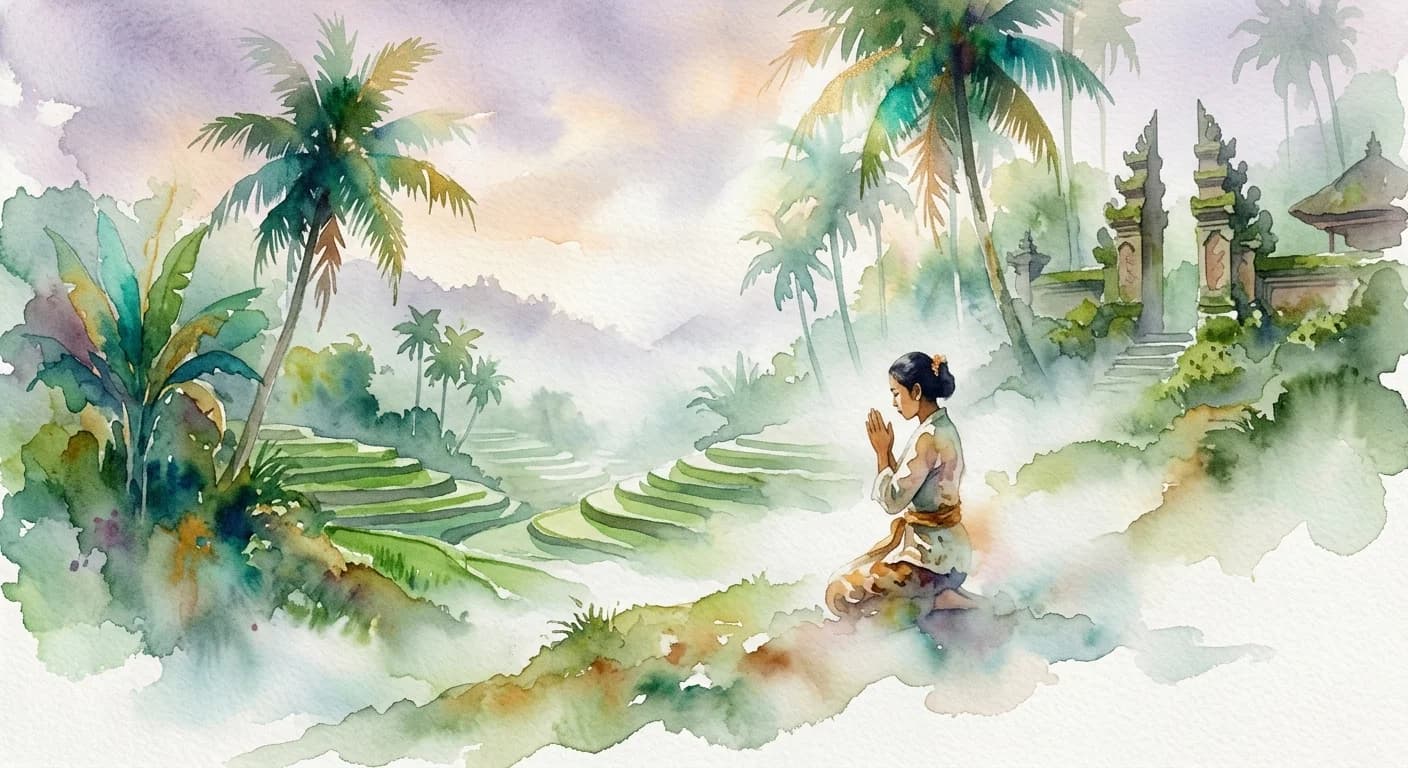
Ramé transcends mere aesthetic appreciation; it is the visceral experience of being interwoven with Bali's vibrant natural world, from its emerald rice paddies to its sacred volcanoes. It signifies an active, spiritual participation in the environment, where every rustling leaf and flowing river imbues a profound sense of belonging and reverence. This deep connection fosters an unshakeable inner peace and harmonious contentment, reflecting a worldview where humanity and nature are inseparable parts of a divine tapestry.
Literal Translation
N/A
The Story Behind the Word
The concept of "Ramé" is deeply rooted in the Balinese Hindu philosophy of Tri Hita Karana, which emphasizes harmony among humans, with nature, and with God. This spiritual framework dictates that a balanced existence requires reverence for the environment, viewing it not as a resource to be exploited, but as a living entity imbued with divine spirit. Therefore, experiencing "Ramé" is not just about feeling good; it's about fulfilling a spiritual duty to live in balance with the sacred landscape, ensuring cosmic equilibrium and personal well-being. This intrinsic link between spirituality, community, and environment makes "Ramé" a cornerstone of Balinese identity and daily life, underpinning their agricultural practices, ceremonies, and artistic expressions.
Experience It
Sunrise Temple Offering
As the first rays of dawn kissed the terraced rice fields, Wayan placed her canang sari offering at the base of a banyan tree, the air thick with the scent of frangipani and incense. A profound sense of ramé washed over her, a feeling of deep connection to the earth, the sky, and the unseen spirits, all harmonizing around her quiet prayer.
Forest Waterfall Immersion
Lost in the cool mist of a hidden waterfall, a traveler closed their eyes, feeling the ancient stones beneath their feet and the vibrant jungle sounds enveloping them. The sheer, overwhelming beauty and spiritual energy of the place brought an intense feeling of ramé, a peaceful realization of their place within the living, breathing landscape.
The Deeper Meaning
Ramé unveils a holistic worldview where divinity is immanent within nature, and human well-being is inextricably linked to maintaining harmony with the environment. It posits that true peace and contentment are not found in isolation, but in active, respectful engagement with the natural world, recognizing its sacredness and our role as custodians, not conquerors. This philosophy encourages a life lived in constant dialogue with the earth's rhythms and spiritual essence.
Did You Know?
While "Ramé" primarily describes a feeling of natural connection, the word also has a secondary, more common meaning in Indonesian/Malay referring to a lively, bustling, and crowded atmosphere, often used in a positive sense!
How It's Used
Used to describe the profound spiritual and emotional connection one feels with the natural environment, especially the sacred landscapes of Bali.