Ujamaa
/oo-JAH-mah/
Meaning
Ujamaa transcends the simple idea of 'familyhood,' encapsulating a profound communal philosophy where the well-being of the individual is inextricably linked to the prosperity of the collective. It champions a spirit of radical interdependence, mutual responsibility, and shared destiny, rooted in traditional African social structures. This concept fosters a deep sense of belonging and solidarity, guiding communities to cooperate, share resources, and collectively uplift every member. It is not just kinship, but a lived ethos of collective flourishing.
Literal Translation
familyhood
The Story Behind the Word
Ujamaa is deeply embedded in the historical and philosophical fabric of post-colonial Tanzania, prominently championed by its first president, Julius Nyerere. Nyerere envisioned Ujamaa as an authentic African path to socialism, rejecting both Western capitalism and Soviet-style communism. It reflects a traditional African worldview where the individual is defined by their relationships within the community, rather than in isolation. This philosophy underpins the belief that security, prosperity, and identity are found within the collective. It emerged from a desire to reclaim African identity and self-determination after colonialism, fostering unity and self-reliance among diverse ethnic groups, and shaping national policies aimed at communal agriculture and self-governance. Ujamaa reveals a society that values harmony, shared resources, and collective progress over individual accumulation, seeing social cohesion as the bedrock of human existence.
Experience It
Village Harvest Share
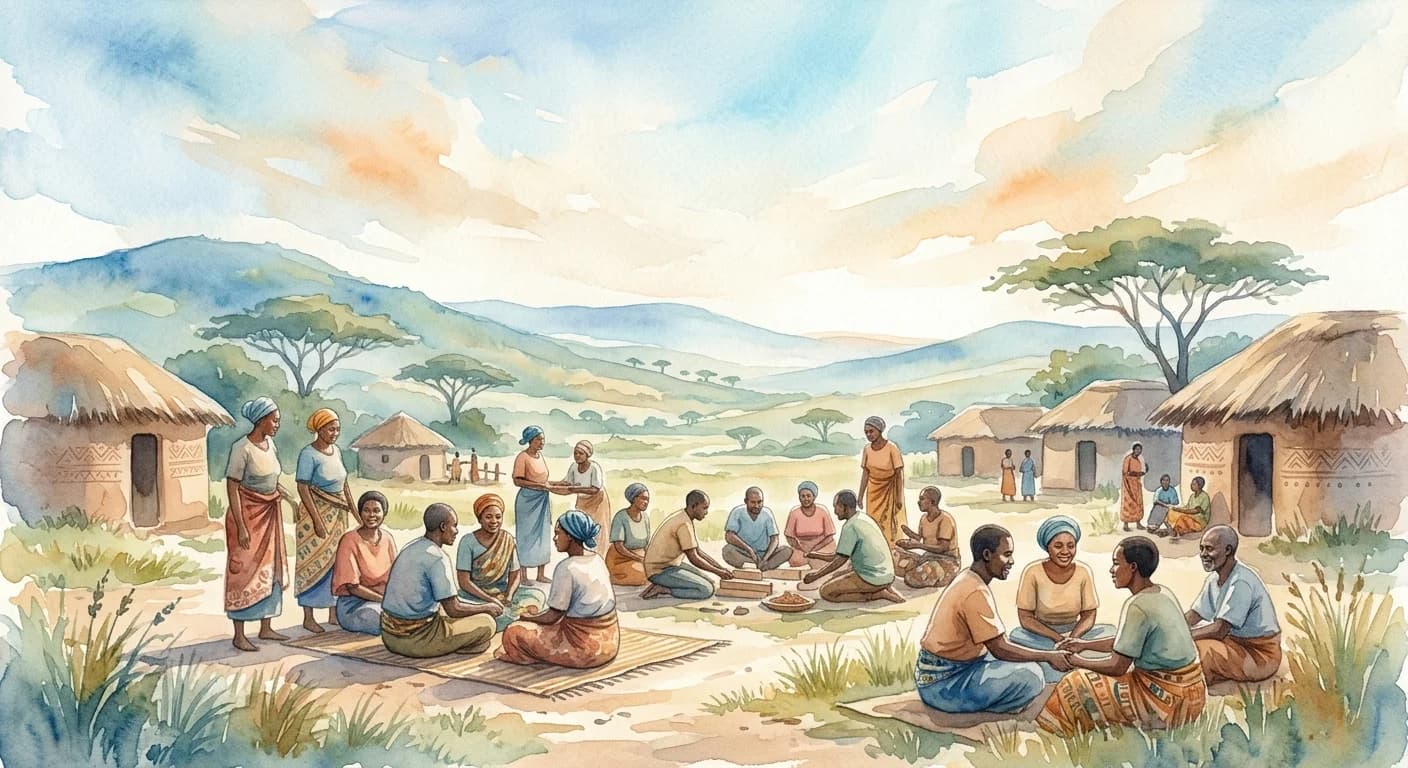
After a bountiful harvest, Mama Zawadi's family has more maize than they need. Instead of selling it all for individual profit, they distribute a portion to families in the village who had a poorer yield, ensuring no one goes hungry. This act reflects the Ujamaa spirit of shared prosperity and mutual support within the community.
Community School Building
When the village school needed repairs, everyone contributed. Men and women brought tools and materials, children helped clear debris, and elders offered guidance and prepared meals. The project was completed through collective effort, demonstrating Ujamaa in action as the community united for a common good.
The Deeper Meaning
Ujamaa reveals a profound African humanist philosophy that places community at the absolute center of existence. It challenges Western notions of individualism, asserting that a person's humanity and well-being are intrinsically tied to the health and prosperity of their community. This worldview emphasizes ethical leadership, social justice, and the moral imperative of collective responsibility, suggesting that true freedom and development are achieved through mutual support and shared destiny, not through isolated self-interest.
Did You Know?
Julius Nyerere's Ujamaa policy led to the establishment of thousands of 'Ujamaa villages' across Tanzania in the 1960s and 70s, where people were encouraged to live and work together communally.
How It's Used
Ujamaa is used to describe a political and economic philosophy, particularly associated with Julius Nyerere's vision for Tanzania, promoting self-reliance and communal living. It's also used more broadly to refer to the concept of extended family and community interdependence.