Bhāva
/BHAA-vuh/
Meaning
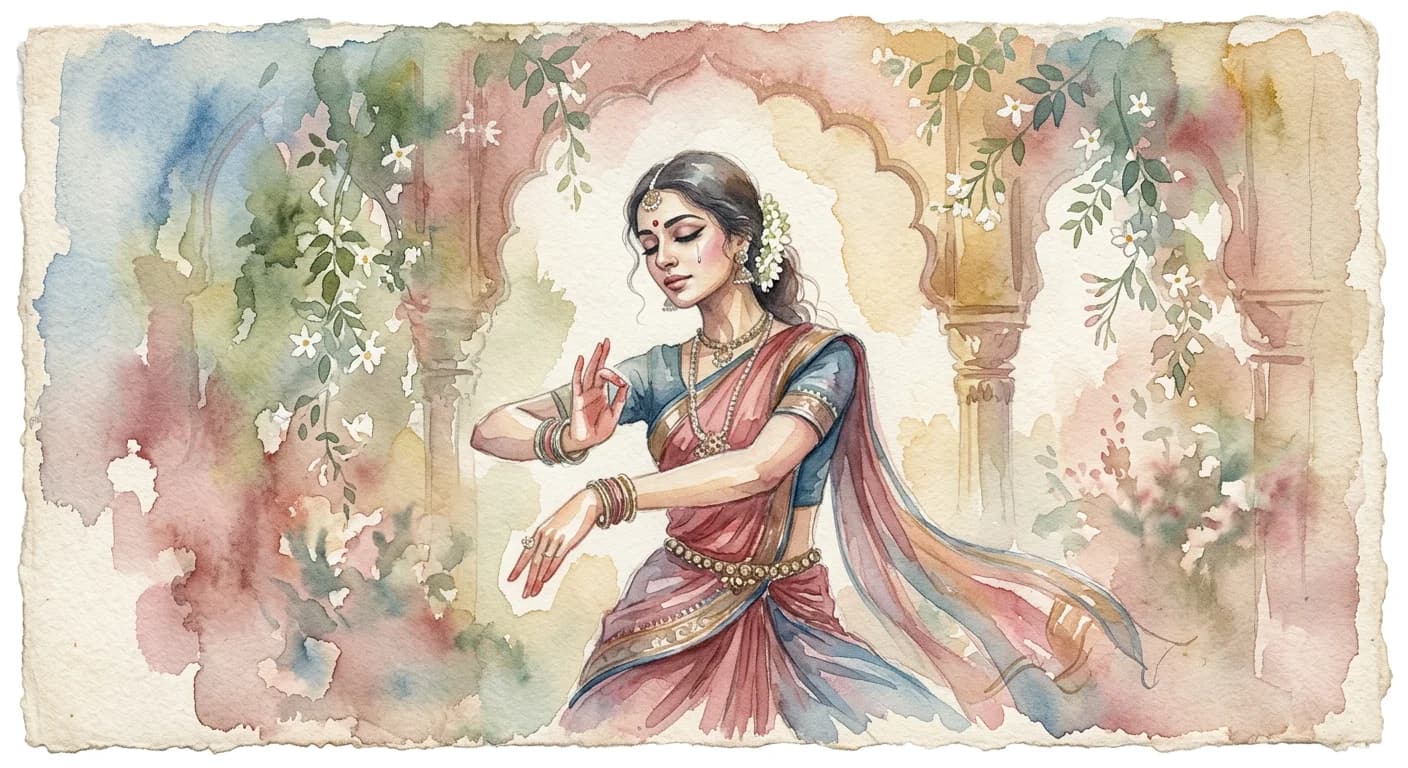
Bhāva is the profound art of embodying and radiating an emotion so completely that it transcends mere performance, becoming a palpable presence. It's the performer's skill in internalizing a sentiment and then expressing it through intricate gestures, nuanced facial expressions, and vocal modulations, allowing the audience to not just observe but deeply feel and share in that emotional state. This isn't just acting; it's a spiritual communion where the performer acts as a conduit for universal human feelings, aiming to evoke a direct, visceral, and often transformative experience in the spectator. It's about bringing an emotion to life with such authenticity that it resonates within the heart of every viewer.
Literal Translation
state, being, existence, mood, emotion
The Story Behind the Word
Bhāva is deeply rooted in ancient Indian aesthetics and philosophy, particularly the Nāṭya Śāstra, a foundational text on performing arts. It reflects a worldview where art is not merely entertainment but a path to spiritual enlightenment and emotional catharsis. The existence of Bhāva reveals a culture that values profound emotional intelligence and the capacity for artists to tap into universal human experiences. It underscores the belief that emotions are not just personal feelings but pathways to understanding the divine and connecting with a collective consciousness. This word encapsulates the idea that art serves as a mirror to the soul, reflecting and refining human experience.
Experience It
Dancer's Sorrowful Gaze
During a Bharatanatyam performance, the dancer's eyes, usually bright, cloud with a deep, unspoken sorrow. Her delicate hand gesture slowly covers her heart, not just showing sadness, but *embodying* the Bhāva of 'śoka' (grief) so intensely that a hush falls over the audience, many feeling a pang of personal loss.
Actor's Righteous Fury
In a Sanskrit drama, an actor portraying an enraged king lets out a roar. Yet, it's not just the sound; his nostrils flare, his brow furrows with tension, and his entire body vibrates with the Bhāva of 'raudra' (fury), making the audience recoil slightly, sensing the raw, dangerous energy emanating from him.
What Gets Lost in Translation
English speakers often mistake Bhāva for simply 'emotion' or 'expression.' However, it's far more profound than that. It's not just the external display, but the internal state, the emotional 'being' that the artist cultivates and then projects. It's also often confused with 'rasa,' which is the aesthetic flavor or emotional enjoyment experienced by the audience, while Bhāva is the emotional state *conveyed* by the artist that *leads* to rasa.
Across Cultures
While 'Bhāva' is unique in its depth, similar concepts exist. The Japanese concept of 'yūgen' in Noh theatre captures a mysterious, profound beauty that evokes deep emotion, though it's often more subtle and melancholic. The Greek 'pathos' refers to an appeal to emotion, but Bhāva encompasses the entire process of embodiment and evocation. German 'Einfühlung' (empathy) describes feeling into another, which is part of the audience's experience of Bhāva, but not the performer's act of creation.
The Deeper Meaning
Bhāva reveals a profound philosophical insight into the nature of reality and human experience: that emotions are not fleeting personal states but archetypal forces. Through Bhāva, art becomes a means of accessing these universal emotional truths, allowing both performer and audience to transcend individual ego and connect with a shared, deeper consciousness. It suggests that experiencing and expressing these fundamental emotions is crucial for human understanding and spiritual growth, making art a form of yogic practice.
Did You Know?
There are traditionally 49 Bhāvas, including eight 'Sthayi Bhāvas' (permanent moods) like love, anger, and wonder, which are considered fundamental to human experience and serve as the roots for all other emotional expressions.
How It's Used
Used in Indian classical dance, drama, and theatrical traditions to describe the emotional essence and mood conveyed by a performer. It is central to understanding the aesthetic experience in these art forms.