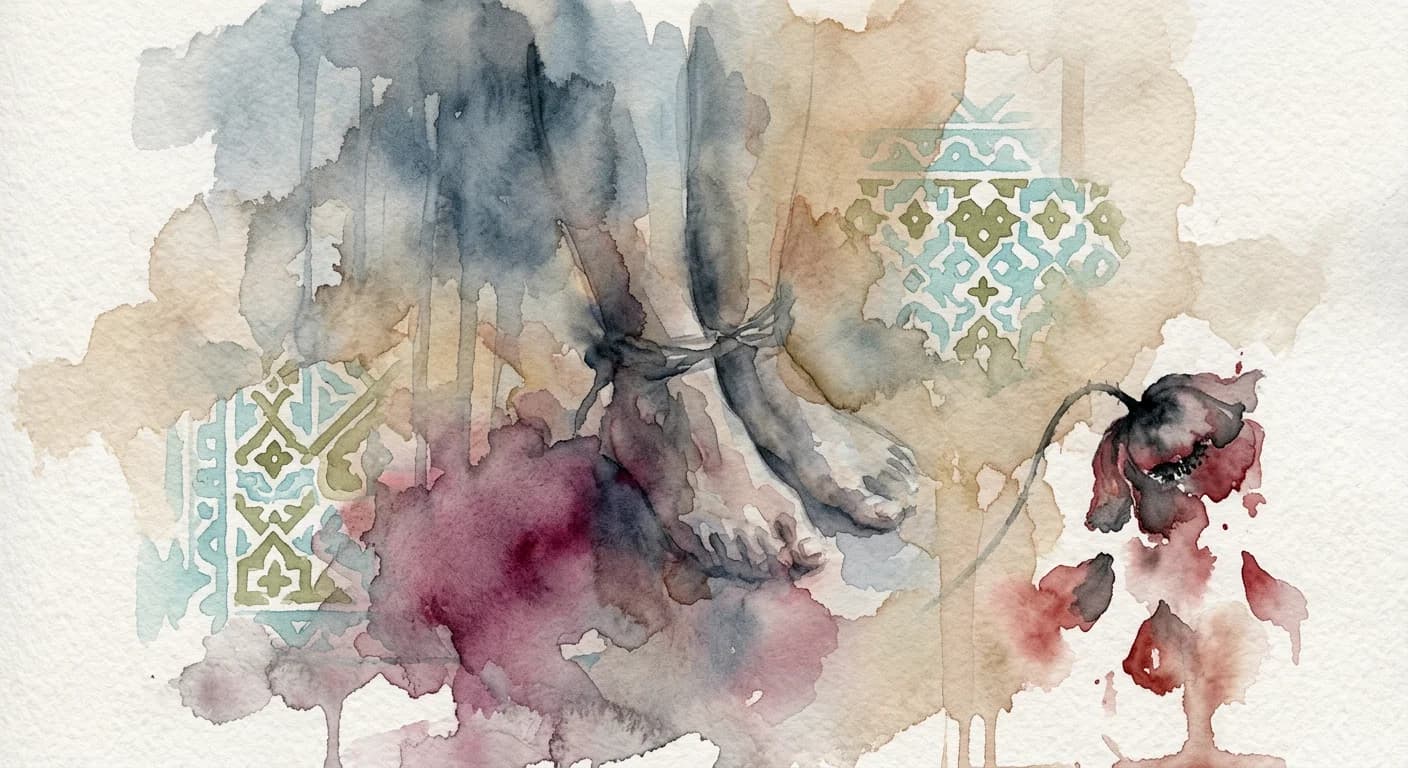
Falaka
/FAH-lah-kah/
Meaning
Falaka refers to the archaic practice of corporal punishment, specifically the beating of the soles of the feet, typically with a rod or stick. This brutal disciplinary method was historically widespread across the Ottoman Empire and its successor states, including Turkey, used in homes, schools, and even military contexts. It embodies not just physical pain but also deep shame, a stark power imbalance, and a cultural acceptance of harsh discipline as a means to enforce order, morality, and obedience. The word evokes a visceral sense of historical cruelty and serves as a potent reminder of a past where severe physical punishment was a normalized societal tool.
Literal Translation
Beating of the soles of the feet
The Story Behind the Word
The existence and historical prevalence of 'falaka' in Turkish and Ottoman culture reflect a societal paradigm where strict hierarchical control and immediate, often severe, physical punishment were considered legitimate tools for maintaining social order, instilling discipline, and shaping character. Rooted in a blend of traditional educational practices, interpretations of Islamic law regarding discipline, and a broader patriarchal structure, falaka was seen less as abuse and more as a necessary, albeit harsh, pedagogical or corrective measure. It underscores a worldview where obedience to authority—be it parental, scholarly, or state—was paramount, and deviation was met with uncompromising physical correction. The word thus captures generations of accepted disciplinary philosophy, revealing a cultural emphasis on conformity and respect through fear, rather than persuasion or understanding.
Experience It
Schoolyard Discipline
Little Ahmet, caught cheating on his arithmetic, was led to the headmaster's office. The cane lay ominously on the desk, a silent promise of the falaka awaiting his bare feet, a common and dreaded punishment in the school's disciplinary repertoire.
Parental Correction
After repeatedly defying his father, young Hasan was made to lie on the floor. His father, with a stern face, administered a few blows to his soles, explaining that this falaka was for his own good, to teach him respect and obedience.
The Deeper Meaning
Falaka illuminates a historical philosophical stance that viewed the human body, particularly children's bodies, as instruments to be molded and controlled through pain, rather than minds to be reasoned with. It reflects a utilitarian approach to discipline, where the perceived good of conformity and obedience outweighed the physical and psychological harm inflicted. This reveals a deep-seated belief in the efficacy of punitive measures to sculpt character and enforce societal norms, often without questioning the long-term psychological impact or the inherent power dynamics at play.
Did You Know?
While officially banned in Turkey, historical accounts suggest falaka was sometimes administered in Ottoman military academies to enforce strict discipline among cadets, highlighting its pervasive reach beyond just schools and homes.
How It's Used
Historically used to describe a specific form of corporal punishment, particularly in educational or disciplinary contexts. It can also be used metaphorically to refer to harsh or severe punishment in general.