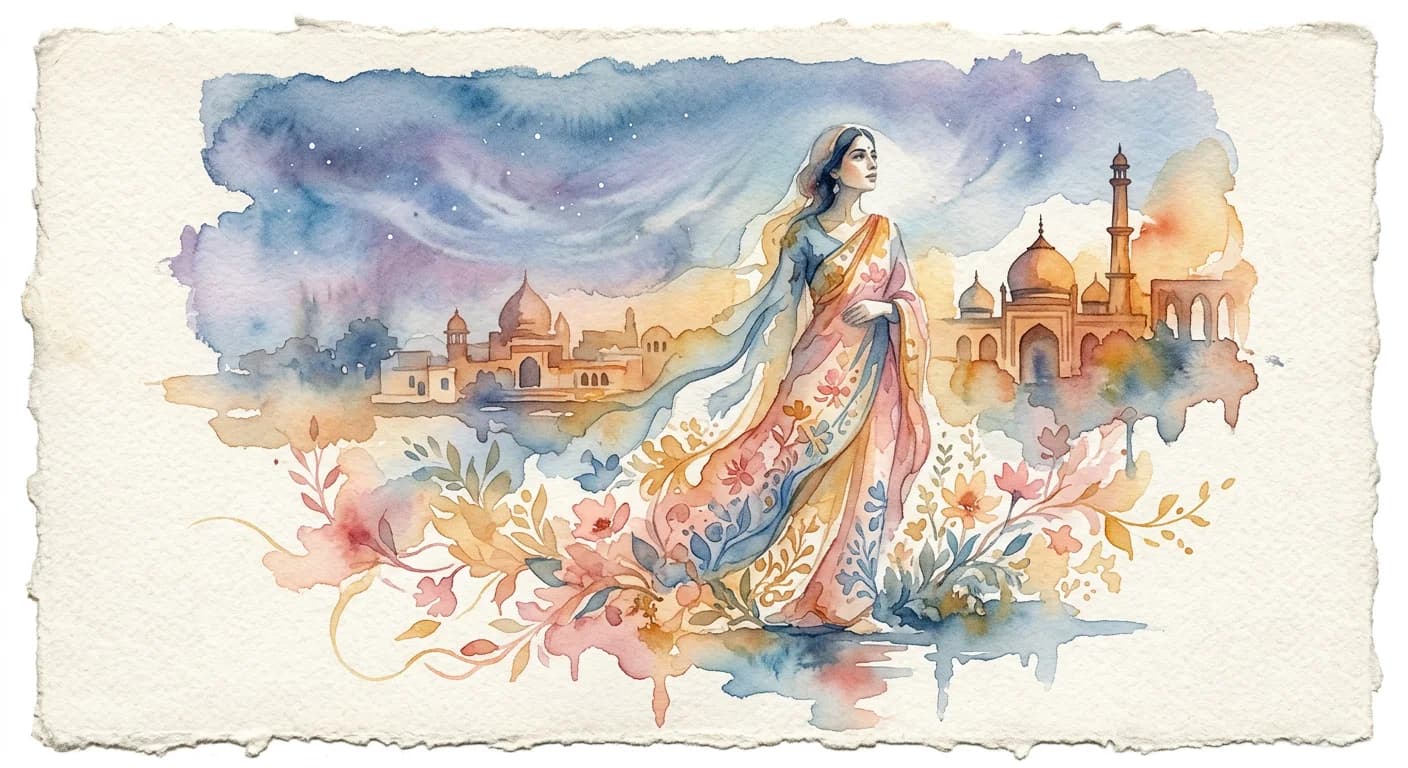
Rasa
/RAH-sah/
Meaning
Rasa, in Indian aesthetics, is the profound, distilled essence of an emotion or mood, meticulously crafted and evoked by an artist in their audience. It transcends mere feeling, becoming an aesthetic 'flavor' or transcendental 'taste' that lingers, transforming the spectator's experience into a higher plane of consciousness. This unique, transformative 'juice' of art, whether it's love, wonder, or sorrow, aims to transport and elevate, making it the very soul of artistic communication and reception.
Literal Translation
essence, taste, juice, flavor, sentiment, emotion
The Story Behind the Word
The concept of Rasa is deeply embedded in ancient Indian philosophical and aesthetic traditions, particularly the Natyashastra, a seminal text on performing arts attributed to Bharata Muni (between 200 BCE and 200 CE). It reflects a worldview where art is not merely entertainment but a spiritual journey, a means to experience universal emotions in a refined, detached manner. The existence of Rasa theory reveals a culture that valued the transformative power of art, believing it could elevate human experience, provide catharsis, and even lead to a state akin to spiritual bliss (Brahmasvada Sahodara). This emphasis on the audience's internal experience as the ultimate goal of artistic creation highlights a profound understanding of psychology and aesthetics.
Experience It
The Dancer's Gaze
During a Bharatanatyam performance, the dancer portrays separation from a lover. Her eyes, filled with longing and a subtle tremor of the lips, evoke Karuna Rasa (pathos) in the audience, who feel a poignant ache in their own hearts, not in personal sorrow, but in shared human experience.
Epic Battle's Fury
In a Kathakali play, a warrior's fierce roar and expansive, aggressive gestures ignite Raudra Rasa (fury). The spectators don't feel personal anger, but rather a powerful, exhilarating surge of righteous indignation and raw power, experiencing the intensity of the scene through the artist's mastery.
The Deeper Meaning
Rasa theory embodies the profound Indian philosophical idea that art can be a pathway to understanding the universal aspects of human emotion and consciousness. By transcending personal identification with an emotion, one can experience its pure essence, leading to a state of aesthetic delight (Ananda) that mirrors spiritual liberation. It suggests that true art doesn't just represent reality but distills it into a form that can elevate the human spirit.
Did You Know?
There are traditionally nine principal Rasas (Navarasas), each associated with a specific emotion, color, and even a presiding deity, forming a sophisticated system for artistic expression.
How It's Used
Used in classical Indian arts (dance, drama, music) to describe the emotional essence conveyed and experienced. It's the core of 'Rasa theory' in aesthetics.