Ubunye
/oo-BOON-yeh/
Meaning
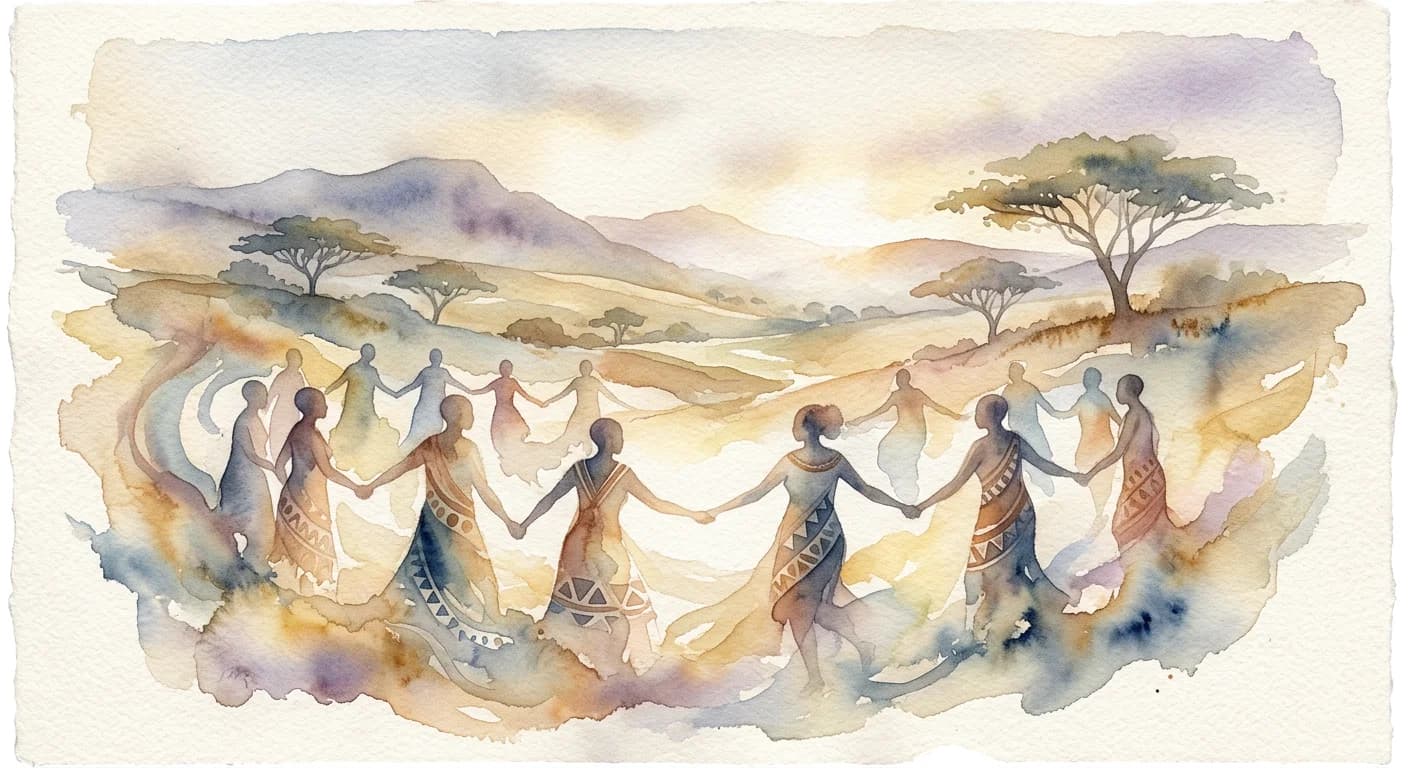
Ubunye transcends simple unity; it is the vital spirit of interconnectedness that weaves together individuals, families, and communities into a single, vibrant tapestry. It embodies a profound sense of shared identity, collective responsibility, and mutual dependence, where the well-being of one is inextricably linked to the well-being of all. This deep-seated harmony extends even to the ancestral realm, ensuring that the collective strength and resilience of the Zulu people are rooted in an unbroken bond across generations.
Literal Translation
Oneness, unity
The Story Behind the Word
The concept of Ubunye is deeply embedded in the historical struggles and triumphs of the Zulu nation, particularly in its formation and consolidation under leaders like Shaka Zulu, where collective strength was paramount for survival and expansion. It reflects an African communal philosophy, where individualism is secondary to the group's welfare, prioritizing social cohesion over personal gain. Ubunye is not merely an ideal but a lived experience, manifesting in traditional practices like 'ukungena' (levirate marriage) which maintains family continuity, and 'ilima' (communal work parties) where community members unite to help one another. It reveals a worldview where humanity is defined by its relationships and belonging, seeing the world as an intricate network of interdependent entities rather than discrete individuals.
Experience It
Community Harvest Day
The fields stretched far, too vast for one family to harvest alone. Yet, as the sun rose, neighbors arrived, hoes and baskets in hand, laughing and singing as they worked side-by-side. By dusk, the entire crop was gathered, a testament to the Ubunye that bound them in shared labor and purpose.
Resolving a Dispute
Two families were at odds over grazing land, their anger threatening to fracture the village. The elders convened, not to assign blame, but to guide them towards a solution that restored equilibrium and understanding, emphasizing that the community's Ubunye depended on their reconciliation and renewed harmony.
The Deeper Meaning
Ubunye reveals a profound relational ontology where existence is fundamentally communal. It posits that true selfhood is realized not in isolation, but through active participation and identification with the collective. This worldview prioritizes harmony, empathy, and interdependence, suggesting that the strength and moral fabric of society depend on the unbroken bonds of its members, extending even to ancestors.
Did You Know?
Ubunye is sometimes described as the spiritual sibling of 'Ubuntu,' with Ubunye focusing on the collective state of togetherness, while Ubuntu describes the humanness that emerges from that connection.
How It's Used
Ubunye is a foundational concept in Zulu philosophy and social interaction, frequently invoked in discussions about community, leadership, conflict resolution, and national identity. It serves as a guiding principle for fostering social cohesion and collective action.