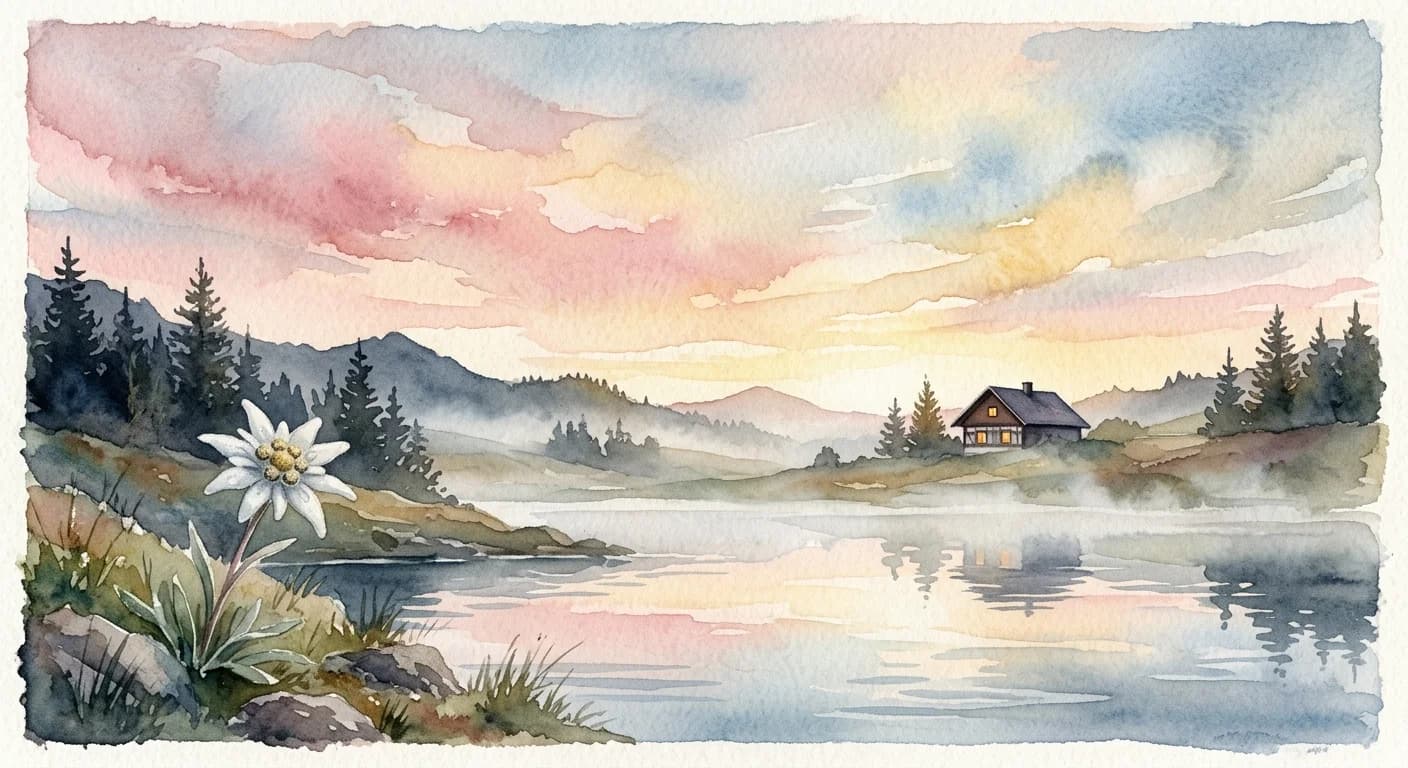
Morgenrot
/MOR-gen-roht/
Meaning
Morgenrot describes the breathtaking, often fiery, spectacle of the sky blushing red or orange at the very first light of dawn. It's not merely the presence of color, but the specific, vibrant hue and the atmospheric conditions that paint the eastern horizon with a promise of a new day. This natural phenomenon evokes a profound sense of hope, renewal, and quiet beauty, marking the transition from night's darkness to day's gentle awakening.
Literal Translation
Morning red
The Story Behind the Word
The deep appreciation for 'Morgenrot' in German culture stems from a historical connection to nature, romanticism, and a pragmatic understanding of time. For agrarian societies, the dawn was a signal for work and survival, but the 'Morgenrot' elevated this necessity to an aesthetic and spiritual experience. It appears frequently in German poetry, folk songs, and art, symbolizing hope, the transience of life, and the enduring beauty of the natural world. This word underscores a cultural tendency to find profound meaning and beauty in everyday natural occurrences, seeing them as reflections of larger truths and cycles of existence. It reveals a culture that values observation, reflection, and the poetic articulation of lived experience.
Experience It
Mountain Dawn
After a long hike, she reached the summit just as the first light touched the peaks. Below, the valley was still shrouded in mist, but above, the 'Morgenrot' painted the sky in hues of rose and gold, promising a clear day.
Fisherman's Hope
The old fisherman cast his nets as the 'Morgenrot' began to spread across the Baltic Sea. He saw it as a good omen, a sign that the day's catch would be plentiful and the waters calm, bringing hope after a restless night.
The Deeper Meaning
The concept of 'Morgenrot' reflects a deep-seated German philosophical inclination towards both romanticism and realism. It acknowledges the ephemeral beauty of a new beginning, often imbued with hope, yet it also carries a subtle awareness of nature's unpredictable power, as seen in old weather lore. It suggests a worldview that finds profound meaning in natural cycles, seeing them as metaphors for human experience, hope, and the passage of time.
Did You Know?
There's a traditional German weather saying: 'Morgenrot bringt Unglückswetter' (Morning red brings bad weather), contrasting the beauty with a practical, less romantic prediction!
How It's Used
Used to describe the red color of the sky at sunrise.