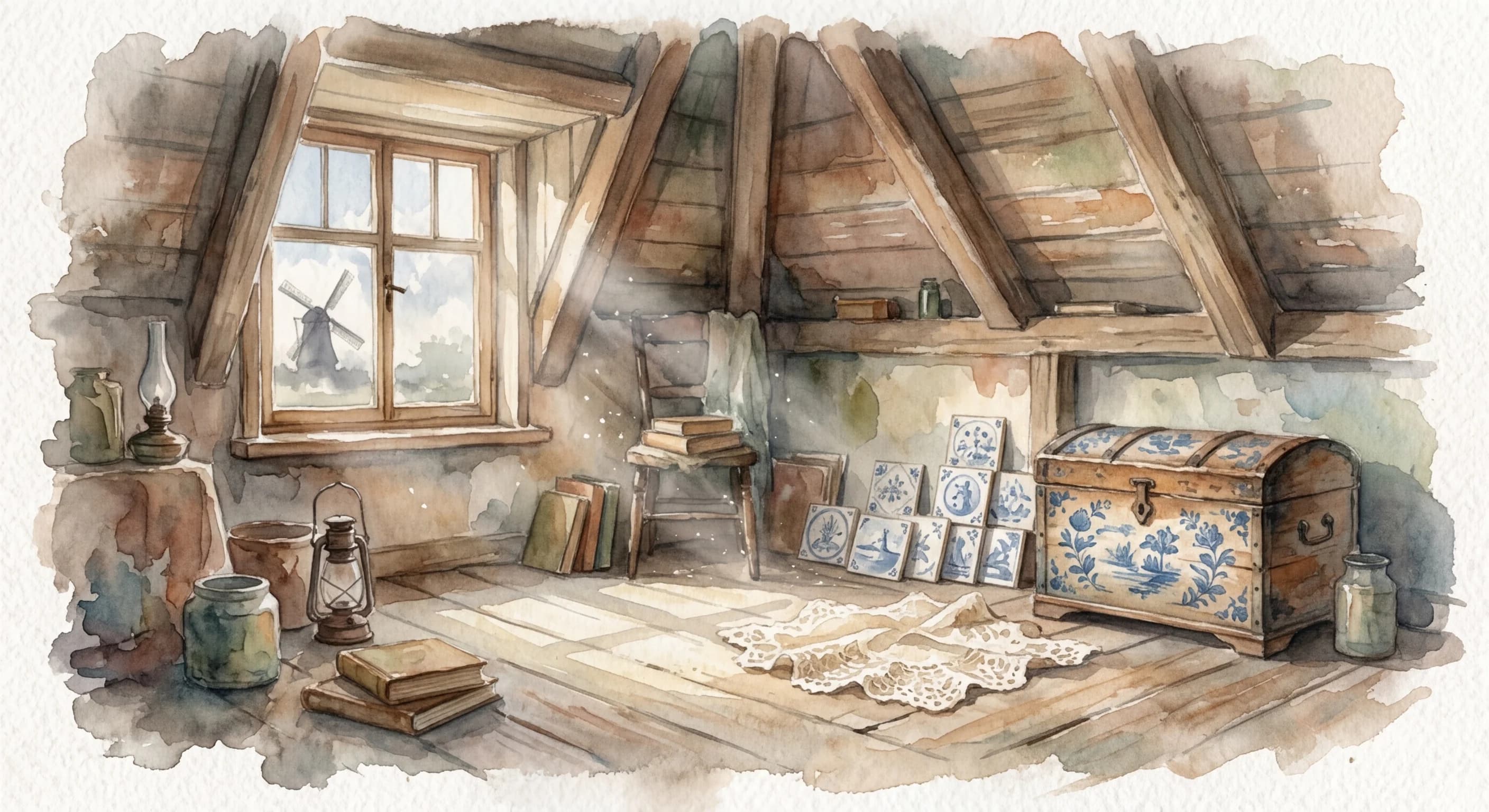
Scharrelen
/SKHA-reh-len/
Meaning
Scharrelen perfectly encapsulates the gentle art of meandering through tasks or objects without a fixed agenda, often with a quiet sense of satisfaction. It's the unhurried act of rummaging, tidying loosely, or pottering about, where the process itself is the reward, fostering a peaceful engagement with one's immediate surroundings. This mindful occupation allows for mental wandering and a comforting connection to the mundane, transforming simple actions into moments of calm contentment. It celebrates the beauty of aimless activity, where the journey, not the destination, holds all the charm.
Literal Translation
To rummage, potter, scratch around
The Story Behind the Word
The existence of 'scharrelen' in Dutch culture speaks volumes about a societal appreciation for slowness, practicality, and the quiet dignity of domestic life. It reflects a value system that finds comfort and meaning not just in grand achievements, but in the small, repetitive acts that make up daily existence. This word embodies a certain down-to-earth pragmatism, a sense of making do and finding contentment in one's immediate environment, rather than constantly striving for external validation or grand plans. It's tied to the Dutch concept of 'gezelligheid' – coziness and conviviality – where 'scharrelen' often contributes to creating a comfortable and lived-in atmosphere. It reveals a culture that permits, and even encourages, moments of unproductivity as a form of self-care and grounding, a quiet rebellion against the relentless pace of modern life.
Experience It
Garden Shed Scharrel
On a lazy Saturday morning, Jan found himself in his garden shed, not with a specific project in mind, but just 'scharrelen'. He moved a few pots, wiped down a dusty trowel, and reorganized a shelf of seeds, humming softly to himself, enjoying the simple act of tidying without pressure.
Kitchen Cabinet Exploration
Feeling a bit restless, Maria began to 'scharrelen' through her kitchen cabinets. She wasn't looking for anything in particular, just rearranging spices, checking expiry dates, and rediscovering forgotten gadgets, finding a quiet satisfaction in the gentle order she brought to the space.
The Deeper Meaning
This word champions a philosophy of 'being' over 'doing,' suggesting that moments of gentle, aimless activity are essential for well-being. It underscores the value of present-moment awareness and finding joy in the mundane, rather than constantly chasing future outcomes. 'Scharrelen' encourages a mindful engagement with one's immediate world, fostering a sense of peace and contentment through simple, unpressured actions, a quiet resistance to the relentless demands of productivity.
Did You Know?
The word 'scharrelen' also literally refers to how chickens 'scratch around' for food, highlighting its connection to natural, unforced exploration and finding sustenance in simple ways.
How It's Used
Used to describe the act of pottering around, tidying loosely, or rummaging in a relaxed and unhurried way. It can apply to household chores, gardening, or even just moving things around without a specific purpose.