Caim
/KAYM/
Meaning
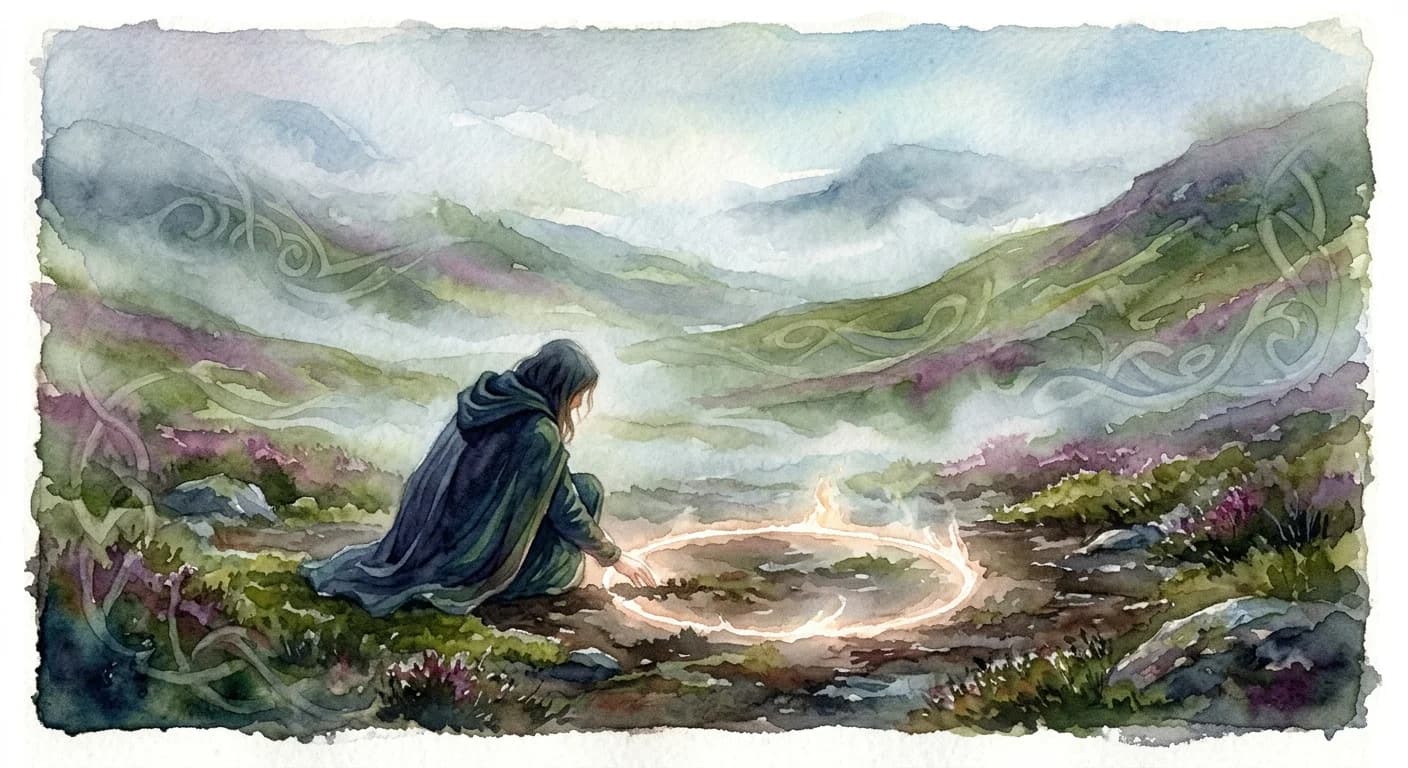
Caim, in Scottish Gaelic, represents more than just a physical circle; it embodies a spiritual act of protection and centering. It's the deliberate invocation of a sacred boundary, often traced with a hand or staff, to create an inviolable sanctuary against external distractions or negative influences. This ritualistic enclosure fosters profound inner peace and focus, preparing one's spirit for deep meditation, ritual work, or simply a moment of serene contemplation. The very act of forming the caim is as potent as the space it defines, forging a tangible connection to one's inner sanctuary.
Literal Translation
Circle, enclosure
The Story Behind the Word
The concept of 'caim' is deeply woven into Celtic spiritual traditions, reflecting a worldview where the physical and spiritual realms are intricately linked and permeable. For the ancient Scots, the world was alive with spirits, both benevolent and mischievous, and the need for protection and sacred space was paramount. Caim arose from a practical need to create safety in a wild, often unpredictable landscape, evolving into a sophisticated spiritual technology for focusing intent and safeguarding the soul. It underscores a profound respect for boundaries – not just physical ones, but also the boundaries of one's personal energy and spiritual integrity. This practice reveals a culture that valued intentionality, inner sanctuary, and a harmonious, yet cautious, relationship with the unseen forces of the world.
Experience It
Morning Meditation
Before dawn, Elara rises and steps outside. With a slow, deliberate movement, she traces a circle around herself with her hand, whispering an ancient prayer. In that moment, the chill morning air and the rustling leaves fade, and she is enveloped in a calm, focused caim, ready for her meditation.
Ritual Preparation
Gathered for a healing ritual, the coven leader takes up a Rowan branch. She walks slowly, drawing a clear circle around the participants, her movements imbued with ancient intent. As the caim is completed, a palpable sense of peace settles over the group, their shared space now consecrated and protected.
The Deeper Meaning
Caim illuminates a profound philosophy of personal agency and the power of intention. It suggests that individuals possess the inherent ability to define and protect their sacred inner space, regardless of external circumstances. This practice underscores the belief that true sanctuary is not merely found, but actively created through focused will and ritual, fostering a deep sense of self-possession and spiritual resilience in a world perceived as both beautiful and potentially perilous.
Did You Know?
The 'caim' is often referred to as the 'encompassing circle' or 'circle of protection,' and is sometimes performed with the index finger of the dominant hand, connecting the individual directly to the act.
How It's Used
Used in spiritual and magical practices, often at the beginning of rituals, meditations, or ceremonies to create a protected and sacred space.