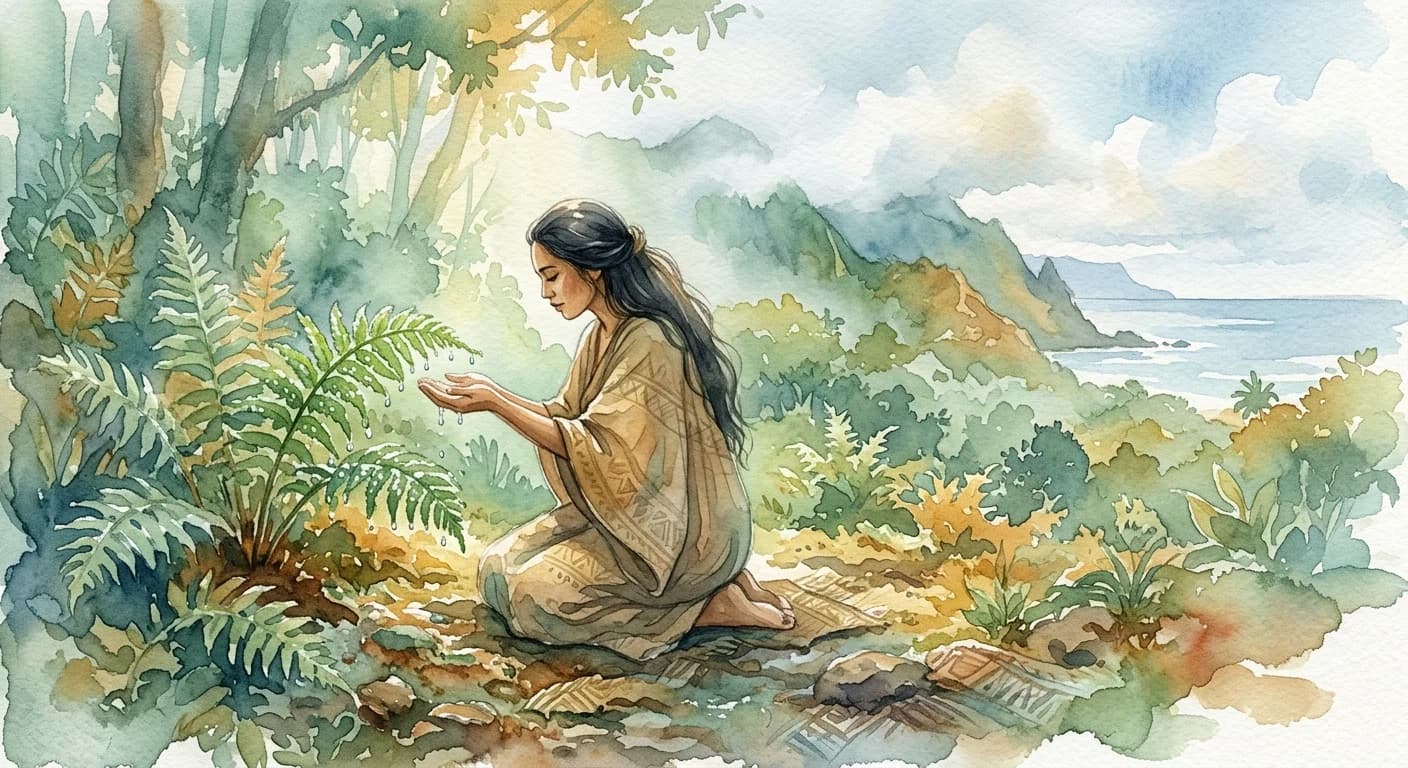
Aloha aina
/ah-LOH-hah EYE-nah/
Meaning
Aloha ʻāina transcends a simple 'love of the land'; it embodies a profound, symbiotic relationship with the Hawaiian Islands, viewing them not as property but as a living entity. This concept is a spiritual covenant, a reciprocal bond where the land generously provides life and sustenance, and in return, the people are bound to cherish, protect, and sustain it. It signifies an unwavering commitment to stewardship, deeply woven into the fabric of Hawaiian identity and ancestral wisdom.
Literal Translation
Love land
The Story Behind the Word
The concept of aloha ʻāina is foundational to Hawaiian culture, stemming from an ancient worldview where people are genealogically connected to the land, tracing their origins to the earth and sky. This inherent connection fostered a system of resource management, such as the 'ahupuaʻa, that ensured sustainability from mountain to sea. The existence of aloha ʻāina reveals a society that historically operated on principles of interdependence, collective responsibility, and deep reverence for nature, viewing the land as an elder, a provider, and a sacred space. It's not just a sentiment but a guiding principle for action, particularly in the face of environmental challenges and cultural preservation efforts.
Experience It
Protecting Sacred Ground
A community meeting is held to discuss a proposed development on a significant cultural site. Elders speak passionately about aloha ʻāina, reminding everyone of their kuleana (responsibility) to protect this wahi pana (sacred place) for future generations, emphasizing that true progress honors the land.
Restoring the Loʻi
Volunteers gather on a Saturday, knee-deep in mud, meticulously clearing invasive weeds from an ancient taro patch (loʻi). Their hands-on labor is an act of aloha ʻāina, a physical manifestation of their love and respect, ensuring the land can once again yield its life-giving kalo (taro).
The Deeper Meaning
Aloha ʻāina articulates a deep ecological philosophy where human existence is inextricably linked to the health of the environment, not as a separate entity but as an integral part of the extended family. It promotes a worldview of reciprocity and stewardship, suggesting that true well-being, both individual and collective, arises from a harmonious, respectful relationship with the natural world. This perspective stands in contrast to anthropocentric views, placing the land's vitality at the heart of human prosperity.
Did You Know?
The Hawaiian Kingdom's motto, 'Ua Mau ke Ea o ka ʻĀina i ka Pono' ('The life of the land is perpetuated in righteousness'), perfectly encapsulates aloha ʻāina, linking the land's well-being directly to ethical governance and action.
How It's Used
Used to express a deep love and respect for the land, particularly in Hawaii, and to encourage its protection and stewardship. It's often invoked in cultural gatherings, environmental advocacy, and discussions about Hawaiian identity.