Bel far niente
/bel FAR nee-EN-tay/
Meaning
This exquisite Italian phrase encapsulates the profound joy of consciously embracing idleness, transforming mere inactivity into a cherished experience. It's not about laziness, but a deliberate act of savoring moments free from obligation, where the simple act of existing becomes a source of deep contentment. It embodies a cultural reverence for stillness, finding beauty in unhurried contemplation and the gentle flow of time without the insistent demands of productivity, offering a tranquil escape into pure, unadulterated leisure.
Literal Translation
Beautiful doing nothing
The Story Behind the Word
The concept of "bel far niente" is deeply embedded in the Italian psyche, reflecting a historical and philosophical appreciation for life's simpler pleasures and a resistance to the relentless pursuit of material productivity. Rooted in a Mediterranean lifestyle that values community, food, and the environment, it suggests that true well-being comes not just from work, but from conscious relaxation. This phrase reveals a culture that understands the importance of balance, where leisure is not merely a break from labor, but a vital component of a rich and fulfilling life, allowing for introspection, connection, and an intimate engagement with the present moment. It's an antidote to modern anxieties, a reminder to pause and simply 'be'.
Experience It
Afternoon Siesta Delight
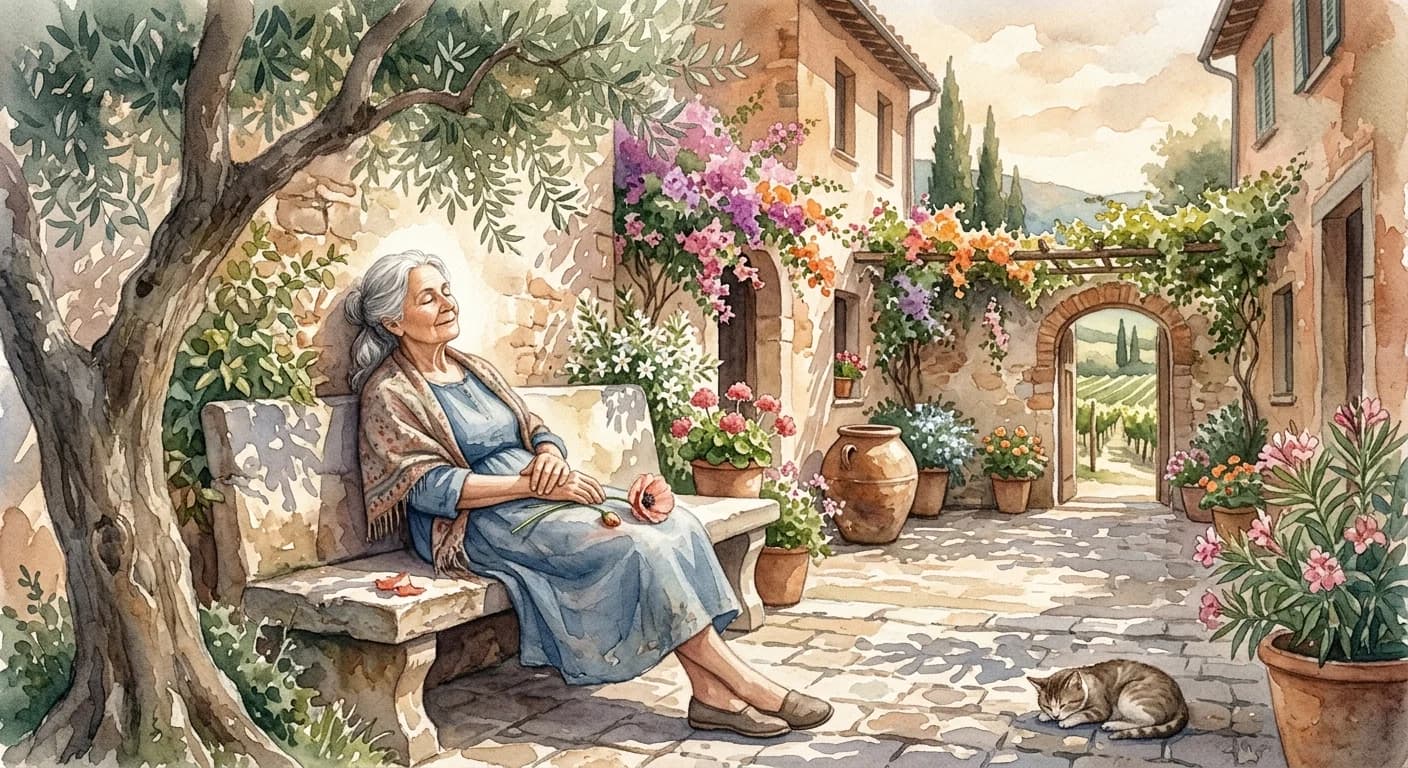
Under the Tuscan sun, Nonna sits on her porch, eyes half-closed, listening to the cicadas. No chores, no calls, just the gentle breeze and the warmth on her skin. This is her "bel far niente," a sacred pause in the day.
Seaside Holiday Bliss
On a quiet beach in Sicily, Marco watches the waves, a half-read book beside him. He isn't worried about deadlines or plans; he's simply enjoying the vastness of the sea and the feeling of sand between his toes, embracing the beauty of doing nothing.
The Deeper Meaning
"Bel far niente" embodies a profound philosophical stance: that human worth and happiness are not solely derived from achievement or production. It celebrates the intrinsic value of existence itself, advocating for a mindful engagement with the present moment, free from external pressures. It suggests that true richness in life often lies in the unquantifiable, in the quiet spaces where the soul can simply breathe and appreciate the beauty of being alive.
Did You Know?
The phrase gained wider international recognition partly due to its romantic portrayal in literature and film, notably in Elizabeth Gilbert's 'Eat, Pray, Love,' popularizing the Italian art of joyful idleness.
How It's Used
Used to describe the enjoyment of idle, pleasant moments, often during holidays or periods of relaxation, emphasizing the value of doing nothing.